-
01 December 2025
Category : Reportage
Luzia and the new voices changing Angola
The PASCAL Programme is succeeding in opening up real opportunities for participation for thousands of young people and women in Angola.
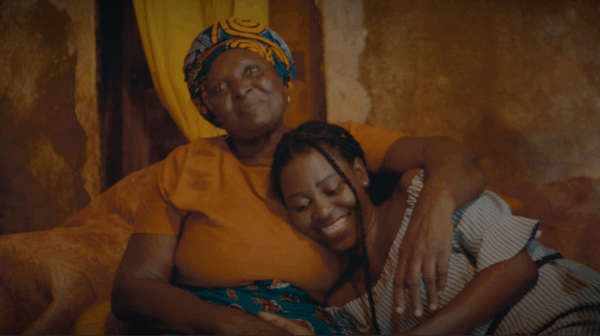
In the Baú neighbourhood of Catumbela, on Angola’s coastline, the nights are dark and water still has to be fetched from far away. During the colonial era, Catumbela was a sugar and industrial enclave. Today, it remains a municipality with an agricultural tradition, but with serious deficits in basic services. Luzia, 22, shares a roof with her grandmother Julia, who at 62 still supports ten grandchildren with her work in the fields. Amidst the shortages and daily struggles, Luzia has found a space to raise her voice in the PASCAL project.
‘It is in these projects that we have a voice. Before, I didn’t know I could talk to the administration, but now I know it is my right,’ says Luzia, who is part of the Associação Projeto Cidadania. For her, participating means much more than attending a meeting: it means presenting proposals on problems in her community, ‘such as lighting or sanitation,’ and seeing that the administration is beginning to listen to them.
Her story reflects what the PASCAL project is achieving in Angola: opening up spaces for real participation for thousands of young people and women who for years were excluded from decision-making.
In her community, Luzia explains what it means to participate:
“I participate because this is where we can talk about the shortcomings of our neighbourhood. If only one citizen complains, they are not heard; but if we do so on behalf of the project, with training and knowledge, our voice reaches further.”
The Civil Society and Local Administration Support Project (PASCAL) was launched in 2021 in response to the major challenge of decentralisation in Angola. Funded by the European Union and managed by a European consortium led by FIAP (Spain) and the Central Project Agency of Lithuania (CPVA) in collaboration with the Angolan Ministry of Territorial Administration, its purpose has been to support the implementation of the new Political-Administrative Division Law, strengthen the capacities of local administrations and open permanent channels of dialogue between Parliament, municipal governments and civil society. In short, to create the conditions for future local authorities to be built on solid, inclusive and participatory foundations.
What Luzia is experiencing reflects a broader change that is already being felt throughout the country. Between 2024 and 2025, more than 12,000 people participated in PASCAL activities, of whom 3,518 were young people. In provinces such as Huíla, hundreds of young people gathered in youth forums and submitted their proposals directly to the governor. According to Teófilo Silvestre, PASCAL’s specialist in governance and public innovation, ‘Today, young people and women are sitting face to face with MPs and governors. That has never happened before.’
For Teófilo, the most significant results of the project include ‘the trust built with strategic institutions such as the National Assembly and the government itself; capacity building in the 25 municipalities involved; the activation of spaces for citizen participation, such as consultation and coordination councils; and the training of local administration teams in open government, planning, transparency and accountability.’
These advances are reflected in practice: more than 50 MPs participated in training courses and study visits on decentralisation, while more than 450 officials from 25 municipal administrations have already been trained in participatory governance and gender-responsive budgeting.
Female participation has also increased significantly. 2,346 women were involved in the project’s activities. According to Analdina Nouemou, gender officer at PASCAL:
“Many women did not know that participating in local councils was a right. Now, even in rural areas, they are organising themselves into groups and taking their proposals to the authorities.”
From Catumbela, community leader Maria Joana Lopes da Silva confirms this:
Women are no longer just providers for the household. They also make decisions about lighting, sanitation, and education in their communities.
The government itself also recognises the progress made. According to Teresa Quiviénguele, Secretary of State for Territorial Administration:
“The PASCAL initiative is of great interest to the Angolan Government, because in our National Development Plan 2023–2027 we are committed to the decentralisation of public services and greater citizen participation in public life. With this support, we are strengthening the institutional capacity of local administrations to expand opportunities for citizen participation and involvement.”
The project has brought together actors who previously had little contact with each other. Members of the National Assembly, municipal administrators and civil society have participated in workshops and forums, with learning taking place in both directions. And the municipalities are beginning to feel the impact. Paulino Banja, administrator of Cubal, explains it clearly:
“With PASCAL, we have held meetings with young people and authorities, which has greatly boosted participation. Women themselves are expressing their rights, and that is a huge step forward for our municipality.”
The results also reach those who monitor and report on what is happening in communities. Augusto Manuel, a journalist in Benguela, sums it up as follows:
‘The training we received gave us the tools for more community-based journalism. Today we can go to neighbourhoods, listen to people, denounce inefficiencies and report on the poverty that exists. This sheds light on the reality of the country.’
This work has strengthened a network of citizen journalists that now publishes reports from municipalities, amplifying the voice of civil society and reinforcing transparency.
The same momentum has been seen in the Network of Women Leaders in Local Governance, which has enabled dozens of women to take on a more active role in community councils and decision-making spaces.
The numbers confirm this: 2,346 women have participated in PASCAL activities and 14 civil society organisations have accessed European Union grants for the first time, enabling them to launch eight projects.
This process has not only increased women’s confidence and leadership, but has also transformed the local agenda: today, community priorities include issues such as childcare, water and security, which are directly linked to women’s demands.
The numbers speak for themselves: 855 activities promoted in 25 municipalities, 40 organisations supported with €1 million in grants and growing trust between institutions and citizens. As Pablo López Dean, coordinator, points out
“Over the past four years, the project has achieved real successes, both in building trust between institutions and civil society, and in opening up spaces for dialogue and gender equality. Decentralisation is a process that requires time, trust and dialogue. The important thing is that no one is left behind.”
For Luzia, the change is not only community-based, but also personal:
‘I participate because I don’t want to stand still. In these projects, we find the voice to speak our minds. And thanks to the training, I now feel more confident. My dream is to be an entrepreneur and help other young people to become entrepreneurs too.’
Europe, Africa and Latin America: an exchange that transforms
One of PASCAL’s fundamental pillars has been the exchange of experiences between public administrators from different continents and levels of government.
‘The project is aligned with the strategies of the Angolan Government and the European Union, and seeks to promote participatory governance based on people, where everyone has a space to speak and, most importantly, where no one is left behind,’ explains Pablo López Dean, project coordinator.
Over the past four years, Angolan MPs and representatives of the public administration have travelled to Spain and South Africa to learn about models of decentralisation and participatory budgeting and to work with the Southern African Development Community (SADC) as a regional benchmark in inclusive legislation. Europe also contributed its expertise from Spain through the Ministry of Territorial Policy and Democratic Memory, INAP, the Youth Institute, the Spanish Federation of Municipalities and Provinces, and from Lithuania through the National Forum on Disability, the Youth Council and the Institute of International Relations and Political Science, among other institutions.
Angola has thus connected to a broader network of practices and learning that transcends borders, confirming that cooperation not only provides funding, but also creates community and trust.
For FIAP, this project reflects its added value: putting the knowledge of European public administrations at the service of cooperation, creating spaces of trust and dialogue between peers. As FIAP Director Francisco Tierraseca points out:
‘Institutional innovation in dialogue and the co-creation of public policies is one of FIAP’s main contributions: opening up new channels between parliaments, administrations and citizens, accompanying processes with evidence and international best practices.’
 Laura Cárdenas, communications consultant for this PASCAL Project activity
The views and opinions expressed in this blog are the sole responsibility of the person who write them.