-
31 January 2019
Category : Opinion
“Nigeria is one of the world’s largest countries of origin for human trafficking and smuggling of persons”
Rafael Ríos, head of the project "A-TIPSOM: fighting against human trafficking and irregular migration in Nigeria", highlights the current situation for human trafficking and people smuggling and how FIIAPP is working to end this new form of 21st century slavery
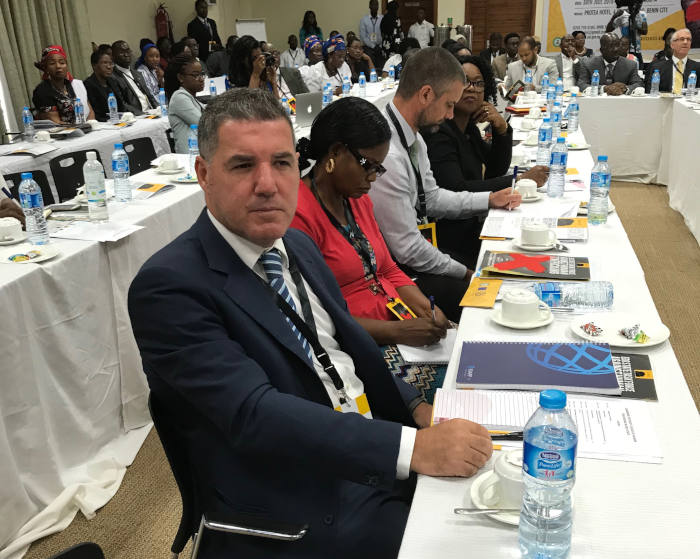 Rafael Ríos, head of the A-TIPSOM project
Human trafficking and migrant smuggling, according to various reports, rank as the third most lucrative criminal business in the world, after drug and arms trafficking. This is a global business, and therefore the only effective way to address it is through the coordination of multidisciplinary actors at all three levels of action: local, regional and international.
Migrant smuggling and human trafficking are intrinsically connected. Smuggling refers to the illegal crossing of people from one country to another for economic or material gain, while trafficking refers to a crime that occurs when a person is recruited, transported, transferred, harboured or received for the purpose of exploitation.
Millions of people are not only deceived with false promises in their countries of origin, but also risk their lives in the hope of reaching a destination where labour or sexual exploitation awaits them. To this, we must add the enormous sums they pay for unsafe journeys managed by organised criminal networks that profit from their suffering.
According to the Global Slavery Index, as of July 2018 there are 40.3 million victims of human trafficking worldwide; 71% of them are women and 25% are minors. While both men and women are victims of migrant smuggling, the predominant profile of a trafficking victim is a woman, with sexual exploitation being the most common purpose.
Today, Nigeria is one of the main countries of origin for human trafficking and migrant smuggling, where thousands of women and children from West Africa are recruited and transported to be exploited mainly in Europe. According to a 2016 UNODC report, 94% of Nigerian women trafficked in Europe come from Edo State.
We must also acknowledge the high number of internally displaced persons currently in Nigeria due to the internal conflict with Boko Haram. These displaced men and women find themselves in situations of extreme vulnerability, which traffickers readily exploit.
Therefore, the causes of this business are extremely complex, associated with structural factors that are difficult to address, such as poverty and conflict. For this reason, FIAP, through the A-TIPSOM project, follows the strategy adopted not only by the European Union but also by Nigeria’s National Agency for the Prohibition of Trafficking in Persons (NAPTIP). This strategy focuses on:
- Preventing trafficking through information and awareness campaigns to avoid the deception of thousands of women.
- Protecting victims of trafficking and smuggling who have returned to Nigeria.
- Prosecuting traffickers and smugglers to ensure they are brought to justice under existing national legislation.
To achieve this final objective, FIAP relies on the expertise of the Spanish National Police, whose experience in investigation and coordination is essential for improving the identification, prosecution and conviction of traffickers across different Nigerian states.
These three pillars are supported by the following cross-cutting actions: strengthening coordination among government agencies; collecting quantitative and qualitative data to improve policy design; reinforcing cooperation among authorities not only in Nigeria but also in transit countries such as Niger, Algeria and Libya; and facilitating cooperation between authorities and civil society through platforms for sharing information, experiences and actions.
All activities integrate a gender-sensitive approach, since, as noted, trafficking is a business based primarily on the dehumanisation of women for sexual exploitation.
This project complements the Nigerian government’s strategy, ensuring that actions are both viable and sustainable. It also fosters the coordination and cooperation needed among all involved countries to reduce the number of women and men who become victims of this new form of 21st-century slavery.
Resumen Nombre del artículoNigeria is one of the world’s largest countries of origin for human trafficking and smuggling of personsDescripciónRafael Ríos, head of the project "A-TIPSOM: fighting against human trafficking and irregular migration in Nigeria", highlights the current situation for human trafficking and people smuggling and how FIIAPP is working to end this new form of 21st century slaveryAutorFIAP Fundación para la Internacionalización de las Administraciones PúblicasPublisher Namehttps://www.fiap.gob.esPublisher Logo
The views and opinions expressed in this blog are the sole responsibility of the person who write them.