


05/03/2026
Civil protection authorities from 21 Ibero-American countries and regional organisations have defined the guidelines for the new organisation, which will be formally presented at the 30th Ibero-American Summit, scheduled to take place in Madrid in October.
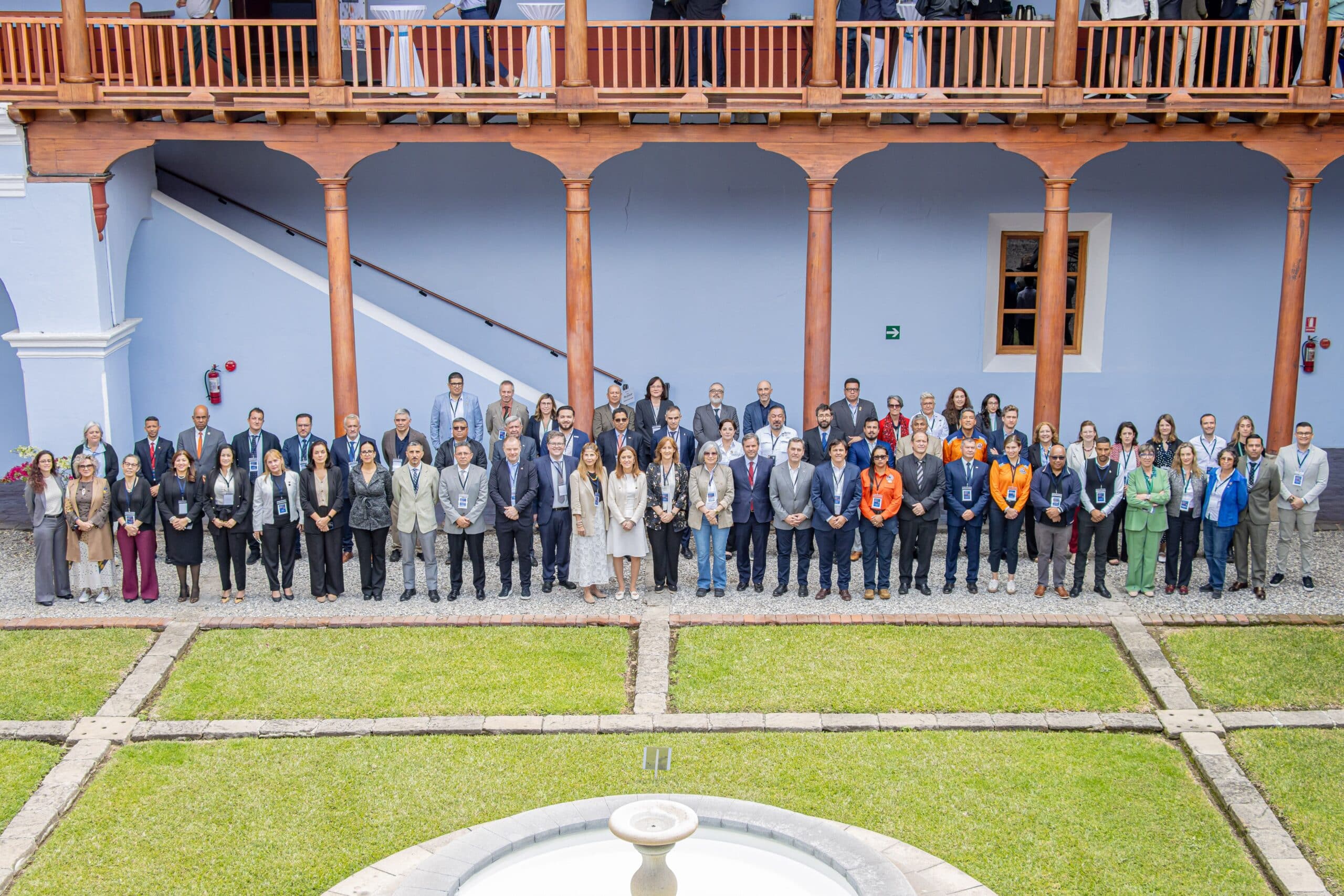
Foto de familia
Authorities and officials responsible for civil protection and disaster risk reduction from 21 countries and regional organisations have just agreed at the headquarters of Cooperación Española in La Antigua, Guatemala, to create a new Ibero-American coordination space, this time to deal with the growing number of natural and man-made emergencies.
This initiative arises from the need to provide the Ibero-American space with a comprehensive, permanent platform with a clear governance structure, which it currently lacks. Its launch and future establishment are intended to strengthen institutional collaboration and coordination between countries in the areas of civil protection and natural disaster reduction, facilitate access to cooperation funds to optimise the mobilisation of resources, and promote synergistic coordination with other thematically related networks, such as those linked to the impact of climate change or the use and distribution of water resources.
The meeting was held at the Spanish Cooperation Training Centre in La Antigua and was promoted by the Spanish Agency for International Development Cooperation (AECID), FIAP, CAF – Latin American and Caribbean development bank – and the Ibero-American General Secretariat (SEGIB).
“At FIAP, a Spanish Cooperation institution dedicated to strengthening public administrations, we firmly believe that the best defence against shared risks is solid and interconnected public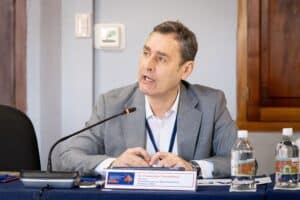 institutions. Our goal is not only to mobilise aid, but also to mobilise institutional expertise. It is about getting civil protection systems across the region to speak the same operational language, share proven solutions and work as a network,” said Francisco Tierraseca, director of FIAP.
Crisostomo emphasised that this initiative is an unbeatable opportunity ‘that will set the course for civil protection in Latin America in the coming decades’, as it is a project that ‘arises from diversity, but with a shared conviction: no country can protect itself alone and we are all stronger when we act together’.
For his part, Barcones argued that ‘Ibero-America cannot afford another disaster without a coordinated response,’ pointing out the advisability of creating this Ibero-American network, which ‘is not a utopia, but an urgent necessity and, for the first time, a real possibility.’
Among the agreements reached at this high-level meeting, the following stand out: the political agreement that formalises the desire to establish the Network; and the creation of two working groups.
A provisional Technical Secretariat has also been elected, which has been entrusted to the Directorate-General for Civil Protection/Foundation for Public Administrations to lead the launch phase; the acronym by which the future Network will be known and its distinctive logo.
Following this initial meeting, the Network will hold a series of online working meetings between the Provisional Technical Secretariat and the Governance and Strategic Guidelines Working Groups, culminating in a face-to-face technical meeting in Montevideo (Uruguay), where all proposals will be discussed and agreed upon.
All of this will crystallise into an Action Plan that must be approved at the first meeting of the Ibero-American Network for Civil Protection and Disaster Risk Reduction, scheduled for October 2026 in Madrid, coinciding with the 30th Ibero-American Summit of Heads of State.