


03/11/2025
Representatives of Amazonian regional governments, experts and international partners have gathered in Ucayali, Peru, for the first Technical Meeting of the Subnational Public Policy Exchange Mechanism (MIPA) for Sustainable Environmental Management in the Amazon.
The meeting, which focused on regenerative agriculture and livestock farming, provided an opportunity to exchange experiences and develop cooperation agendas to strengthen public policies that promote sustainable production compatible with the conservation of Amazonian forests.
Organised by the Regional Government of Ucayali and the Amazon Regional Association, with technical support from the GCF Task Force and FIAP’s Amazonia+ programme, funded by the European Union, the event brought together delegations from Ecuador, Colombia, Peru, Bolivia and Brazil, Amazonian countries that are members and observers of the GCF Task Force.
“This meeting in Ucayali has reminded us that subnational governments are at the forefront of environmental management. We are the ones who live day to day with the challenges and opportunities offered by our Amazonian territory. From the Amazon Regional Community and regional and local governments, we reaffirm our conviction that strengthening the capacities of our regional and local governments and promoting cooperation between them is the most solid path to conserving our forests and building a sustainable future from the local level,” said Manuel Gambini Rupay, Regional Governor of Ucayali and President of the Amazon Regional Community.
Iván Lefort, coordinator of the Amazonia+ programme at FIAP, said: “Subnational governments are at the forefront of environmental management: they are the ones who implement policies and live with the challenges of the territory on a daily basis. Strengthening their capacities and promoting cooperation between them is essential to conserve the Amazonian forests and ensure sustainable development at the local level. Through the Mechanism for the Exchange of Public Policies for Sustainable Environmental Management (MIPA), we identify the most effective local initiatives for the management of Amazonian forests and, in addition to promoting their exchange so that they can be replicated, we promote real cooperation processes to advance towards sustainable management of the Amazon.”
Colleen Scanlan, project leader for the GCF Task Force, said: “Seeing the dedicated experts from the GCF Task Force member governments in the Amazon share lessons and guide each other towards best practices focused on the realities of the territory is exactly what these technical exchanges are all about. We are very pleased to be working with Amazonia+ to launch MIPA this week in Ucayali and to support our members and their allies in efforts that will drive economic growth in their communities while protecting forests and the climate.” 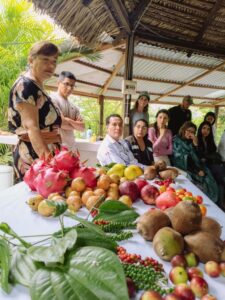
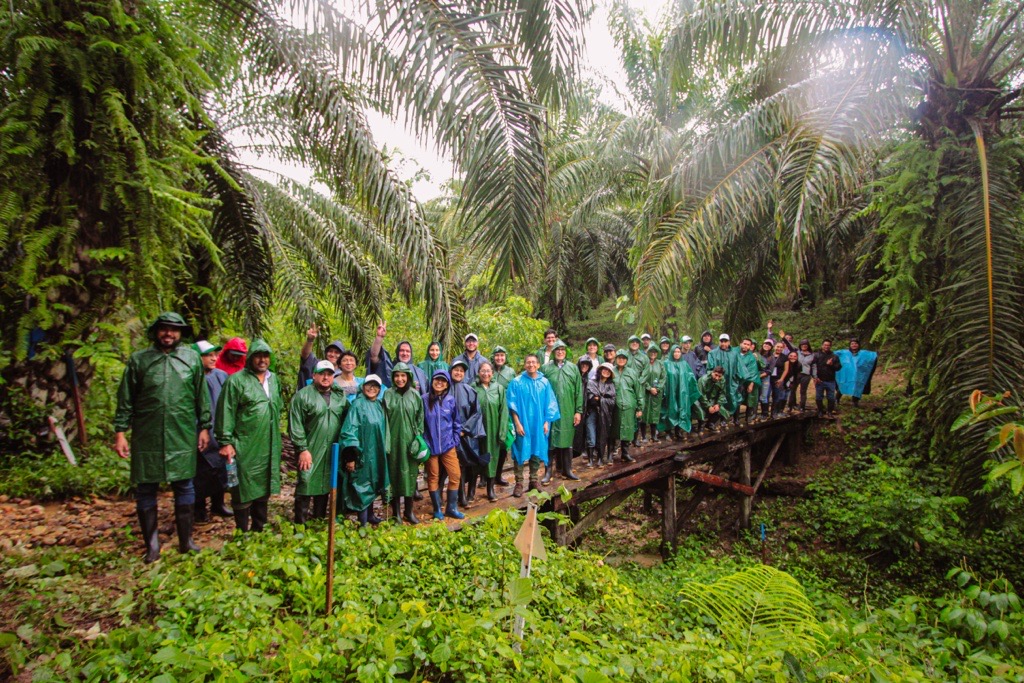
The delegations participated in technical sessions, field visits and collaborative spaces where they identified challenges, opportunities and possible lines of cooperation for scaling up regenerative practices in the Amazon. They also thanked Earthworm Foundation, Proforest, Mecanismos de Desarrollo and WWF Peru for their participation and for contributing their knowledge and lessons learned.
MIPA is consolidating its position as a decentralised South-South cooperation platform that strengthens environmental management and joint action by Amazonian governments, in line with the efforts of the GCF Task Force members to build a new forest economy. With this initiative, subnational governments are reaffirming their commitment to an Amazon that cooperates, produces and regenerates.
Regenerative agriculture and livestock farming propose a form of production that restores ecosystems, improves soil fertility and conserves water and biodiversity, helping to mitigate climate change. In the Amazon, this approach offers a sustainable alternative to traditional agricultural and livestock expansion, helping to preserve forests, strengthen rural livelihoods and ensure the well-being of local communities. Its adoption is key to building a new forest economy capable of generating development without destroying the natural environment on which millions of people depend.
Cooperation between Amazonian countries is essential to drive this change in the production model. Through the Subnational Public Policy Exchange Mechanism, the Amazonia+ programme and the GCF Task Force support regional governments in translating public policies into concrete initiatives in the territories, strengthening local capacities and promoting sustainable solutions adapted to each Amazonian reality.