

12/12/2025
As part of the EU-funded EUCaN project, Dominica has hosted a regional seminar that brought together public authorities, cooperative leaders and technical partners from the Eastern Caribbean to exchange good practices and agree on priority actions to strengthen agricultural and fisheries cooperatives.
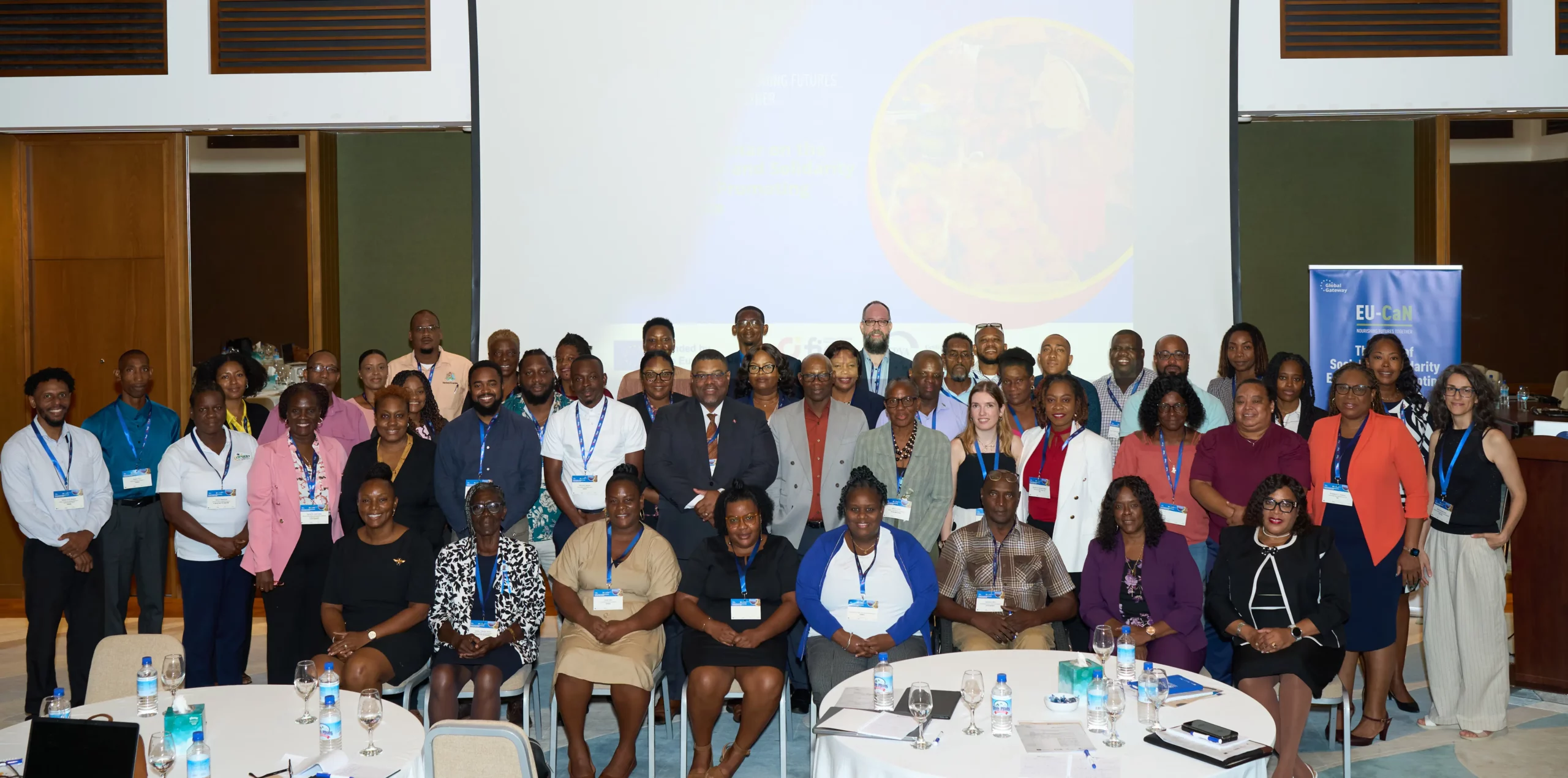
Dominica has hosted the regional seminar “The Role of Social and Solidarity Economy in Promoting Social Justice,” bringing together public authorities, cooperative leaders and technical partners from across the Eastern Caribbean. Held within the framework of the United Nations’ International Year of Cooperatives 2025, the event has served as a platform to share experiences, identify common challenges and agree on priority steps to strengthen agricultural and fisheries cooperatives in the region.
Organised under the EU-funded EUCaN project and implemented by the Foundation for the Internationalization of Public Administrations (FIAP) in partnership with the Central Project Management Agency (CPVA), the seminar has also counted on the collaboration of the OECS Commission, the International Labour Organization (ILO), the Inter-American Institute for Cooperation on Agriculture (IICA) and the Ministry of Culture, Youth, Sports and Community Development of Dominica. Discussions have highlighted the potential of the Social and Solidarity Economy (SSE) to generate decent work, reinforce rural economies and promote social inclusion, while also underscoring persistent gaps such as outdated legislation, limited data systems and constrained access to financial and non-financial services.
Throughout the forum, regional representatives have stressed the need to advance towards more inclusive and resilient economic models. Contributions from the EU Delegation, the ILO and the OECS have underlined how cooperatives can strengthen local food systems, promote fair value chains and enhance community resilience in the face of climate change. International experiences shared by the Spanish Ministry of Labour and Social Economy and the Spanish Social Economy Confederation have provided valuable guidance on legal frameworks, institutional support mechanisms and financing models that could be adapted to the Caribbean context.
Country delegations have also presented assessments of their cooperative ecosystems, outlining priority needs in areas such as legislation, capacity building, data collection and market facilitation. Technical inputs from ILO, FAO, IICA and Cipriani College have offered operational recommendations on cooperative governance, access to inclusive finance, market aggregation and climate-resilient practices.
As a result of the two-day seminar, participants have agreed on the outline of a shared regional workplan, setting priorities for future collaboration around capacity strengthening, inclusion, data systems and the use of digital technologies and artificial intelligence. The event has reaffirmed the key role that cooperatives play in generating decent work, improving market access for small producers and reinforcing community resilience across the Eastern Caribbean.