


13/02/2026
Comienza el proyecto europeo Tinkuy en el que especialistas europeos trabajaran con la Corporación ecuatoriana para el desarrollo de la investigación y de la academia (CEDIA) con el objetivo de fortalecer la transformación digital y la modernización del Estado ecuatoriano, así como a la mejora de los servicios públicos digitales en beneficio de la ciudadanía.
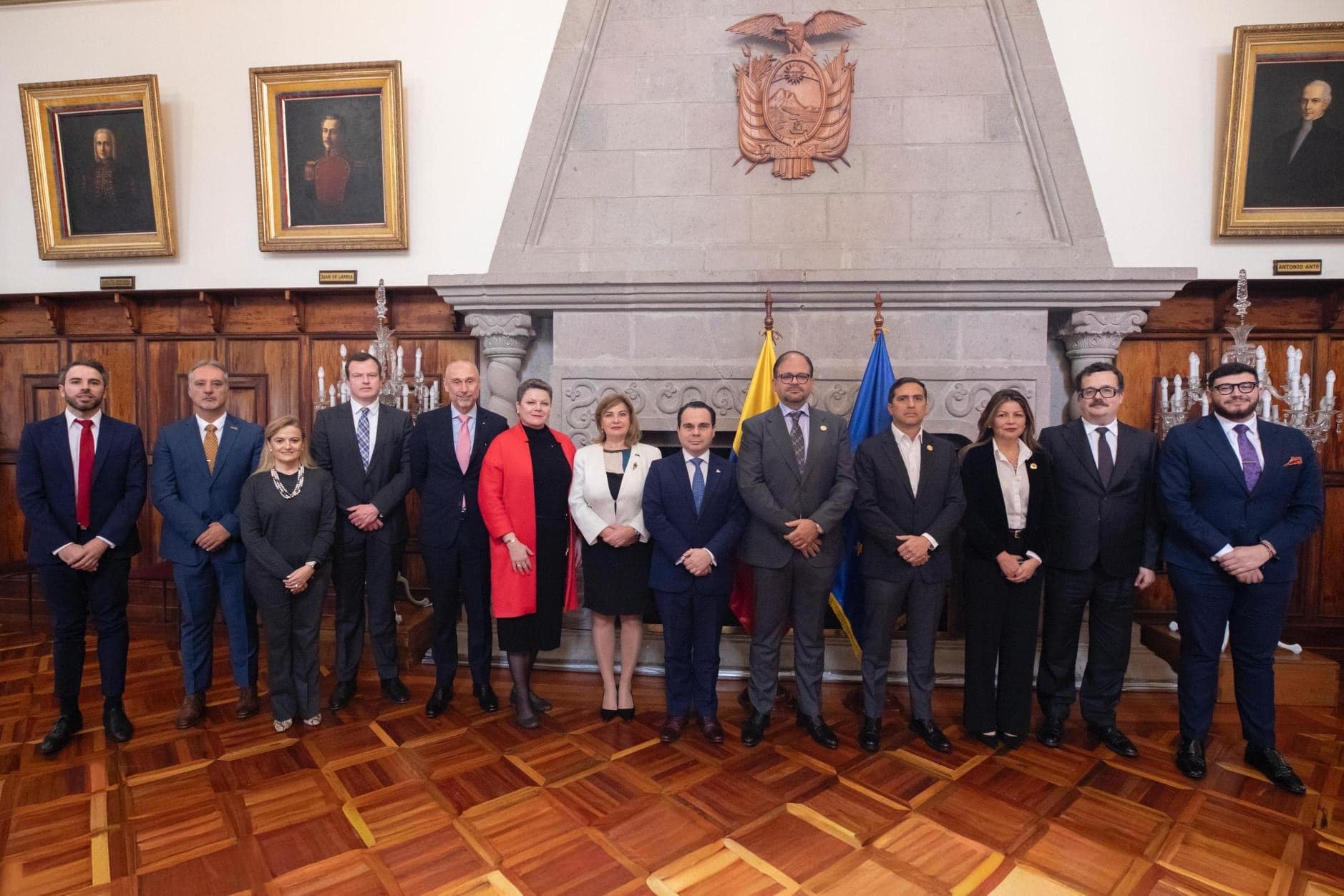
The Ecuadorian capital, Quito, hosted the launch of the new European programme Tinkuy, aimed at strengthening digital transformation and the modernization of the Ecuadorian State, while enhancing digital public services for citizens.
Tinkuy, whose name comes from Ecuadorian Kichwa and means “encounter” or “convergence”, seeks to optimize the GOB.EC platform through a more functional, people-centered design; strengthen interoperability and data governance; reinforce national capacities in data protection and cybersecurity; and develop a system for managing and monitoring key information, including indicators on chronic child malnutrition, to support evidence-based decision-making.
Over the next four years, the programme will contribute to strengthening digital governance, interoperability among public institutions, cybersecurity, and data management, with the goal of consolidating a more integrated, efficient, and sustainable public digital ecosystem. These actions align with the National Digital Agenda 2022–2025 and the National Development Plan 2025–2029, prioritizing citizen-centered public management. In the coming months, the programme will launch its first technical actions and capacity-building processes, progressively advancing toward a more resilient and coordinated public digital ecosystem.
The event was attended by Ecuador’s Minister of Foreign Affairs, Gabriela Sommerfeld; the Minister of Telecommunications and the Information Society, Roberto Carlos Kury; the Minister of the Interior, John Reimberg; the Ambassador of the European Union to Ecuador, Jekaterina Doródnova; the Minister Counsellor of the Embassy of Spain in Ecuador, Tomás López Vilariño; as well as State authorities, members of the diplomatic corps, and representatives of institutions linked to the modernization and digitalization of public services.
The Minister of Telecommunications and the Information Society, Roberto Kury, stated: “At MINTEL, we are firmly leading Ecuador’s Digital Transformation. Through the Tinkuy programme, we consolidate interoperability as the only path toward a truly connected, efficient State that is, above all, at the service of every citizen.”
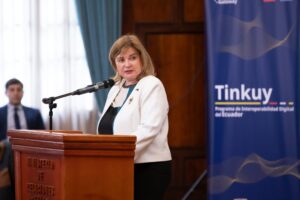
In her remarks, the Ambassador of the European Union to Ecuador, Jekaterina Doródnova, highlighted: “This initiative represents the European commitment to promoting sustainable investments and trusted partnerships with our partner countries, building connections that generate economic development, social cohesion, and opportunities for all.”
For his part, Estonia’s Minister of Foreign Affairs, Margus Tsahkna, stated in a video message that “Estonia has built a transparent and efficient digital state, where 100% of public services, from filing taxes to voting, are securely available online. We are proud to support Ecuador in the development of citizen-centered digital public services.”
Likewise, the Minister Counsellor of the Embassy of Spain in Ecuador, Tomás López Vilariño, emphasized that the Tinkuy programme “aims to improve the quality of public policies by introducing tools, and making better use of existing ones, to ensure higher-quality public services; and therein lies its great political ambition.”
Funded y the European Union, Tinkuy will be implemented by FIAP, the e-Governance Academy of Estonia (eGA), and the Ecuadorian Corporation for the Development of Research and Academia (CEDIA). FIAP will lead cybersecurity and digital governance actions; eGA will promote service digitalization and institutional interoperability; and CEDIA will oversee the data management system and social information analysis.
Tinkuy is part of the Global Gateway initiative, through which the EU is strengthening connections between Europe and the world and helping partner countries bridge the digital divide and further integrate into the global digital ecosystem. A more digitalized society requires promoting sustainability and building a global, open, stable, and secure cyberspace based on the rule of law, human rights, and the values of inclusion and democracy.