


01/12/2025
Quito has hosted an event to strengthen the operational and analytical capabilities of institutions responsible for investigating complex financial crimes and tackling transnational criminal dynamics.
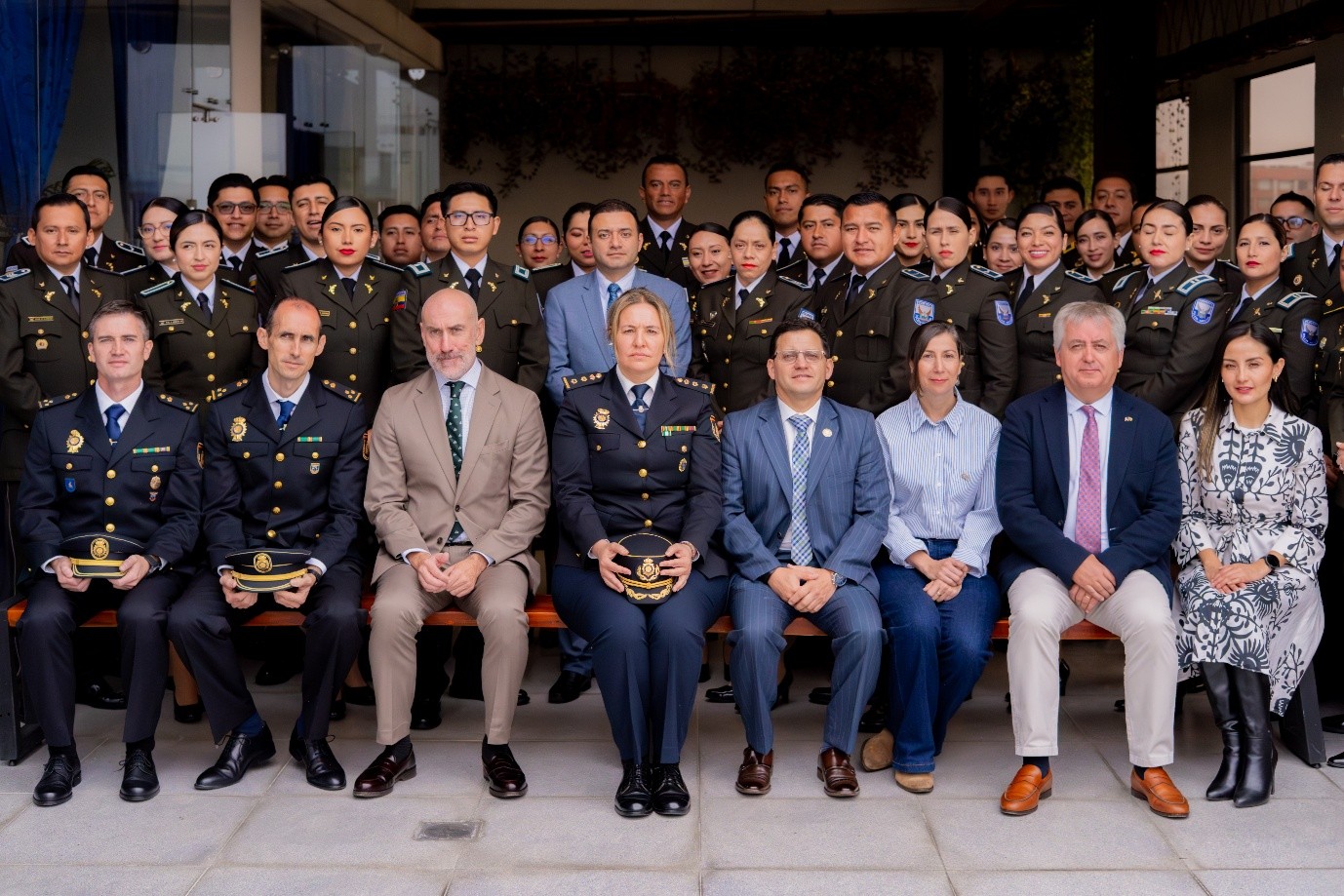
A training course on money laundering, the process by which criminal assets are integrated into the legal financial system under the guise of having been obtained legally, has been launched in Quito, covering investigation strategies, typologies, and international cooperation. It has been an intensive five-day process aimed at personnel from the National Police, the Attorney General’s Office, and the Ministry of the Interior.
The training was organized by the European SERPAZ project, a program for Security, Hope, and Resilience for Peace in Ecuador, which aims to strengthen Ecuador’s resilience to overcome the security crisis associated with drug trafficking and organized crime.
During the meeting, Deputy Minister of Public Security Luis Fernando Pérez highlighted the importance of international cooperation in institutional strengthening. In his speech, he said: “The fight against money laundering requires solid, technical, and coordinated institutions. This type of training, in collaboration with the European Union and international experts, shows that cooperation is a fundamental pillar for strengthening our capabilities and moving toward more effective investigations. We appreciate this support, which contributes directly to improving security and public confidence.”
Likewise, SERPAZ Director Cristina Lera mentioned: “Our work is much more than a technical exercise: it is a strategic effort to shield Ecuador from transnational organized crime. At SERPAZ, we reiterate our firm commitment to strengthening institutions and contributing to peacebuilding.
The training cycle was led by specialists from anti-money laundering units in Spain with extensive experience in parallel financial investigations, organized crime, and operational cooperation with Latin American countries. The training covered topics such as the international legal framework for money laundering, the typologies applied in Europe and Latin America, special financial investigation techniques, real cases of economic crime, regional risk factors, and tools for cooperation between agencies and specialized units.
The methodology used combined keynote speeches, analysis of real cases, practical exercises, and opportunities for dialogue aimed at strengthening inter-institutional coordination and knowledge management within anti-money laundering and counter-terrorist financing systems. This approach sought to promote coordination between institutions responsible for investigating financial crimes and addressing transnational criminal dynamics.
The training process has consolidated a firm step toward a prepared and coordinated state response to money laundering. The European Union and the Security, Hope, and Resilience for Peace Program (SERPAZ) have reiterated their support through sustained technical actions and specialized cooperation to strengthen the role of institutions in protecting the country’s security and stability.