

03/03/2026
FIAP has organised a workshop in Peru that addressed illegal gold mining as a structured and transnational criminal economy.
Illegal gold mining in Latin America has become a structured criminal economy, especially in Amazonian regions where weak state presence, abundant resources and high profitability favour its expansion.
This phenomenon cannot be understood solely as an extractive problem; it must be analysed from the perspective of transnational organised crime, which is present throughout the mineral value chain, from exploration and extraction to processing, export and final marketing in destination markets. Its environmental impacts, particularly massive deforestation and mercury contamination of rivers and soils, make it one of the most serious environmental crimes in the region and reflect a criminal logic aimed at maximising profits by transferring social and environmental costs to local populations and ecosystems.
Beyond the environmental dimension, illegal gold plays a central role in financing organised crime. Its high value, ease of transport and ability to be integrated into legal trade chains make it a privileged product for running a parallel economy. Through increasingly sophisticated laundering mechanisms—such as fraudulent documentation, professional intermediaries, multiple national and international front companies, and simulated exports—illicit revenues are reintegrated into the formal economy, strengthening the financial resilience of criminal organisations.
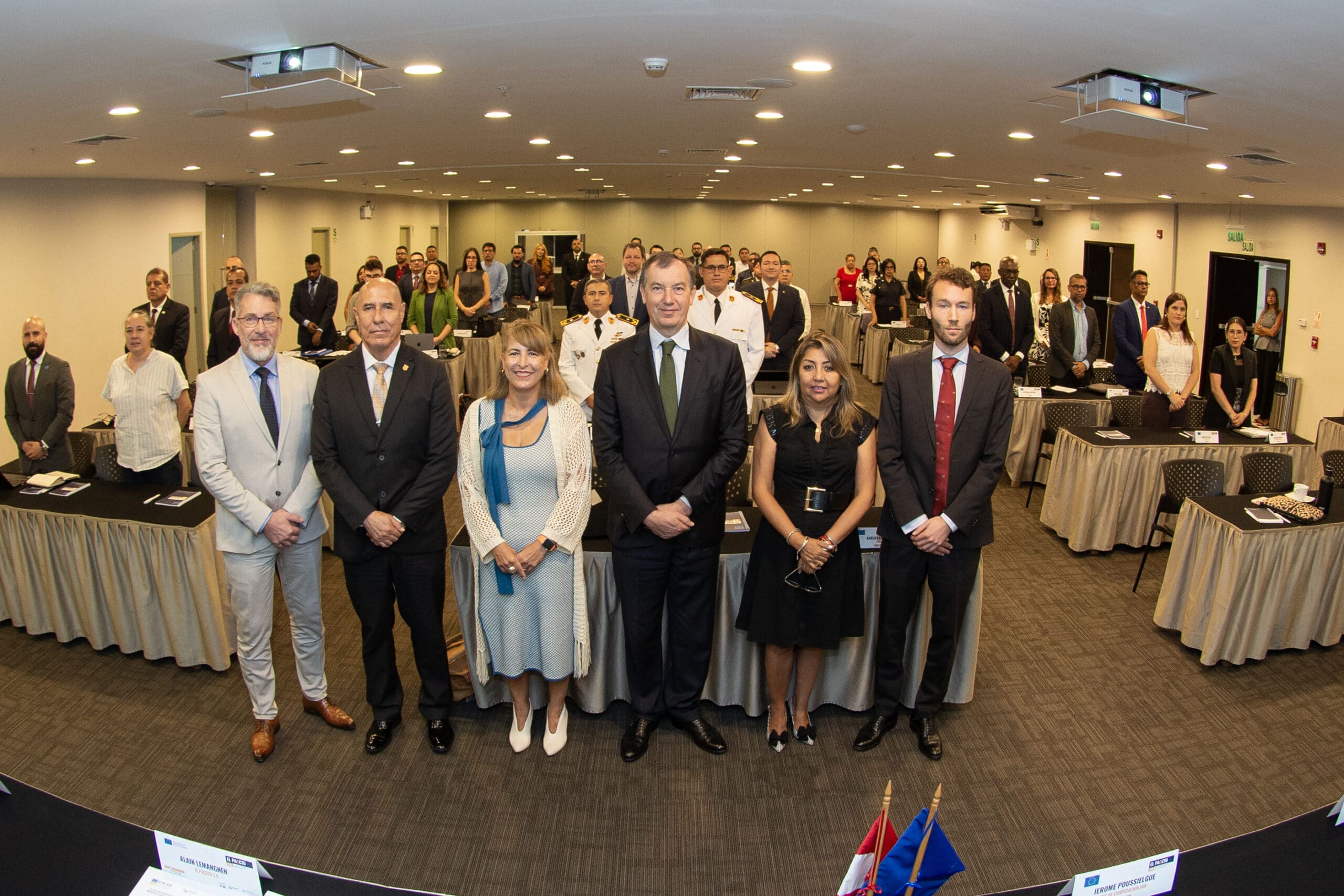
In response to this situation, the European project on combating drugs and organised crime, the European EL PACCTO 2.0 project and EMPACT have organised the workshop ‘Gold as a criminal resource: illegal mining, transnational organised crime and money laundering’. This high-level event brought together authorities and specialists from Europe, Latin America and the Caribbean with the aim of strengthening strategic and operational cooperation in the fight against criminal economies linked to illegal gold.
The seminar addressed illegal gold mining as a structured, transnational criminal economy, analysing its entire value chain: from illicit extraction to international trade and the money laundering mechanisms that allow it to enter formal markets.
It also examined the environmental and social impacts, including deforestation and mercury pollution of water, as well as links to corruption and other forms of organised crime.
The programme included specialised panels, case studies, sessions on gold traceability, such as the Swiss Better Gold initiative (Switzerland), and regional working groups aimed at identifying legal, operational and coordination gaps. It also promoted the exchange of experiences between financial intelligence units, specialised prosecutors, police forces and international organisations.
Within the framework of the European Multidisciplinary Platform Against Criminal Threats (EMPACT), the importance of strengthening bi-regional cooperation to dismantle the financial and logistical networks that support illegal mining has been highlighted. The action is led by the Dutch Police and co-led by UNODC, INTERPOL, Brazil and EL PACCTO 2.0.
As a result, the workshop will enable participants to consolidate a shared diagnosis of the criminal mechanisms that structure the illegal gold market, identify priority gaps and lay the foundations for future joint investigations, intelligence sharing and coordinated actions aimed at disrupting the illicit economies linked to this crime.
This meeting reaffirms the commitment of the participating countries and the European Union to the fight against transnational organised crime and to the protection of legality, the environment and regional security.