

19/01/2026
Specialists from Spain and Greece work alongside the Macedonian authorities to strengthen the country’s environmental inspection system.
North Macedonia is improving its environmental inspection system with the aim of moving towards a functional, modern and efficient model, in line with the requirements of the European Union integration process.
In this context, the EU-financed Twinning project, aimed at reinforcing capacities for the implementation of environmental legislation in the country, has been making solid progress following its relaunch in May 2025. Its objective is to support the State Environmental Inspectorate, under the Ministry of Environment and Physical Planning.
The project initially faced a setback that led to a six-month suspension shortly after its launch. However, with the arrival of a new technical team, the programme has regained momentum and is currently showing significant progress across almost all areas of work.
The first part of the project, now completed and focused on the harmonisation of the regulatory and legal framework, has achieved the expected results. Among the advances made is the preparation of key strategic documents, such as the National Environmental Inspection Strategy and the Information and Communication Strategy.
In addition to these policy documents, key instruments have been developed to provide the State Environmental Inspectorate and local authorities with updated and standardised tools. This includes defining the structure and content of the inspection strategy, among other elements. These instruments will help standardise procedures, reduce discretion and ensure greater transparency in inspection activities.
The adoption and implementation of these documents by the national partners constitutes a key stage in the European Union integration process, as it allows the necessary reform of the environmental inspection system to begin. Once this work has been completed, efforts will shift to the beneficiary institutions to ensure that the changes are implemented and incorporated into the national regulatory framework.
The second part of the project, focused on strengthening administrative capacity, is progressing adequately. One of its main pillars is the introduction of an intelligent inspection approach, which will allow actions to be prioritised according to environmental risk and resources to be optimised. In parallel, standard operating procedures for environmental inspections are being developed.
A central aspect of this part of the project is capacity building at both central and local levels. In North Macedonia, environmental inspection operates at two levels: the State Environmental Inspectorate at national level and authorised inspectors within local self-government units at municipal level. This administrative structure makes the strengthening of local government capacities crucial to ensuring a coherent and integrated application of environmental legislation.
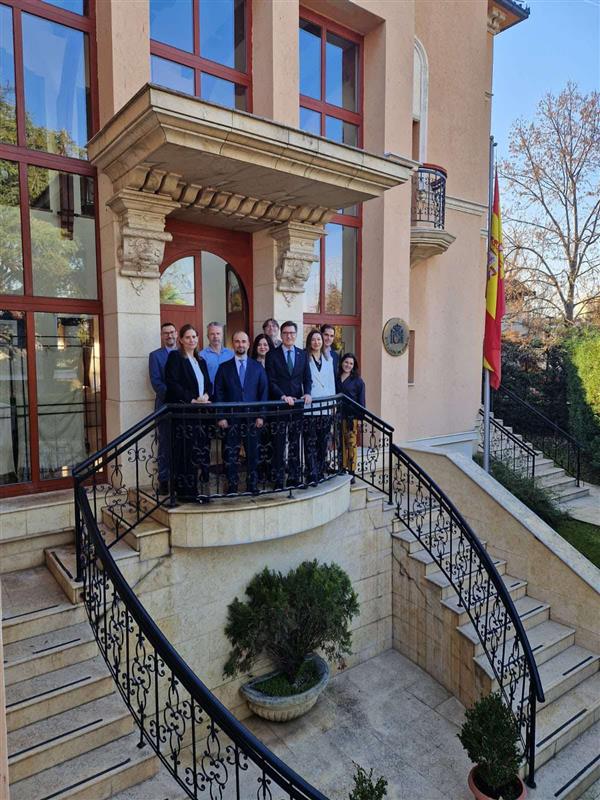
To this end, two training activities are planned for 2026, during which a team of six experts from Spain and Greece will deliver training sessions to municipal inspectors from all regions of the country.
The third part of the project has already launched its first activities and foresees the development of a National Environmental Platform aimed at establishing mechanisms for the prevention and combat of environmental crime.
A project with continuity
The initiative builds on a previous Twinning project that strengthened administrative capacity to implement the EU environmental acquis and improved the Management Information and Reporting System. The reform process continues under the current project, which supports the implementation of the Environmental Inspection Law, adopted in 2022 and aligned with EU Recommendation 2001/331/EC on minimum criteria for environmental inspections.
Thanks to the assistance provided by this EU-funded project, North Macedonia can continue advancing in the consolidation of a key institutional transformation on its path towards alignment with European standards, reinforcing the efficiency, transparency and impact of environmental inspections.