


11/12/2025
For four years, the CT JUST project has been working in the Middle East, the Maghreb, the Sahel and the Horn of Africa. At the closing ceremony, its most significant achievements in the fight against terrorism in these regions were presented.
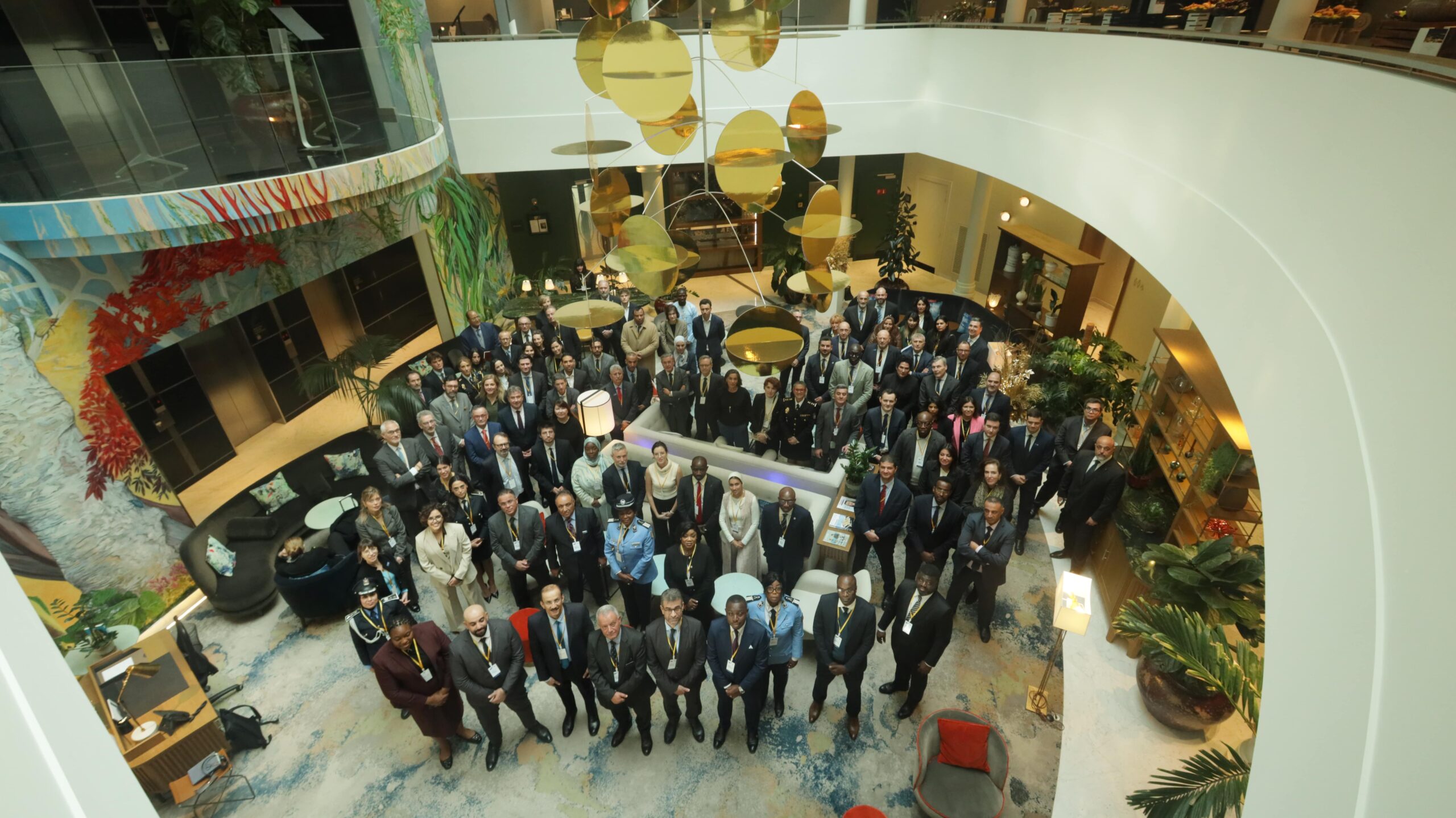
On December 9 and 10, in Brussels, at the heart of European diplomacy, the project’s implementation came to an end and the implementing agencies, FIAP and Expertise France, together with CIVIPOL as partner, organized its closing ceremony, gathering more than 100 representatives from 25 partner countries and institutions together to discuss the CT-JUST’s achievements and the future of the fight against terrorism.
Since 2022, CT-JUST has established itself as a flexible and responsive project, aligned with the needs of its partners. Whether it is supporting the preparation of major events, in crisis management, the training of specialized magistrates, or in conducting an audit of the judicial system, or providing equipment to partners, the project has been able to adapt its actions to diverse contexts and evolving requests.
CT-JUST carried out 174 activities, involving more than 1,500 participants from 49 countries, with the goal of increasing the capabilities of partners throughout the counter-terrorism criminal justice chain. All parts of the chain were targeted, from police investigation, judicial procedures, the collection and custody of evidence during a crime scene, to the mechanisms for dealing with victims.
The closing ceremony dedicated time to discuss the project’s achievements and lessons learned, with an eye to ensuring continuity for the beneficiaries who wish for renewed European Union support in their counterterrorism efforts. As mentioned by the magistrate and director of the CT JUST project, José María Fernández Villalobos,
“Terrorism and organized crime require a global response. International cooperation, both judicial and police, is essential for the effectiveness of the entire criminal justice chain. This response must necessarily be guided by the rule of law and respect for fundamental freedoms and human rights.”
For her part, Irena Moozová, Deputy Director-General of the European Commission’s Directorate-General for Justice (DG JUST), stressed that “this collaboration remains a priority on the European Union’s agenda, demonstrating our unwavering commitment to the fight against terrorism”.
To conclude, Francisco Tierraseca, Director of FIAP, emphasized that: “Technical projects such as CT JUST expand the operational scope of European agencies, such as Eurojust, and Member States by preparing and connecting the terrain in which these actors must operate. They are part of the same ecosystem that allows the Union to act as a credible partner in security matters and committed to its values”.
The project has been involved in several lines of work, achieving great success in each of them:
CT JUST has facilitated direct judicial cooperation between Eurojust and the League of Arab States (LAS) and the Gulf Cooperation Council (GCC) in the fight against terrorism and has provided operational support to European actors in the Middle East, North Africa and the Gulf region by opening bilateral channels, promoting cooperation frameworks and strengthening institutions.
Through CT JUST, an institutional relationship has been established between Eurojust and the LAS to work together to strengthen ties and promote visibility and the conclusion of agreements between the agency and the various central authorities of the Arab League member states. In addition, specific cooperation agreements between Eurojust and the central authorities of Iraq and Egypt have been promoted.
At the bilateral level, CT-JUST supported Jordan’s High Judicial Court and collaborated in the assessment of the needs of Libya’s judicial system to strengthen the fight against terrorism through a variety of targeted activities.
Created in 2022, the Sphinx initiative brings together 16 countries represented by actors from the justice sector, law enforcement services, and intelligence agencies. The initial observation that motivated its creation remains fully relevant today: cooperation, both between services and between states, remains insufficient. Sphinx has established itself as a platform for exchange on crucial issues such as the judicialization of intelligence, threat analysis, cross-border cooperation, the judicial treatment of terrorism victims, the cultural impact of terrorism, and the use of artificial intelligence in counter-terrorism.
The CT-JUST project implemented a wide range of training and capacity-building activities across key regions.
In Jordan, CT-JUST delivered specialized counter-terrorism training in digital investigations, including OSINT and early-warning systems, and certified 16 trainers in forensic science and crime-scene management. The project also supported the National Center for Security and Crisis Management (NCSCM) in conducting large-scale annual exercises involving over 2,000 participants, with CT-JUST leading the evaluation. EUROPOL’s involvement further reinforced cooperation with Jordanian security forces.
In Iraq, the project supported the Ministry of Interior’s counter-terrorism units through training in crime-scene management and OSINT.
In Tunisia, institutional crisis-management capacities were strengthened through an agreed activities program covering the entire crisis cycle, complemented by simulation exercises for future senior security officials.
At the regional level, CT-JUST organized crisis-management simulations for the Arab Interior Ministers Council (AIMC) in partnership with Naïf Arab University for Security Sciences (NAUSS). A regional study visit to Paris in 2025 also enabled partners to learn about the security preparations and the return of experience that followed the 2024 Olympic Games.
At the multilateral level, CT-JUST accelerated the development of AFRIPOL’s e-learning platform and initiated work on the African Arrest Warrant, advising the African Union’s Counter-Terrorism Commission on the methodology for this flagship initiative.
CT-JUST analyzed emerging trends across the MENA region and Europe, highlighting evolving female terrorist profiles—shifting from victims or companions to active perpetrators, recruiters skilled in social media, operational facilitators, and indoctrinators.
This analysis led to collaboration with specialists from the Spanish National Police to strengthen the role of women in law enforcement, particularly in investigations involving foreign terrorist fighters (FTFs). In certain cases, the involvement of a female officer can help build trust during interviews with female suspects, providing a calmer and more conducive environment for effective questioning.