


23/12/2025
Zimbabwe has hosted a regional meeting on multisectoral coordination in nutrition, co-organised by the Food and Nutrition Council, the Scaling Up Nutrition Movement and the EU4SUN project, implemented by FIAP.
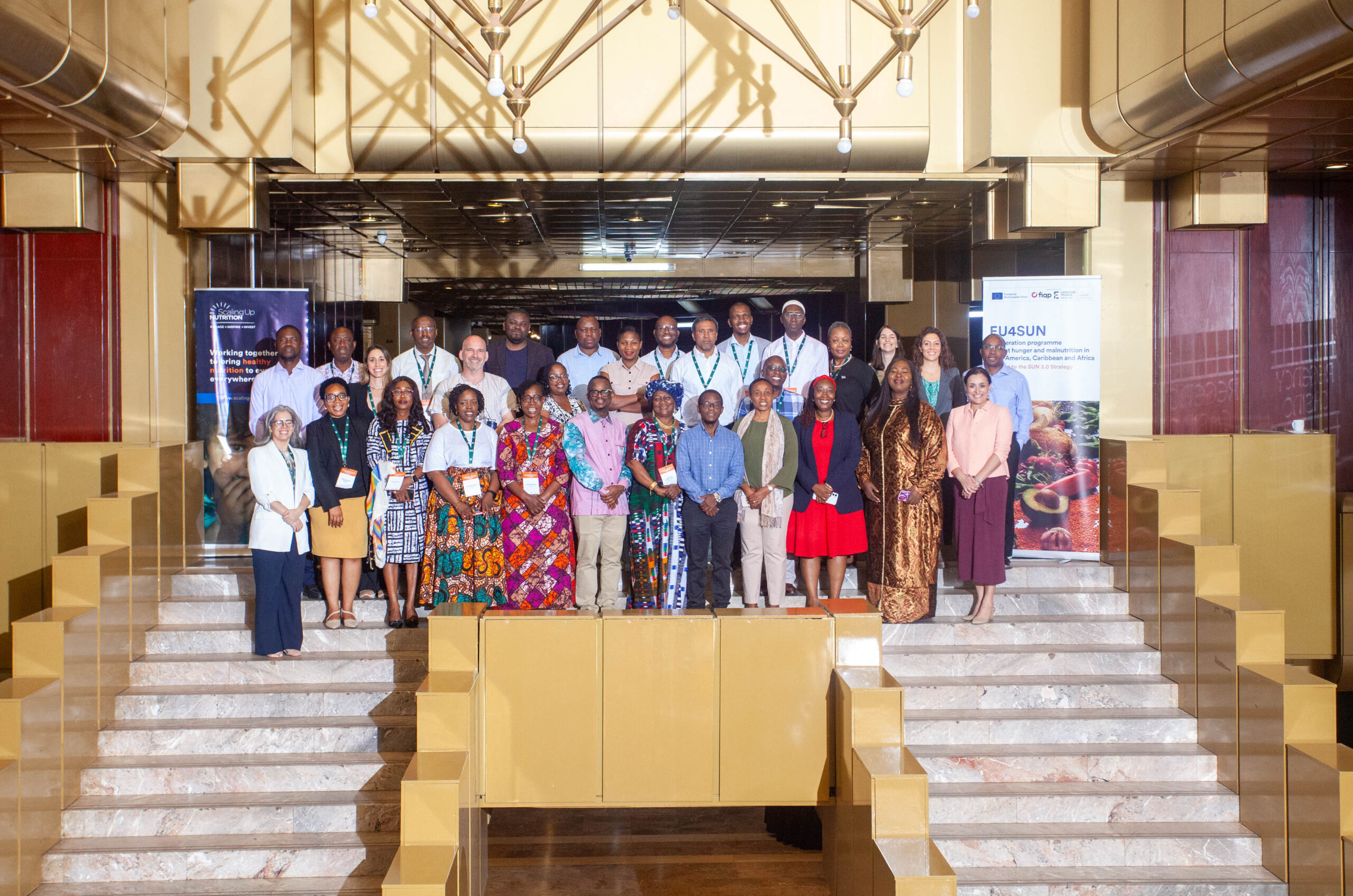
The country hosted a regional exchange and training meeting on multisectoral coordination in nutrition, co-organised by the Food and Nutrition Council (FNC) of Zimbabwe and the Scaling Up Nutrition (SUN) Movement Secretariat for the Anglophone Africa Region, with technical and financial support from the European Union through the EU4SUN project, implemented by FIAP.
The initiative builds on the continued support provided by FIAP and EU4SUN to countries in the region. In 2024, FIAP supported the SUN Secretariat in the formulation of the nutrition commitments presented by countries at the Nutrition for Growth (N4G) Summit held in Paris. Subsequently, and in order to support their implementation, the SUN Movement and the EU4SUN project conducted direct consultations with countries, during which strengthening multisectoral platforms was identified as one of the main priorities, giving rise to this regional initiative held in Zimbabwe. Two complementary components were organised throughout the week to strengthen multisectoral coordination.
From 24 to 26 November, the Peer Learning Exchange on Multisectoral Coordination took place, using Zimbabwe’s nutrition coordination model as a regional learning laboratory. Over three days, delegations from eight countries analysed in depth the trajectory, challenges and success factors of the Food and Nutrition Council (FNC), the body responsible for food and nutrition security in Zimbabwe, with the aim of adapting and replicating the good practices identified in their respective national contexts.
One of the most valued moments was the visit to Murewa District, where delegations exchanged experiences with members of the Food and Nutrition Security Committee, including local authorities, representatives of the Ministry of Women’s Affairs and the Ministry of Agriculture, youth parliamentarians, as well as farmers and producers. The visit made it possible to observe how coordination among these actors translates into concrete interventions in nutrition, food systems, women’s and youth empowerment, and local development. The delegation also visited the FNC headquarters in Harare, where its governance structure, decision-making mechanisms and, notably, its solid data system and scientific evidence production were presented.
On 27 and 28 November, the Regional Leadership Training Workshop for Strengthening Multisectoral Platforms (MSPs) was held, bringing together SUN Focal Points from 16 Anglophone African countries.
The aim of the workshop was to strengthen transformational leadership capacities and improve the functioning of multisectoral nutrition platforms. During the opening session, EU4SUN Project Coordinator Teresa González underlined the central role of SUN Focal Points as drivers of coordination, accountability and resource mobilisation to advance national nutrition goals. The experience in Zimbabwe will guide the next steps of the EU4SUN project, with the objective that by 2027, the project’s final year of implementation, countries will be able to demonstrate concrete progress in implementing their N4G commitments, including strengthened multisectoral coordination, and that these results are documented and shared at regional level as evidence of impact and learning.