-
25 November 2024
Category : Sin categorizar
Cooperation to close the Atlantic cocaine maritime route
The European SEACOP project, led by FIAP in Latin America with the support of the Spanish National Police, connects law enforcement agencies and port authorities from Latin America and Africa to strengthen maritime drug trafficking intelligence and provide operational tools for effective seizures.
Why does it matter?
The production and maritime drug trafficking of cocaine continue to reach record highs. While the supply of this illicit substance has intensified, seizures by law enforcement authorities have also increased worldwide. Colombia, one of the top cocaine producing countries, is registering record levels of cocaine seizures.
According to data from InSight Crime, an investigative and journalistic organisation specialising in organised crime, Colombia recorded the highest seizure figures in Latin America and the Caribbean in 2023, confiscating 739.5 tons of cocaine hydrochloride.
Ecuador ranked second, with more than 195 tons seized, followed by Panama and Brazil, which seized 95.7 tons and 72.3 tons, respectively. Brazil remains the most important transit point on the Atlantic coast of Latin America, seizing more cocaine than Argentina, Guyana, Suriname, Uruguay and Venezuela combined. These countries lie along key drug trafficking routes connecting producer countries with Europe and the United States, including the main cocaine road across the Atlantic.
Drug trafficking is violence
Drug trafficking groups compete for strategic maritime corridors. Ecuador surpassed all violence indicators in 2023, while Costa Rica’s homicide rate increased by 41%, amid an ongoing struggle to control cocaine flows through ports and coastal infrastructure.
By contrast, in countries such as Bolivia and Peru—also among the top cocaine producing countries due to extensive coca cultivation—authorities seized more cocaine in 2023 than in 2022, yet homicide rates remained comparatively low. This highlights how the impact of maritime drug trafficking varies depending on institutional capacity and territorial control.
New maritime drug trafficking routes
During 2024, a maritime drug trafficking route—particularly for cocaine hydrochloride—has become the main expansion corridor for transnational criminal organisations seeking passage from producer countries, mainly Colombia and Peru, to Europe.
This evolving drug trafficking route crosses Southern Cone countries by air, land (Colombia, Peru, Bolivia, Brazil and Venezuela) and river (via the Paraná waterway involving Paraguay, Uruguay and Argentina), before crossing the South Atlantic from ports in Brazil and Argentina toward African countries in the Gulf of Guinea and North Africa, including Morocco, Nigeria, Liberia and Senegal.
Within this context, European, Latin American and African criminal organisations operate in a coordinated manner at low operational and logistical cost. The presence of European networks in Latin America is increasing, while Latin American criminal groups expand into Africa to facilitate logistics, storage and transport for the transit of illicit goods to Europe. This low-profile expansion strengthens transnational criminal cooperation and consolidates the percentage of cocaine to the US via maritime routes and Europe as final destinations.
In this reality of constant innovation—where maritime drug trafficking routes seek to evade land, sea and air controls, and criminal alliances span multiple continents the European SEACOP project develops targeted strategies to identify international maritime smuggling networks, disrupt their consolidation, and prevent cocaine shipments from reaching their final destination.
Maritime intelligence, seizures and cooperation: keys to success
One of SEACOP’s most effective and sustainable strategies is based on building lasting capacity in partner countries across three core areas: maritime and river intelligence, seizure techniques, and the creation of international cooperation networks.
During the first half of the year, intelligence training activities were conducted in several participating countries. In the second half, training has focused on seizure techniques, alongside the definition of two transnational intelligence strategies involving Latin American and African partners, including Senegal.
As a result of this combined training and networking effort, two operational frameworks have been established with the support of specialists from the Spanish National Police: the Special Response Groups (GRES)—GRES South Atlantic and GRES Ports—covering the southern and northern maritime and river drug trafficking routes.
Special Response Groups
The GRES SUR operation was launched last May in Paraguay with the participation of Argentina, Brazil and Uruguay. Meanwhile, GRES Ports will be launched in mid-October in Colombia with the participation of Peru, Ecuador and the Dominican Republic, also involving key regional partners such as Panama and Costa Rica.
In its first months of operation, GRES SUR carried out actions in strategic maritime and recreational ports, including Santos, Montevideo, Río de la Plata, Dakar and Asunción, resulting in significant seizures of cocaine and drug-related assets.
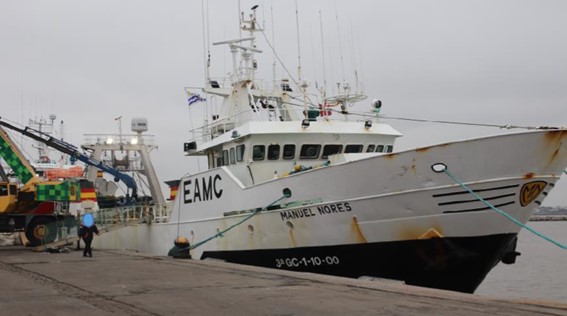
Maritime containers, cargo vessels and recreational boats were inspected, leading to cocaine seizures in Paraguay, Argentina and Brazil. Drugs were also seized from a vessel departing from Senegal bound for Argentina, and ten individuals allegedly involved in this maritime drug trafficking network were arrested.
These results were made possible through coordinated maritime–river intelligence sharing and joint operations. The Operational Coordination Centres in Argentina and Senegal played a crucial role in preventing information leaks and ensuring effective international coordination.
The views and opinions expressed in this blog are the sole responsibility of the person who wrote them.
This content has been updated to reflect the current context and to highlight the continued implementation and relevance of the SEACOP project, which remains active in strengthening international cooperation against maritime drug trafficking.
ResumenNombre del artículoCooperation to close the Atlantic cocaine maritime routeDescripciónThe European SEACOP project, led by FIAP in Latin America with the support of the Spanish National Police, connects law enforcement agencies and port authorities from Latin America and Africa to strengthen maritime drug trafficking intelligence and provide operational tools for effective seizures.AutorFIAP Fundación para la Internacionalización de las Administraciones PúblicasPublisher Namehttps://www.fiap.gob.esPublisher Logo
The views and opinions expressed in this blog are the sole responsibility of the person who write them.