-
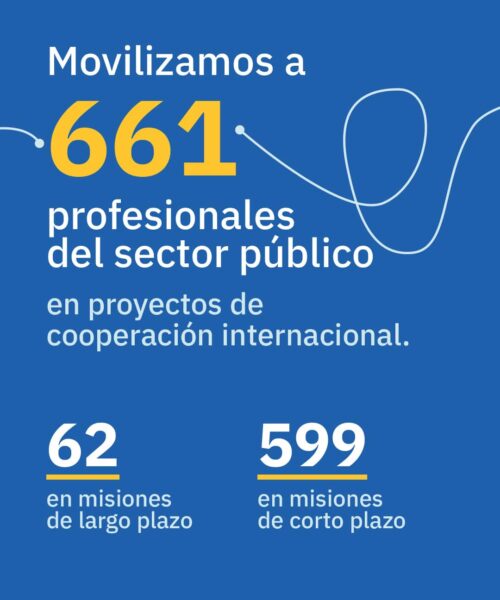
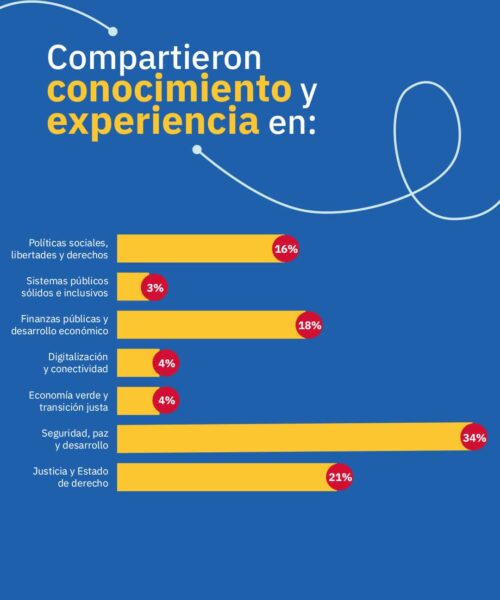
Over the past year, we have deployed 661 professionals from our public sector to overseas cooperation projects, including 62 aid workers on long-term missions.
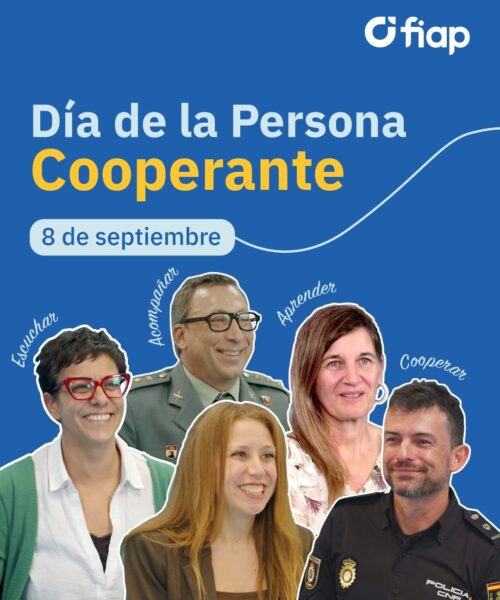
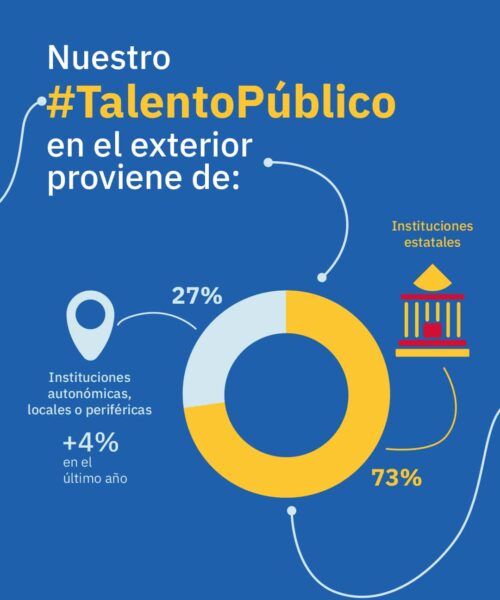
The experience and knowledge of those working in public institutions are among the greatest assets for making progress towards the Sustainable Development Goals. They represent a country’s #PublicExpertise, and mobilising and sharing this talent lies at the heart of FIAP’s cooperation projects. Today, on Development Workers’ Day, we celebrate the tremendous commitment shown by each and every one of them.
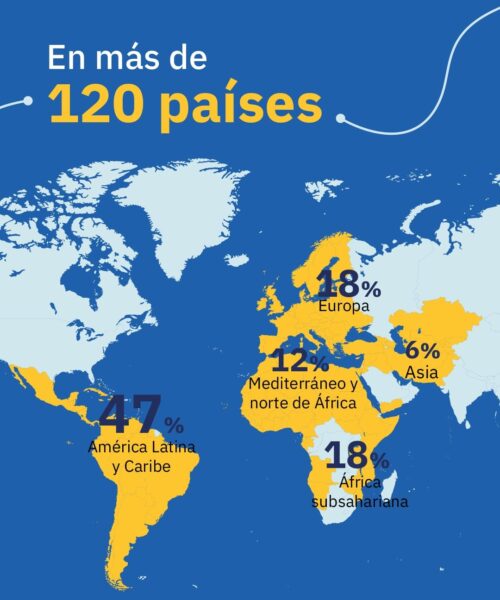
In the last year alone, we have deployed 661 professionals from our public sector to overseas cooperation projects, including 62 aid workers on long-term missions (lasting more than six months). They have worked with institutions in over 120 countries to promote public systems that benefit people and the planet.
In 2025, we managed to increase the number of women deployed by 3 per cent, thereby narrowing the gender gap. By 2024, we had already increased the number of women deployed by 7 per cent. You can view the full profile of public sector aid workers here.
Furthermore, on 23 June we celebrated the United Nations Public Service Day with an event dedicated to ‘Pioneers: women who opened the doors to institutions’. Institutions, across all sectors and territorial levels, play a key role in the development and implementation of public policies, not only to narrow the gender gap, but also to bring about the necessary transformation that would guarantee full equality of rights and opportunities. For this reason, this year’s event focused on the contribution of various Spanish institutions to feminist cooperation, and we highlighted the pioneering women who opened the doors to these institutions for other women, promoting equal access or holding decision-making positions within them.
This is an event we have been celebrating for five years alongside our public sector staff, which promotes the value of public services and public governance.
Cooperation between institutions is key to a multilateral world in which different countries work together to find solutions to shared challenges.
Here we bring you the stories of our #PublicExpertise – professionals who have shared their expertise to create a better world.
-
Diversity enriches us. Respect brings us together. And equality is only real when everyone can be themselves, freely and without fear.
At FIAP, we have adopted our Action Plan against LGBTI+ Discrimination, marking another step forward in our commitment to building an organisation where there is no place for discrimination, harassment or any form of LGBTI+phobia.
Because we believe that a safe working environment is not one where differences are merely tolerated, but one where everyone feels respected, listened to and valued.
Our commitment is demonstrated through our actions
We are therefore implementing measures to guarantee equal opportunities, promote inclusive communication, prevent any form of discrimination or harassment, ensure equality in employment rights, and incorporate an LGBTI+ perspective into our Public Technical Cooperation projects. Key among these is training and awareness-raising for the entire workforce on diversity and the prevention of LGBTI+phobia, an essential tool for building a working environment based on respect, inclusion and equality. Because building a more inclusive organisation is a shared responsibility.
We also wish to send a clear message: at FIAP, there is no place for any discriminatory behaviour based on sexual orientation, gender identity or expression, or sexual characteristics. Everyone has the right to carry out their work in a safe, respectful and inclusive environment. Discrimination, harassment or any manifestation of LGBTI+phobia has no place in our organisation and will be prevented, addressed and, where appropriate, sanctioned.
This Plan reflects who we are and how we want to work: a public foundation committed to human rights, equality and the dignity of all people.
Inclusion is not just about opening the door. It is about ensuring that everyone can come in, participate, grow and feel part of FIAP.
More diversity. More inclusion. More FIAP.
✍🏽 Patricia Mate, specialist in gender, human rights and disability; and Esther Sánchez, area manager of Human Resources and Organization
-
FIIAPP, a Spanish Cooperation organisation specialised in promoting cooperation between public administrations, mobilises more than 200 public professionals every year in more than 20 projects promoted by the European Union to strengthen public systems in Latin America and the Caribbean
In July 2023, the III EU-CELAC Summit marked a milestone after more than eight years without a high-level meeting between the European Union and Latin America and the Caribbean. This meeting brought together Heads of State and Government from more than 60 countries of the European Union (EU) and the Community of Latin American and Caribbean States (CELAC), together with the President of the European Council and the President of the European Commission, with the aim of strengthening the Bi-regional Strategic Partnership.
Reconnecting Europe and Latin America
The summit was a turning point for several reasons. For the first time, a structured dialogue was established, with a permanent coordination mechanism, meetings of heads of state and government every two years and at Ministerial level in alternate years. In addition, the Global Gateway investment agenda was presented, with the objective of mobilising up to 45 billion euros by 2027 in 130 investment projects in the digital, energy, transport, health, education and research sectors.
Beyond specific advances, the leaders reaffirmed the status of the EU and LAC as natural and preferential partners. They committed to strengthening a bi-regional partnership based on common values and interests, including the defence and promotion of multilateralism, the strengthening of economic, social and cultural ties, and institutional cooperation to address global challenges such as food insecurity, poverty and inequality.
Public technical cooperation actions transform systems and improve lives, contributing to sustainable and inclusive development in the framework of the SDGs and the 2030 Agenda. In 2021, EU Foreign Ministers recognised that mobilising public expertise is a distinctive added value, representative of the European identity, and particularly useful to promote European interests and values and strengthen strategic partnerships.
FIIAPP cooperates through different projects and programmes in a wide range of sectors, such as green agenda, digitalisation, justice, drugs, security, food, trade, youth, citizen participation, migration, employment, border management and drug trafficking, among others.
Regulatory frameworks: software required to deploy the Global Gateway
Within the framework of the Global Gateway strategy, FIIAPP has supported the development and strengthening of policy and regulatory frameworks that are essential for the viability and sustainability of investments. These include, among others, support for the climate change law in Ecuador and El Salvador, energy efficiency regulations for light vehicles in Colombia and the energy transition policy in Cuba, the development of data protection legislation in Guatemala and the implementation of a pilot project for electric buses in the Dominican Republic, among others.
FIIAPP has also supported actions in strategic priority areas for the EU beyond Global Gateway, such as citizen security, the rule of law and social cohesion. These areas not only improve the investment climate, but are part of European identity and integration and development goals in their own right. Their external projection is essential to strengthen public institutionality, promote democratic governance and lay the foundations for sustainable and inclusive development. The promotion of a regional protocol for undercover agents in international drug trafficking investigations and the creation of two formal spaces for EU-LAC dialogue stand out: the Political Security Cycle – Latin American Committee on Internal Security (CLASI) and the Shared Political Justice Cycle between Latin America and the European Union.
Next stop: spring 2025
The priorities set at the III EU-CELAC Summit were also reinforced at the meeting held last September in New York between the EU and CELAC foreign ministers. There they developed the dialogue between the two regions and made progress on shared priorities ahead of the next ministerial meeting, which will take place in Brussels in the spring of 2025, and the IV EU-CELAC Summit, scheduled to take place in Colombia in the last quarter of 2025. In addition, the representations underlined the importance of maintaining a high-level political dialogue to exchange ideas on key issues of global governance, international security and stability, a fundamental part of the coordinated and joint work that the FIIAPP has been developing with Latin America and the Caribbean for more than 25 years.
-
The Amazonía+ program has participated in the presentation in Barcelona of the documentary “Echoes of the Rainforest”, which explores how the study of fossil pollen helps to understand climate change and conserve Amazonian ecosystems.
The Amazonía+ Program, funded by the European Union, has participated in the screening and round table presentation of the documentary “Echoes of the Rainforest” in Barcelona; in which specialists in paleoecology study pollen samples extracted from the Amazonian soil to reconstruct the values of temperature and rainfall in the past and understand, through this analysis, climate change.
In an interdisciplinary team, these paleoecologists and paleoecologists from the Geosciences Barcelona-CSIC research center, in alliance with Peruvian environmental researchers and indigenous communities of the Pacaya-Samiria National Park, show how the work of study, protection and conservation of Amazonian ecosystems is carried out.

Presentation of the documentary in Barcelona But what is paleoecology?
Encarni Montoya, scientist at Geosciences CSIC explains very clearly in the documentary: “Paleoecology is a discipline in the field of ecology that considers a longer time scale to really analyze what were the species of the past that lived in what environmental conditions and how they have evolved. But not just species, but also landscapes and ecosystems: how they have evolved over time and what has driven those changes.”
Paleoecology involves unraveling the Amazon’s past to anticipate what its future will be.
What is the Amazon for the communities that inhabit it?
“To answer you how much the Amazon, nature and diversity are worth, I would have to ask you how much your life is worth; if your life has a price, then maybe the Amazon has a price, because it is nature that gives us life,” answers a woman inhabitant of the Peruvian Amazon.
Why is it urgent to protect the Amazon?
The documentary highlights the urgent need to preserve the biodiversity and cultural heritage of the Amazon before its ecological and cultural integrity is irreversibly lost. Dael Sassoon, author of the documentary, explains: “The Amazon is about to reach a point of no return, to understand how vegetation in the Amazon reacts to climate change and to measure the sensitivity of tropical forests to changes in rainfall and temperature”.
Encarni explains forcefully: “The Amazon and the Tropics in general are big unknowns, they are huge areas in terms of conservation because they harbor huge amounts of biodiversity. The tropics are a key environment that harbor life on Earth as we know it, [the tropics are] responsible for the climatic conditions we have in extra-tropical regions, but not only biodiversity, but also the physical functioning of the Earth, also depends on the health and richness of tropical ecosystems.”
Gabriel Hidalgo, biologist at the Peruvian Amazon Research Institute, emphasizes: “The Amazon has around 6,000 species of trees alone, it is a dynamic ecosystem in which the rest of the world is integrated, it is not isolated: studies have confirmed that dust comes from the Sahara and is deposited in the Amazon, that evapotranspiration from the Amazon moves to other continents… everything is integrated”.
“Predictions for the year 2050 are not very positive: up to 47% of the Amazon rainforest could be lost”, as Encarni points out in the documentary: ”This would be linked to a cascade effect and death of other ecosystems in South America […] so maintaining the forest cover of the Amazon is crucial and a priority for all […].
The value of scientific communication and dissemination:
The roundtable discussed the vital need for science to disseminate its findings and the value of science communication; as well as the very notion of knowledge “who owns it”, highlighting the value of intersectional and inter-scientific knowledge, as well as multidisciplinary. The conclusion is clear: the efforts of all actors are needed to protect the Amazon (communities, scientists and scientists, decision makers, international cooperation…).
Among the challenges we currently face as societies on environmental issues, we find precisely that one of them, if not the main one, is how to open the conversation about climate change to all citizens; perhaps in today’s world some knowledge about ecology needs to be taught in schools so that we can make informed decisions about our future as a global planet.
If you have half an hour and want to discover the enormous scientific potential of pollen, feel free to watch here:
The PALOMA Project (Palaeoenvironmental Investigation of Amazonian Lowland Sensitivity to Climatic Drivers Using Pollen-based Modelling Approaches) is a postdoctoral fellowship funded by the Marie Skłodowska-Curie Actions and the European Commission (Horizon Programme). Its objective is to study how vegetation responds to climate change in the northwestern Amazon lowlands using pollen-based methods.
Written by Clara Ortega Díaz-Aguado, Amazonía+ Project Technician
-
As we close 2024, we want to take the opportunity to look back and appreciate what we have achieved together. At FIIAPP we remain committed to public technical cooperation that transforms systems and improves lives.
These are processes that we at FIIAPP have supported and accompanied, working hand in hand with the public expertise of institutions in more than 120 countries. We have joined forces in key areas such as justice, security, environment, social policy, digitalisation, and much more. Each achievement reflects the commitment and enthusiasm of those of us who firmly believe in the power of public policy.
We invite you to explore, through this link, this selection of milestones that summarise a year full of cooperation, learning and goals achieved.
Thank you for being part of this journey!
-
The President of the Belgrade Appellate Court, Mr. Duško Milenković and the Eu Judges and and Public Prosectors that worked in the development of the Manual.
The EU-funded Project “Facility supporting Serbia in achieving the objectives of Chapter 24: Justice, Freedom and Security” supports the Republic of Serbia in the enhancement of the capacities to combat serious and organised crime and in the seizure and confiscation of assets. To achieve this objective, the cooperation is focused on the strengthening of the professional and operational skills and capacities to combat serious and organised crime.
In the scope of this Project, Serbian public prosecutors and Serbian judges identified the need to establish a common guideline with clear rules to build up a successful case in complex investigations, which are predominantly based on circumstantial evidence.
To illustrate, and in accordance with a prevailing understanding, evidence in criminal proceedings may be direct or circumstantial. Direct evidence is considered as proof of a fact presented in a direct manner, such as the testimony of an eyewitness. Circumstantial evidence is indirect evidence that does not, in and of itself, prove a given fact. Rather, it gives rise to a logical inference that the fact exists. For example, an individual’s “spending habits” may prompt further investigation into the provenance and destination of the property in question. This line of reasoning leads to the conclusion that the investigation should focus on the family relationships, relatives, business relationships, or other general interests of an individual whose personal and professional income, when considered in conjunction with the financial transactions and profit from his or her business, do not justify the observed unusual financial activity. A hypothesis may be regarded as a conclusion when it is deemed to be sufficiently substantiated and aligned with the evidence presented.
So, one of the most significant concerns of Serbian practitioners when assessing criminal cases, is that even if there is an understanding on the importance of circumstantial evidence, it considered essential to raise awareness on the principles of circumstantial evidence and on how to use it effectively.
As a result of this need, the Project has supported Serbian practitioners in the development of the “Guideline on comparative analysis of the necessary evidence required for a successful proceeding in organised crime, money laundering and assets recovery. Special focus on the importance of circumstantial evidence”. At the heart of the Manual is an emphasis on the use of circumstantial evidence, taking into consideration that serious and organised crime usually operates in the shadows. The Guideline encourages judicial practitioners to consider indirect evidence not as secondary, but as central to build a robust case. It provides a practical framework for how practitioners can better present, analyse, and link these pieces of evidence to form a convincing narrative.
With this in mind, the Manual aims to raise the awareness of Serbian Judges, Public Prosecutors, and Police Investigators on using circumstantial evidence in cases involving financial crimes, particularly money laundering. The Manual was drafted during a year by a team coordinated by the senior judge and Key Expert for Judicial and Prosecutorial Matters, Ms. Marta Pizarro Mayo, who brought together Serbian and EU expertise, in a coordinated work developed by relevant representatives from the Spanish and Serbian Judiciary and the Spanish and Serbian Public Prosecution.
The Manual is designed to serve as a practical, “hands-on tool” for daily use by practitioners, rather than as an academic document. It incorporates case law from the European Court of Human Rights, the Court of Justice of the EU, and the Supreme Courts of EU Member States, with the objective of aligning Serbian practice with European standards.
The presentation of the Guideline took place in the first week of October 2024, and was successfully hosted at the four Appellate Courts of Kragujevac, Niš, Novi Sad and Belgrade. The presentation was attended by numerous judges and prosecutors from the Serbian Appellate regions, who expressed great interest in the Manual.
During the presentation of the Manual, the President of the Belgrade Appellate Court, Mr. Duško Milenković emphasised that it is “an important guide on how to resolve dilemmas on all important issues that arise before judges and prosecutors in the course of proceedings related to circumstantial evidence”. He also highlighted the fact that the Manual “makes a positive contribution to the reinforcement of instruments of international legal cooperation with neighbouring countries and in particular with EU countries, as Serbian judges and prosecutors will be able to identify all possible obstacles that the country we has in judicial cooperation, and to find concrete solutions to those obstacles, in order to initiate possible changes in the Republic of Serbia for cooperation to flow in a more streamlined manner”.
The Manual was presented in two formats: physical and digital. The digital version incorporates accurate links to the original resolutions, legislation, and international treaties, thus providing a dynamic and useful tool for practitioners from the Republic of Serbia and beyond.

Presentation of the Manual in the Belgrade Appellate Court Deputy Court President from Niš Court of Appeal, Mr. Zoran Popović, highlighted in the presentattion that the Manual “will contribute to the wider application of circumstantial evidence in judicial practice in the Republic of Serbia”
The Judicial Academy of the Republic of Serbia has assumed responsibility for the dissemination of the Manual to all Serbian criminal judges and public prosecutors. Furthermore, the Academy is coordinating additional training activities based on the utilisation of the Manual..
During the presentation of the Manual, the President of the Kagrujevac Appellate Court, Mr. Aleksandar Blanuša, also stated “the positive contribution of the Guideline to strengthening the instruments of international legal cooperation with neighboring countries, and especially with the EU countries, for the successful fight against both organised crime and all other forms of crime”.
In conclusion, and quoting Mr. Miljko Radisavljević, Public Prosecutor from the Supreme Public Prosecution of Serbia, “the Guideline, though not a strategic document, harbour an ambitious idea to make a significant contribution to changing the current situation, judging by the list of authors engaged, their approach, experience, used sources, persuasiveness of their argumentation, this goal will undoubtedly be achieved. The document is not only intended for practitioners, but should serve as an indispensable tool in their daily work, a guide for resolving doubts and open questions, but also a document that needs to improve their knowledge, skills, stimulate their creativity and help them to solve the challenges we face in processing money laundering, corruption, serious and organised crime with new ideas, energy and even courage”.

Printed version of the Manual in Serbian