


24/06/2026
Representatives from sub-national governments in the Amazon region, national bodies, experts and international partners have gathered in Bogotá and San José del Guaviare (Colombia) for the Second Technical Meeting of the Mechanism for the Exchange of Sub-national Public Policies (MIPA) for the Sustainable Environmental Management of the Amazon.
The activity, organised as part of the European Union’s Amazonia+ Programme (implemented by FIAP, AICS and Expertise France), in conjunction with the GCF Task Force, focused on promoting transport infrastructure that is compatible with the conservation of Amazonian ecosystems and the well-being of local communities. During the event, technical expertise was shared to strengthen institutional capacities and develop cooperation agendas that advance the Green Road Infrastructure Guidelines (LIVV) and intermodal connectivity.
On the first day, held in Bogotá, participants analysed the challenges facing the Amazon in relation to road infrastructure development and reviewed tools for integrating environmental, social and ecological connectivity criteria into spatial planning. Colombia’s progress in implementing the Green Road Infrastructure Guidelines (LIVV) was also presented, alongside experiences of transport planning and its practical application.
The Green Road Infrastructure Guidelines (LIVV) are a technical tool that provides guidance on the planning, design, construction, improvement and maintenance of road projects, incorporating environmental, social, technological and engineering criteria from the earliest stages of development.
 Their implementation aims to prevent, mitigate and remedy impacts on ecosystems and communities, promoting biodiversity conservation, ecological connectivity and resilience to climate change. In environmentally sensitive areas such as the Amazon, these guidelines are a key tool for reconciling infrastructure development with the protection of forests and the well-being of local communities.

The second day took place in San José del Guaviare, where the delegations shared experiences on incorporating the LIVV into sub-national planning, identifying challenges and opportunities to strengthen their implementation.
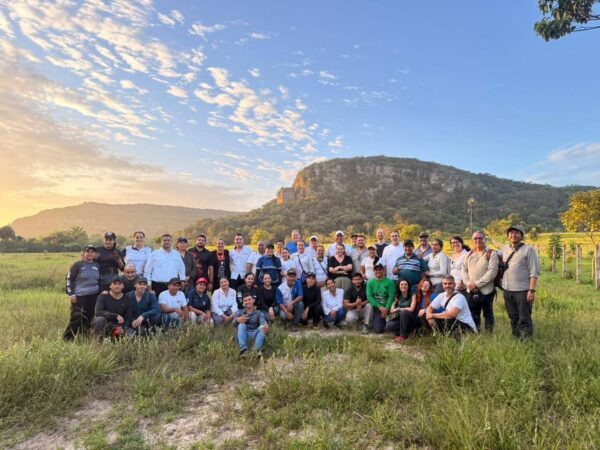
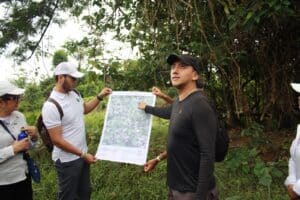
One of the key highlights was the field visit to the El Retorno–Calamar road, where participants were shown interventions such as wildlife crossings, track plates and sustainable drainage systems, as well as conservation initiatives, sustainable tourism and community forestry in the Serranía de La Lindosa and Nuevo Tolima.
On the final day, the delegations exchanged insights on ecological connectivity, learnt about the experiences of the participating countries and worked together to identify challenges, opportunities and partnerships to consolidate a roadmap that promotes more sustainable infrastructure adapted to the realities of the Amazon.
MIPA is thus establishing itself as a platform for cooperation that strengthens the exchange of public policies and joint action amongst Amazonian governments. Through these forums, sub-national governments are making progress in identifying and replicating innovative solutions to tackle common challenges and promote sustainable environmental management of the Amazon.