


15/10/2026
The meeting, organised by AEMET and FIAP as part of EUROCLIMA, provided an opportunity to review the progress of the regional project and define new areas of work.
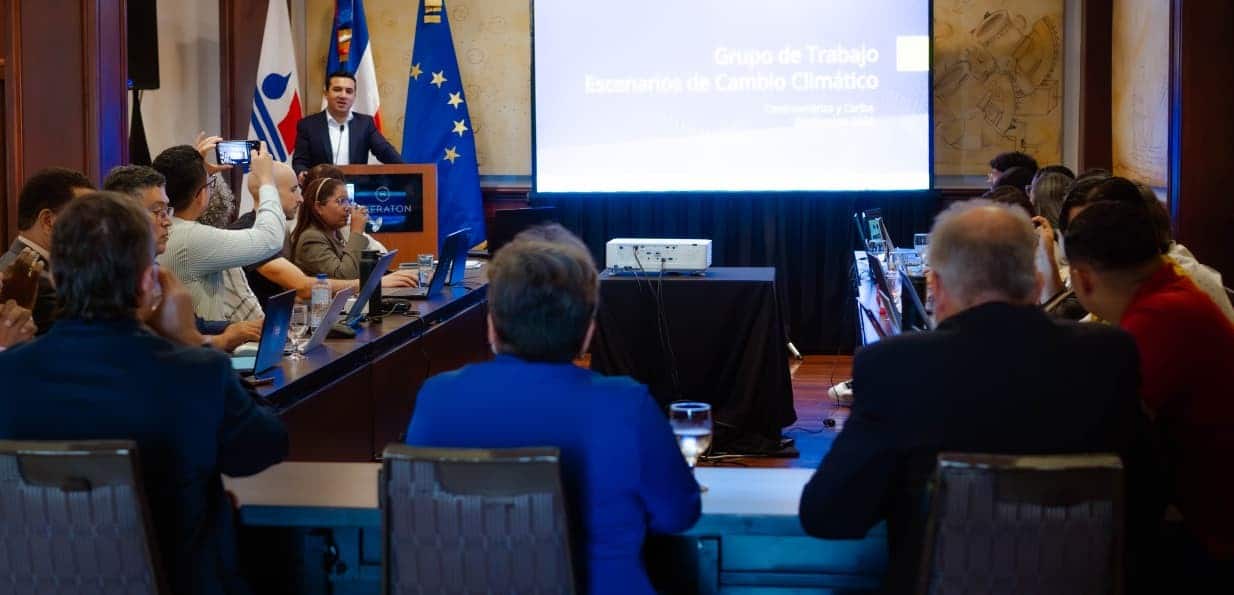
Santo Domingo hosted the in-person workshop of the Regional Working Group on Climate Change Scenarios for Central America and the Caribbean. From 28 September to 2 October, representatives from the national meteorological services of Guatemala, El Salvador, Honduras, Costa Rica, Panama and the Dominican Republic met as part of the European Union’s EUROCLIMA programme.
The workshop served to share progress on the project ‘Generation of High-Resolution Climate Change Scenarios in Central America and the Caribbean’, which aims to improve the climate information available in the region in order to anticipate the effects of climate change, strengthen risk management and facilitate decision-making. It was organised by the Spanish State Meteorological Agency (AEMET) and FIAP.
During the workshop, progress was presented on the development of regionalised climate scenarios based on CMIP6 global models, which enable us to explore how the climate might evolve over the coming decades. Work was also carried out on a corrected climatological grid to represent the climatic conditions of Central America and the Dominican Republic more accurately.
Key results include 12 regionalisations of climate models and projections for four future emissions scenarios. These resources include high-resolution daily data on temperature and precipitation, climate indicators for priority sectors, and a regional viewer that allows users to view and download the information. A suite of tools to better understand potential climate changes and support planning and adaptation in the region.
A technical meeting was held in the Dominican Republic with representatives from sectors such as agriculture, water resources, health and risk management to explore how to use climate information in planning and preventing impacts.
The meeting helped to identify information needs and strengthen collaboration between those who generate climate data and those who use it to plan and design public policies.
The meeting resulted in the agreement of a roadmap for 2026–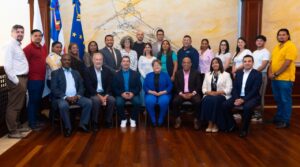 2027, including new training activities, the development of sector-specific indicators and the improvement of tools for visualising climate data.
The participation of the Dominican Institute of Meteorology (INDOMET) has strengthened ties between Central America and the Caribbean and fostered technical exchange on the generation and use of climate scenarios.
In addition, meetings were held with public institutions, co-operation agencies and representatives from the academic sector to identify opportunities for collaboration and promote the use of climate information in public planning, climate change adaptation and risk management.