

22/10/2026
Guatemala, El Salvador and Honduras have joined the Atenas Network to detect forged documents and combat organised crime.
Guatemala City has hosted an event at which Central American countries have joined the Atenas Network, a mechanism through which forged passports, visas and other documents can be detected.
Guatemala, El Salvador and Honduras will set up specialised units at their airports, enabling the authorities in each country to exchange information with specialists from other countries to combat organised crime, drug trafficking, the smuggling of migrants, human trafficking and terrorism, all of which rely on false documentation.
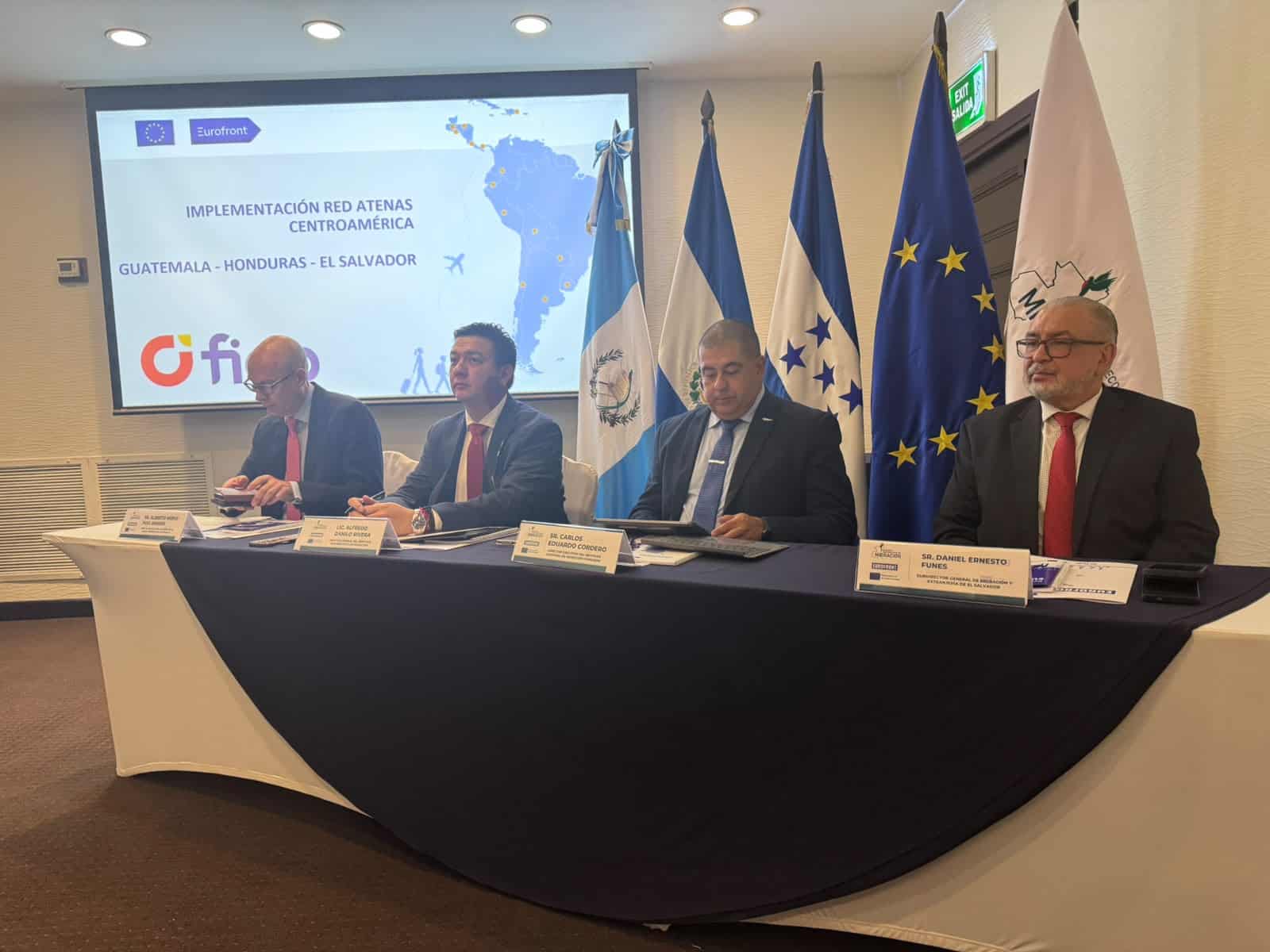
As part of the European EUROFRONT programme, a ceremony was held to formalise the accession of Guatemala, El Salvador and Honduras to the Atenas Network, which was done through the signing of a Memorandum of Understanding.
The Memorandum was presented by José Antonio Cambronero, director of the EUROFRONT programme at FIAP, and signed by Carlos Eduardo Cordero Montoya, executive director of the National Institute of Migration of Honduras; Alfredo Danilo Rivera, director-general of the Guatemalan Institute of Migration; and Daniel Funes, deputy director-general for Migration and Foreigners’ Affairs of El Salvador.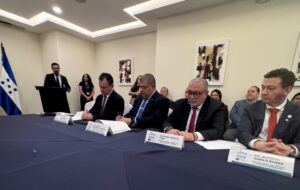
The immigration authorities of the three countries have highlighted the regional scope of the agreement: ‘The region is becoming stronger in the face of organised crime, document forgery and identity theft, enabling more efficient, real-time coordination at borders – not only between the EU and our Central American countries, but also between us and the members of the Atenas Network in South America.’
Document fraud crosses borders and continents. Specialised checkpoints at airports around the world identify individuals who attempt to travel between countries fraudulently using false documents – in some cases, documents issued by other countries.
This situation highlights the need for and usefulness of the Atenas Network, which enables rapid and effective verification with the issuing country, at any time of day or night, directly between specialist units.
The Atenas Network has proven its effectiveness on both sides of the Atlantic, as, in one operation, the Spanish National Police arrested 34 people who had used forged Colombian documents to enter Europe. According to the police, collaboration between the Atenas Points in Spain and Colombia was essential.
Through the EUROFRONT programme, the Atenas Network had previously been rolled out in eight South American countries: Argentina, Bolivia, Colombia, Ecuador, Paraguay, Peru, Chile and Uruguay. With the addition of Guatemala, El Salvador and Honduras, the network has expanded to 11 countries, extending into Central America. This expansion strengthens the link between the Athens Points in the region and the Athens Point in Madrid and enables and facilitates cooperation and the exchange of information in detecting and combating document forgery and related offences.