



30/10/2026
The Central American 5G Innovation Hackathon brought together 46 participants from across the region to develop eight prototypes in areas such as biodiversity, agriculture, health and mobility.
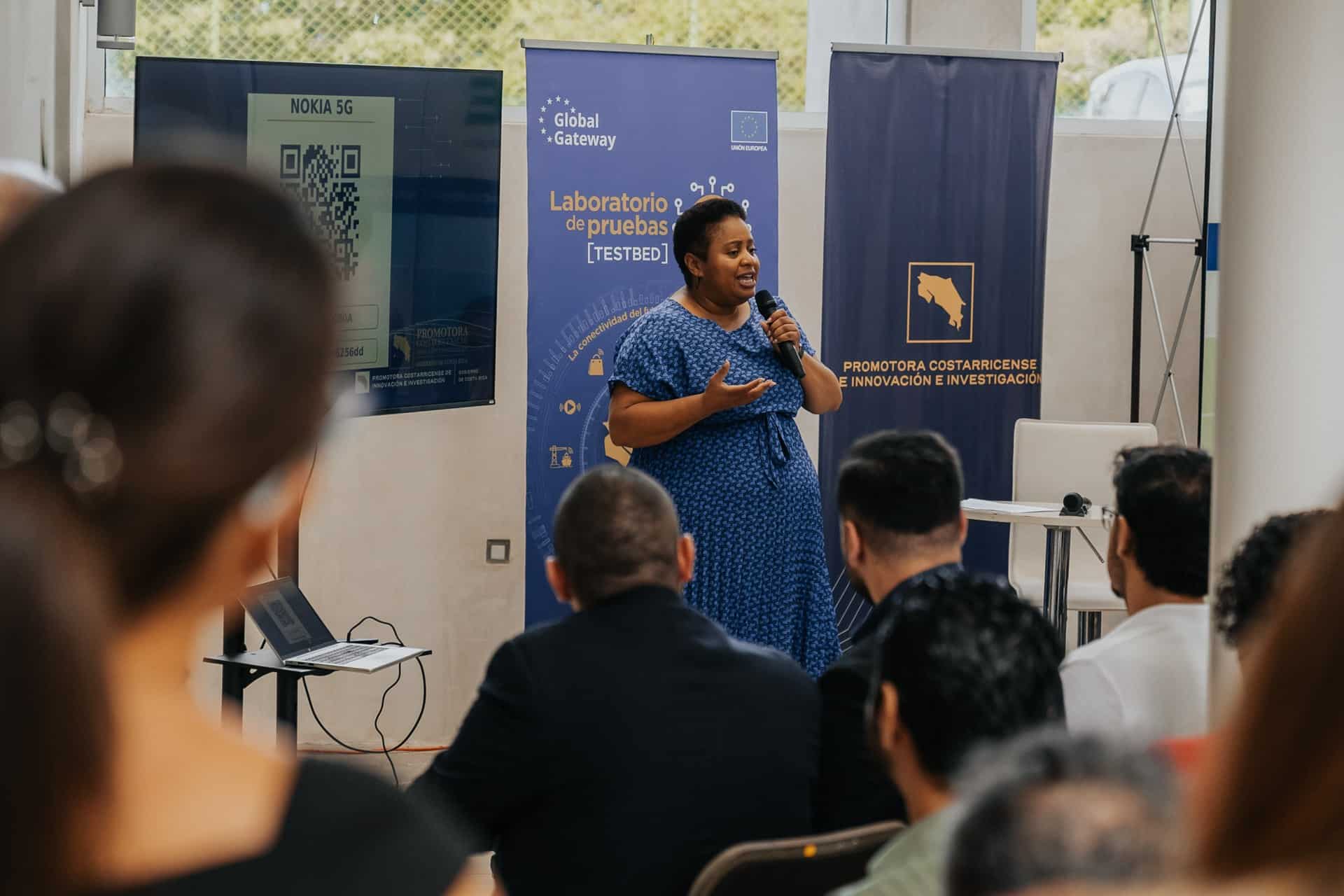
5G technology can help address challenges ranging from biodiversity conservation to natural resource management and the improvement of public services. With this aim, Costa Rica hosted the Central American 5G Innovation Hackathon from 5 to 9 October, bringing together 46 participants from different countries in the region. Organised into eight teams, they worked on developing technological solutions to address specific needs across Central America.
Over five days, the teams worked on proposals in five areas: smart agriculture and the bioeconomy; biodiversity, the environment and climate change; digital health and wellbeing; smart cities, mobility and risk management; and smart and sustainable tourism. The process combined multidisciplinary teamwork, technical and business mentoring, and access to Costa Rica’s 5G Testbed, where participants were able to experiment with technologies such as 5G, the Internet of Things (IoT) and Edge Artificial Intelligence.
Among the solutions developed was PantheraID, focused on wildlife monitoring and conservation. Its proposal combines camera traps with image-processing systems and 5G or satellite connectivity to transmit sightings in real time, making it easier to monitor remote areas and track species such as the jaguar.
Other initiatives addressed agricultural challenges. InnoBIA developed a smart irrigation management solution using sensors and connectivity, while AgroSenser combines weather stations, soil sensors and artificial intelligence to provide alerts and recommendations to farmers. These three projects took the top positions in the competition, with PantheraID in first place, InnoBIA in second and AgroSenser in third.
The other teams worked on solutions to prevent risks in rural areas, improve urban mobility and detect agricultural pests. Together, the eight prototypes demonstrate different ways in which 5G technology can be applied to address specific challenges across the region.
Costa Rica’s 5G Testbed played a central role in the development of the prototypes by providing infrastructure to test and validate solutions based on technologies such as 5G Standalone, Edge Computing and the Internet of Things. In addition, participating initiatives will have access to further opportunities for experimentation, specialised mentoring, regional visibility and connections with institutions and other stakeholders in the innovation ecosystem to help advance their proposals.
The Hackathon was jointly organised by the Costa Rican Innovation and Research Promotion Agency (PCII), in coordination with the Ministry of Science, Innovation, Technology and Telecommunications (MICITT), the European Union and FIAP, with the strategic support of the National Centre for High Technology (CeNAT), as part of Costa Rica’s 5G Testbed project.
The initiative aims to foster collaboration between Central American talent and institutions within the technology ecosystem, helping the solutions developed move beyond the prototype stage and towards practical application in the region.


