


09/06/2026
As part of a European Union project, two events are being held: workshops at the STIC Conference and a training course on security and governance.
FIAP seeks to promote a people-centred digital transformation by strengthening digital sovereignty, regulatory convergence and the development of an inclusive, resilient and sustainable digital model. To this end, as part of the two-year cybersecurity and artificial intelligence project for Latin America and the Caribbean, funded by the European Union, two important events took place in the Dominican Republic this week.
Firstly, three training workshops were held on 27, 28 and 29 May as part of the STIC Conference & RootedCON Dominican Republic Congress under the slogan “A digital shield against cyber threats”.
These were practical, in-person workshops, all three of which were fully booked, where discussions centred on cybersecurity and AI – key areas for democratic stability and development. Crucial topics were addressed, including cryptocurrencies, on-chain traceability – the process of tracking the movement of digital assets across a network – and cyber emergencies, with a focus on prevention, detection and response to cybersecurity incidents. FIAP thus consolidates its presence at the STIC Conference, a leading cybersecurity event.
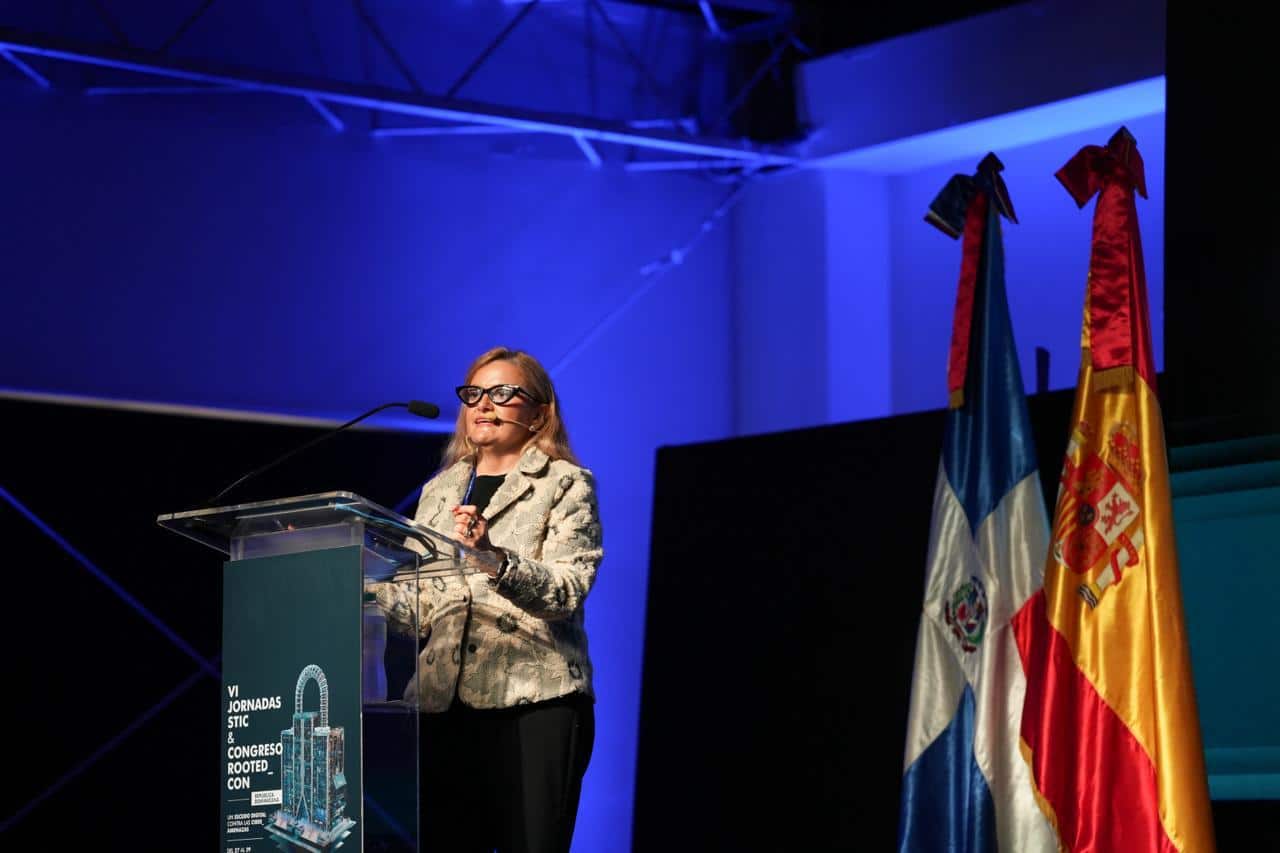
The opening ceremony of the STIC Conference attracted 1,250 participants, both online and in person, and was attended by professionals from 33 countries, confirming the international scope of this year’s event.
The Secretary of State and Director of the National Intelligence Centre (CNI) and the National Cryptology Centre (CCN), Esperanza Casteleiro, stated that “strengthening the digital shield to anticipate threats requires cooperation between all countries” and argued that “AI must be an ally in defending our common interests”. She also noted that “the security of one is increasingly the security of all”.
In the same vein, Spain’s ambassador to the Dominican Republic, Lorena Arribalzaga, has highlighted the institutional and democratic aspects of this challenge, emphasising that “cybersecurity is a prerequisite for democratic stability”.
To build on the project’s objectives, a training session was organised at the OGTIC – the body responsible for leading the government’s digital transformation strategy – during which trainers from Red.es shared and exchanged knowledge. The session was also attended by the Head of European Union Cooperation in the Dominican Republic.

Over the course of three days, this event established itself as a hub for knowledge exchange, institutional collaboration and the analysis of innovative strategies in the field of government digitalisation.
Key topics were addressed, such as cybersecurity in critical infrastructure, the application of artificial intelligence in the provision of public services, interoperability between government systems, and improving the citizen experience in their dealings with the administration. These sessions provided an opportunity to showcase technological advances, but also to reflect on the ethical, regulatory and organisational challenges accompanying this transformation.
One of the key themes of the meeting was the demonstration that cooperation between countries and organisations makes it possible to identify best practices, avoid duplication and accelerate the adoption of digital solutions that have a real impact on the quality of public services.