


20/05/2026
Specialists from the Civil Guard’s GAR unit are working with their Kenyan counterparts to improve risk analysis in public spaces.
Safe public spaces in Kenya are essential for the country’s day-to-day activities, as well as for the organisation of major events such as state visits, National Day celebrations, the Africa Cup of Nations, and other sporting, political, social, cultural and religious events. Key aspects for the protection of these spaces include planning, coordination between the various agencies involved, and proactive measures based on a thorough analysis of threats and risks.
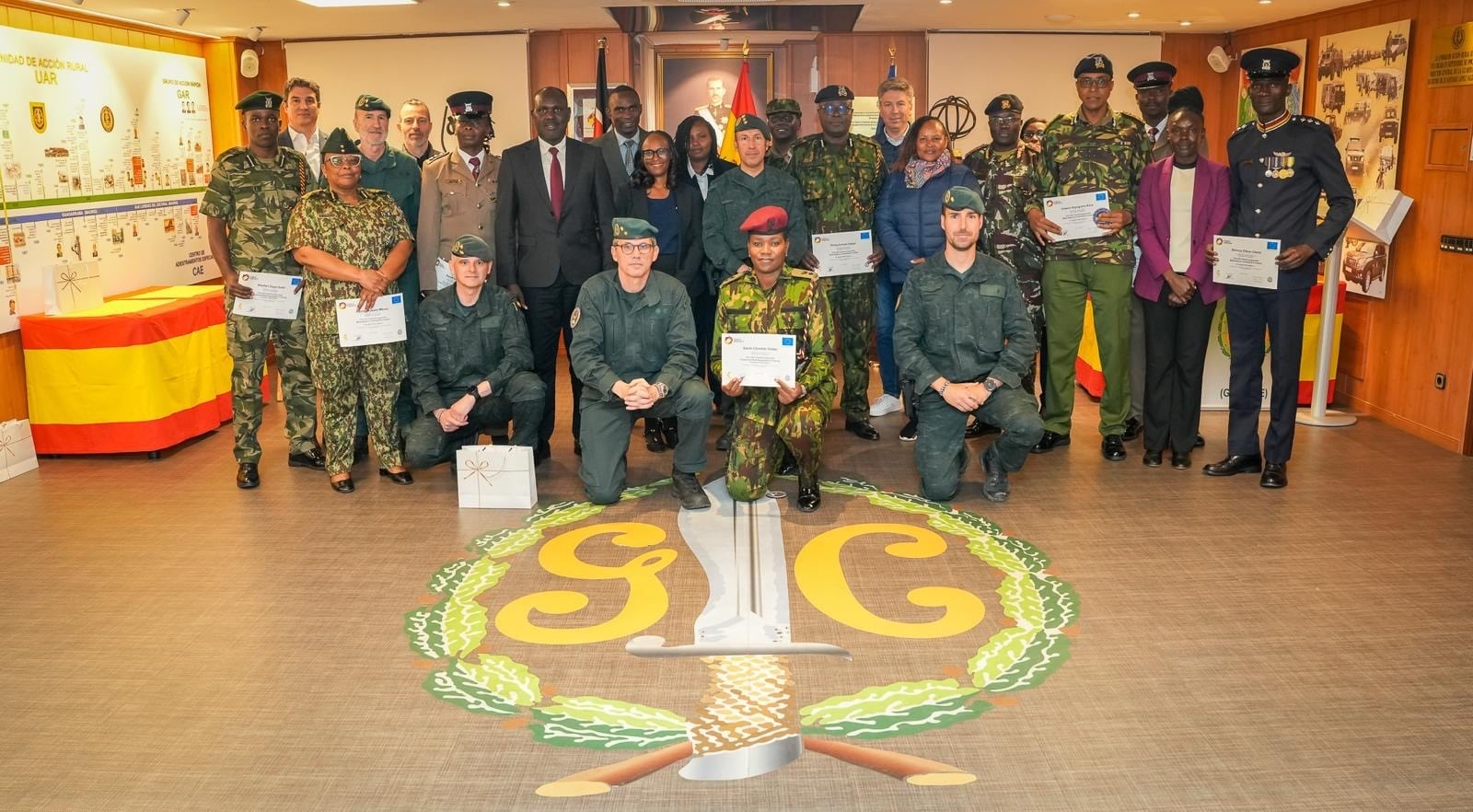
The European Union’s Public Spaces+ project has organised a visit by a Kenyan delegation, which included the Director of Operations of the Kenyan Police, to the premises of the Civil Guard’s Rapid Action Group (GAR).
The delegation had the opportunity to observe and gain an understanding of key concepts such as the relationship between public and private security, the organisation of command and control, the protection of critical infrastructure, and threat assessment.
Experts from the Ministry of the Interior’s Centre for Intelligence against Terrorism and Organised Crime (CITCO) and the National Centre for the Protection of Critical Infrastructure (CNPIC) took part in the two-week training programme, as did representatives from the Rural Action Unit, the EU High Risk Security Network and various units of the Civil Guard.
In addition to the theoretical and practical classes, they have had the opportunity to see how a command post operates in Santander; they have visited the maritime, customs, border and security services at the city’s port; and they have taken part in practical sessions at the Civil Guard’s Rural Action Unit (UAR) training ground, focusing on various capabilities (drones, bomb disposal, marksmanship, etc.).
The risk analysis activity saw a high participation of women (62%), and gave them the opportunity to understand and practise how threats, vulnerabilities and risks are assessed in event security. In addition, practical exercises were carried out, including visits to key security infrastructure such as the 112-emergency call centre, and the train and bus stations in Logroño.