


13/04/2026
Spain is hosting “Wtrex Quijota España 2026”, a 12-day programme of controlled burning exercises aimed at strengthening female leadership.
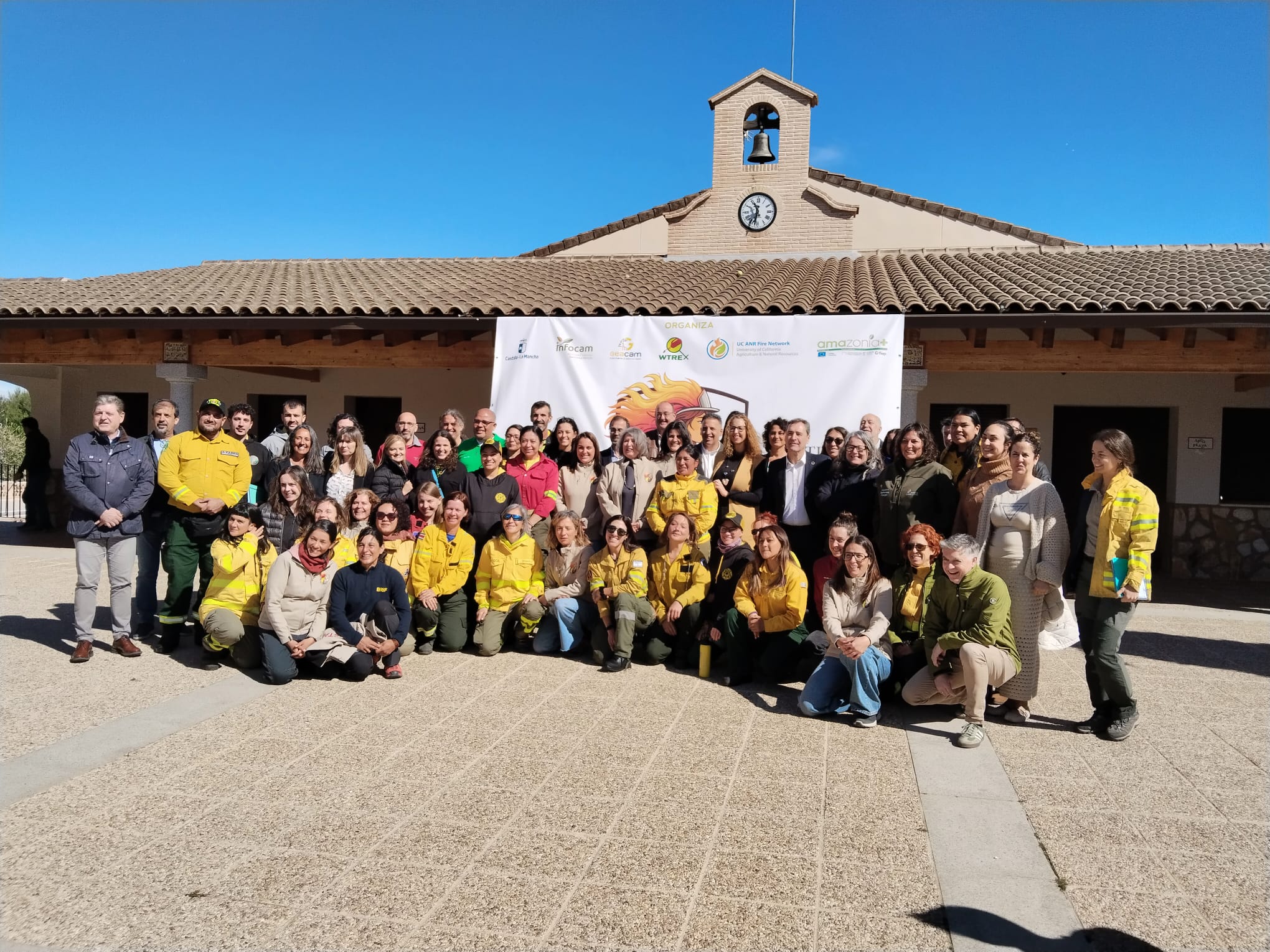
A 12-day intensive training programme begins today in the Toledo and Ciudad Real areas, featuring controlled burning exercises, workshops on advanced operational planning, leadership, decision-making and women’s empowerment. This is the programme for WTREX Quijota, the first event in Spain of an international movement aimed at strengthening women’s leadership through the exchange of work experiences in a space where women from every continent come together to learn, burn, plan, decide, lead and rewrite the future of fire management.
‘Wtrex Quijota Spain 2026’, with the slogan “Women shaping the future of fire”, is organised in partnership with the Government of Castilla-La Mancha, the public company GEACAM and the INFOCAM unit, and is sponsored and supported by Redeia, the University of California in the US and the Wtrex (Women-In-Fire Training Exchange) training programme.
Furthermore, FIAP is supporting this intensive technical training through the Amazonia+ project, funded by the European Union, which combats deforestation in eight countries in the Amazon basin.
“The WTREX initiative, which is fully aligned with the Spanish Government’s Feminist Cooperation policy, demonstrates that promoting women’s leadership multiplies solutions, broadens perspectives and strengthens land management in the face of environmental challenges,” said Francisco Tierraseca, director of FIAP, at the opening ceremony held this morning at the Casar de la Iniesa(Toledo).
The Regional Minister for Sustainable Development of Castilla-La Mancha, Mercedes Gómez, has stated that prevention measures, such as training, are key to successful fire management.
Currently, 12 per cent of forest fire crews are women; that may seem like a small number, but there used to be even fewer, said the Minister for Equality of Castilla-La Mancha, Sara Simón. “You are changing the world: girls are seeing you working on fires and now they know that they too can be there.”
The ‘Women-in-Fire’ (W-TREX) Controlled Burning Training Exchanges follow the model of the Controlled Burning Training Exchanges (TREX), which began in the landscapes of the US Great Plains in 2008. The TREX model typically brings participants together for two weeks of practical training, combining live-fire training with deeper learning about fire ecology, policy and social dynamics. WTREX has been reimagining this model for the past ten years, building on a TREX held in Northern California, by adopting a women’s empowerment approach to a traditionally male-dominated profession, thereby combining goals of sustainable development and equality.