
10/07/2026
FIAP is organising a training programme to build the capacity of civil society organisations to tackle human trafficking.
In recent years, international cooperation partners working to combat human trafficking have supported the Nigerian Government in developing national data collection and reporting tools. These tools aim to strengthen the generation of information for the National Report on Human Trafficking and to improve evidence-based decision-making.
Despite the progress made, significant challenges remain for civil society organisations – including those belonging to the National Network of Non-Governmental Organisations against Trafficking in Persons, Child Abuse and Child Labour (NACTAL) – to use these tools effectively and contribute fully to the national information system.
The US Department of State’s Trafficking in Persons Report 2025 (TIP Report) identified an under-representation of the actions carried out by these organisations in areas such as victim protection, prevention and the prosecution of the offence.
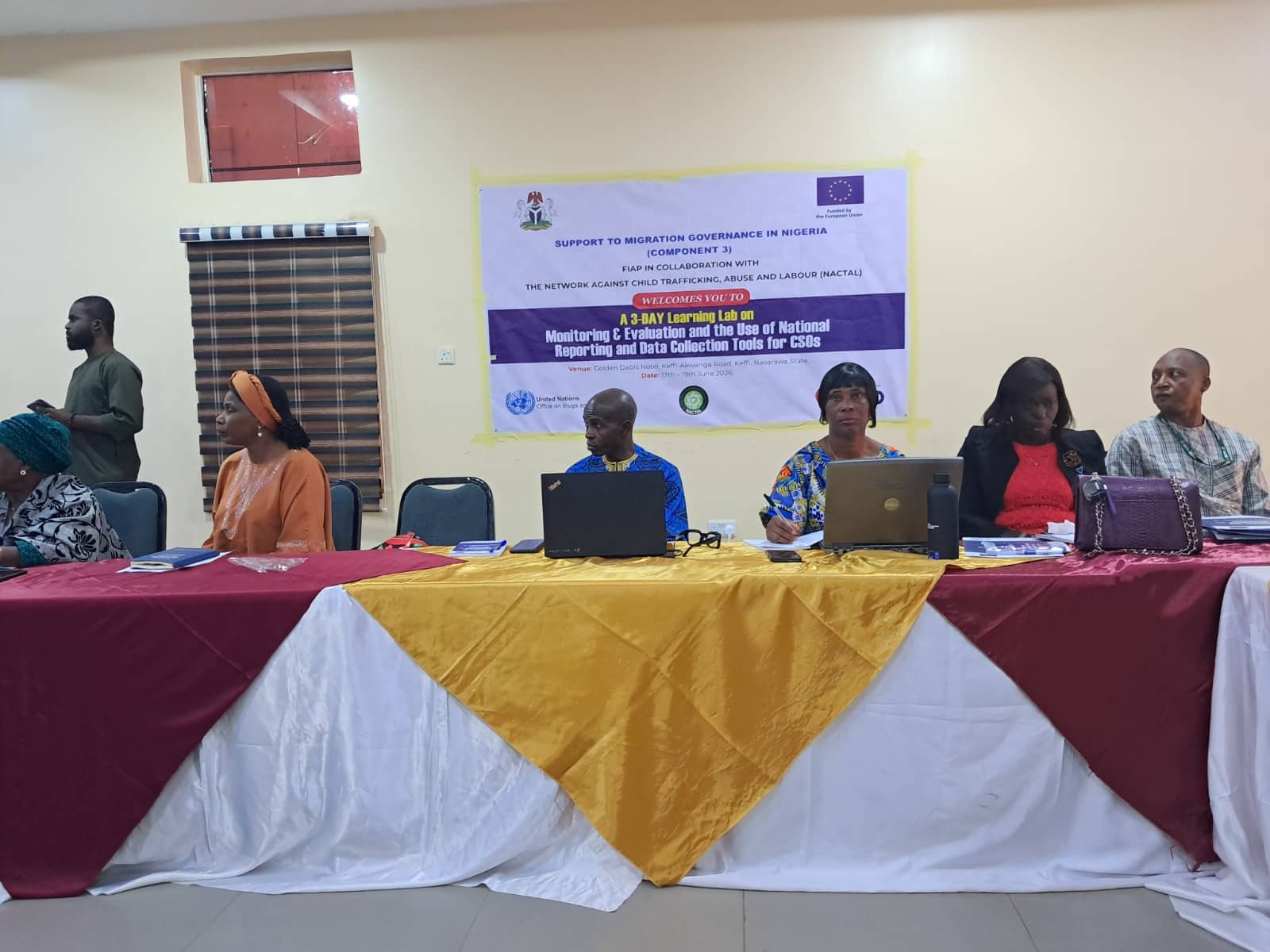
To address this challenge, FIAP organised a three-day Learning Lab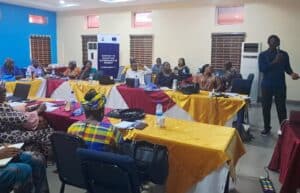 for organisations belonging to the Network Against Child Trafficking, Abuse and Labour. Held in Keffi, Nasarawa State, the training aimed to strengthen participants’ capacities in monitoring, evaluation and reporting. The activity was carried out as part of the European Union-funded Migration Governance in Nigeria project, which seeks to strengthen Nigeria’s response to trafficking in persons and the smuggling of migrants.
During the event, the deputy director of the project, Javier León, explained that this training addresses the needs identified in collaboration with partner organisations and the main Nigerian institutions involved in the fight against human trafficking, such as the National Agency for the Prohibition of Trafficking in Persons (NAPTIP), the Nigerian Police Force and the Immigration Service.
‘This training forms part of our work plan. Together with our partners, we identify existing needs and design activities to address those challenges,’ he said. He also highlighted that shortcomings in data collection and reporting systems continue to limit the visibility of the work carried out by both civil society organisations and public institutions in the fight against human trafficking.
The Learning Lab brought together NACTAL member organisations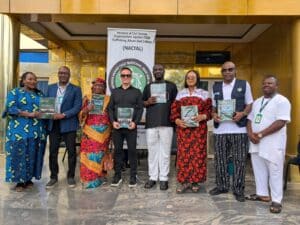 selected for their strategic role in preventing and responding to human trafficking and the smuggling of migrants. In addition to technical training, the meeting served to analyse the network’s operations and to present a publication produced by NACTAL detailing its main recent interventions and achievements, many of which were not included in the 2025 Trafficking in Persons Report published by the US Department of State.