


05/10/2026
Platforms such as TikTok, Temu and Amazon have met with public authorities and sports brands to share tools for tackling intellectual property infringements.
Serbia is a candidate for membership of the European Union and has been conducting accession negotiations since 2014. As part of this process, the country is working on various political and legislative reforms and on strengthening its domestic market, with the support of Spain, Italy and Slovakia through a project funded by the European Union.
Intellectual property is a priority area for the Serbian government. Piracy and counterfeiting are widespread amongst consumers, and combating them is complex as it involves various institutions. Furthermore, Serbia lies along the Balkan routes used by criminal networks, making the fight against counterfeiting a particularly important issue.
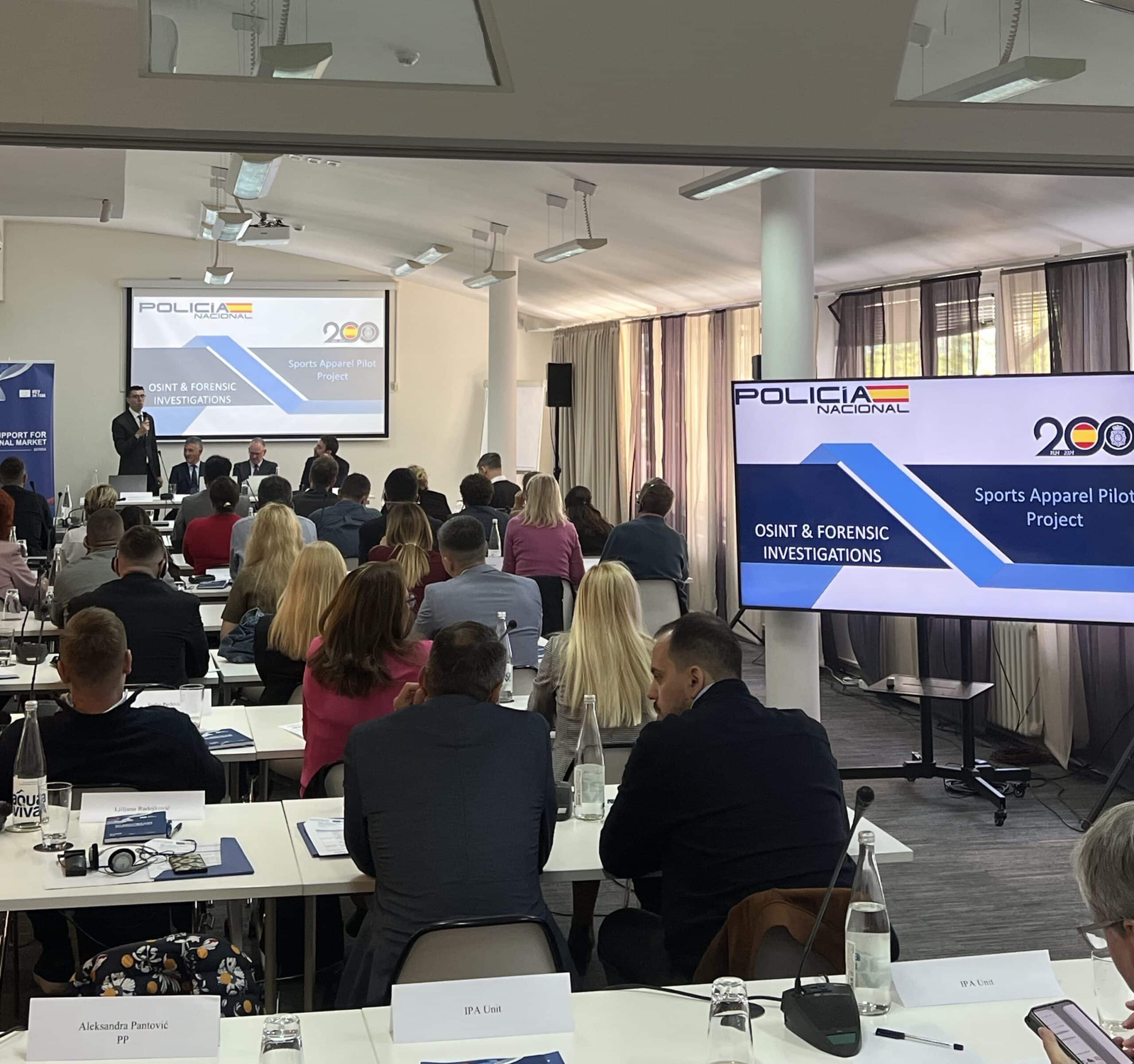
On 29 and 30 September, a new edition of a pilot workshop on the enforcement of intellectual property rights took place, this time focusing on counterfeit sportswear. The event follows on from the one held in March 2026, which addressed online piracy via IPTV and counterfeit medicines, both organised in collaboration with the Spanish National Police.
The workshop brought together public authorities, digital platforms, online marketplaces and rights holders to exchange experiences and best practices and to strengthen cooperation in tackling intellectual property infringements.
On the first day, participating institutions included the European Union Intellectual Property Office (EUIPO), the European Anti-Fraud Office (OLAF), the Spanish National Police, Belgium’s Federal Public Service Economy and the Criminal Office of the Slovak Financial Administration, alongside Serbian authorities. Representatives from TikTok, Alibaba, Temu, Amazon and Ananas also took part, as well as rights holders from the sports sector such as Nike, React, Puma and Adidas.
The discussions focused on the exchange of information and the mechanisms used by platforms to detect and prevent infringements, with the aim of identifying practical ways to improve the protection of rights through coordinated action between the public and private sectors.
The second day featured a practical workshop in which participants will carry out an investigation using OSINT (open-source intelligence) tools and forensic techniques, supported by public investigators from EU Member States and in collaboration with rights holders.
The exercise will enable participants to apply investigative methodologies, analyse digital evidence and identify opportunities for action against counterfeiting networks operating via digital platforms and social media.
The aim of this pilot is to facilitate the exchange of practical knowledge and experience in the field of investigation, as well as to establish operational coordination mechanisms to support the identification, dismantling and prosecution of online counterfeiting networks.