


16/07/2026
This is an international cooperation programme that has been combating transnational organised crime in Latin America and the Caribbean for two years.
Two years ago, the European Union launched EL PACCTO 2.0, a cooperation programme implemented by FIAP alongside its partners in the Team Europe initiative to strengthen the fight against transnational organised crime and reinforce the rule of law in Latin America and the Caribbean.
During this time, this joint effort has yielded figures that speak for themselves: 5,117 participants, 249 experts and 706 activities.
But the real impact goes far beyond the figures. Behind them are police officers, prosecutors, judges, prison staff and many other professionals who work together to tackle common challenges, sharing experiences and strengthening the capacities of their institutions.
At FIAP, we work alongside our partners with a clear guiding principle: to listen to the needs of institutions and develop solutions through cooperation amongst peers, in order to move towards justice and security systems that are more effective, resilient and respectful of the rule of law.
The video below looks back over these two years of collaboration:
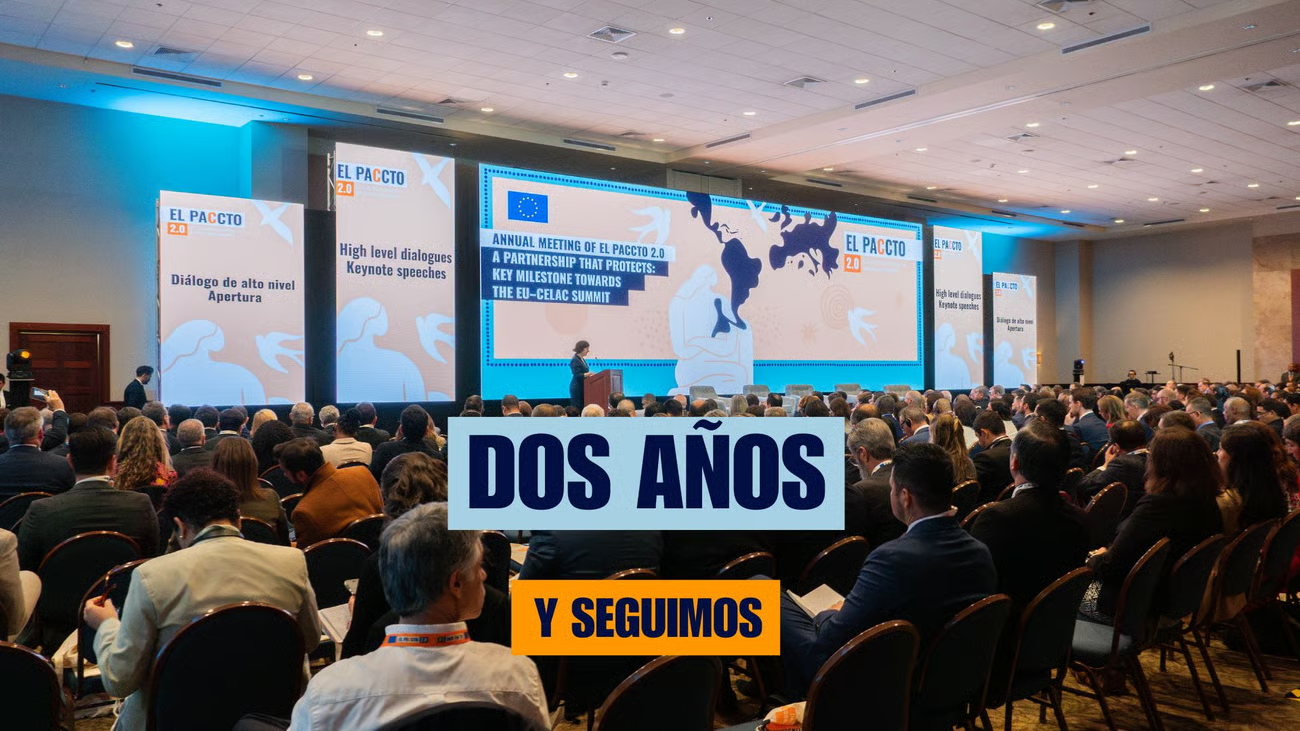
As a result of the programme’s efforts to link the work of the region’s police and prosecution networks with other justice and security actors such as Ameripol, Caricom Impacs and RSS, as well as with European agencies such as Eurojust and the European Judicial Network, the second annual meeting has been organised, bringing together around 100 representatives from the main networks.
Under the slogan ‘Connecting networks for a lasting impact’, from 13 to 15 July, coordination and the exchange of information between the networks and structures combating organised crime in both regions were strengthened.
Not only did the event serve as a forum for dialogue, but it also included bilateral and multilateral pre-operational meetings to make progress on specific cooperation cases.
Since 2017, the EU has supported the creation of police, prison, prosecution and asset recovery networks between Latin America, the Caribbean and Europe. These networks offer informal and flexible cooperation: they enable their points of contact to get to know one another and collaborate in a more agile and dynamic manner. The challenge today is to connect these networks with one another: to build an EU-LAC cooperation ecosystem that capitalises on what each actor contributes, according to its nature and scope.