


23/10/2026
The new cooperation platform will strengthen knowledge- and capacity-sharing to prevent disasters and improve emergency response across the Ibero-American region.
The Ibero-American Community now has a new permanent cooperation mechanism to strengthen disaster risk reduction, preparedness and emergency response. National authorities from 22 countries have formally established the Ibero-American Network for Disaster Risk Reduction and Civil Protection (RGIR), consolidating a joint initiative to enhance resilience and integrated disaster risk management for the benefit of more than 670 million people.
The Network provides a permanent platform for sharing capacities, knowledge and experience and coordinating efforts to address the natural hazards affecting the region.
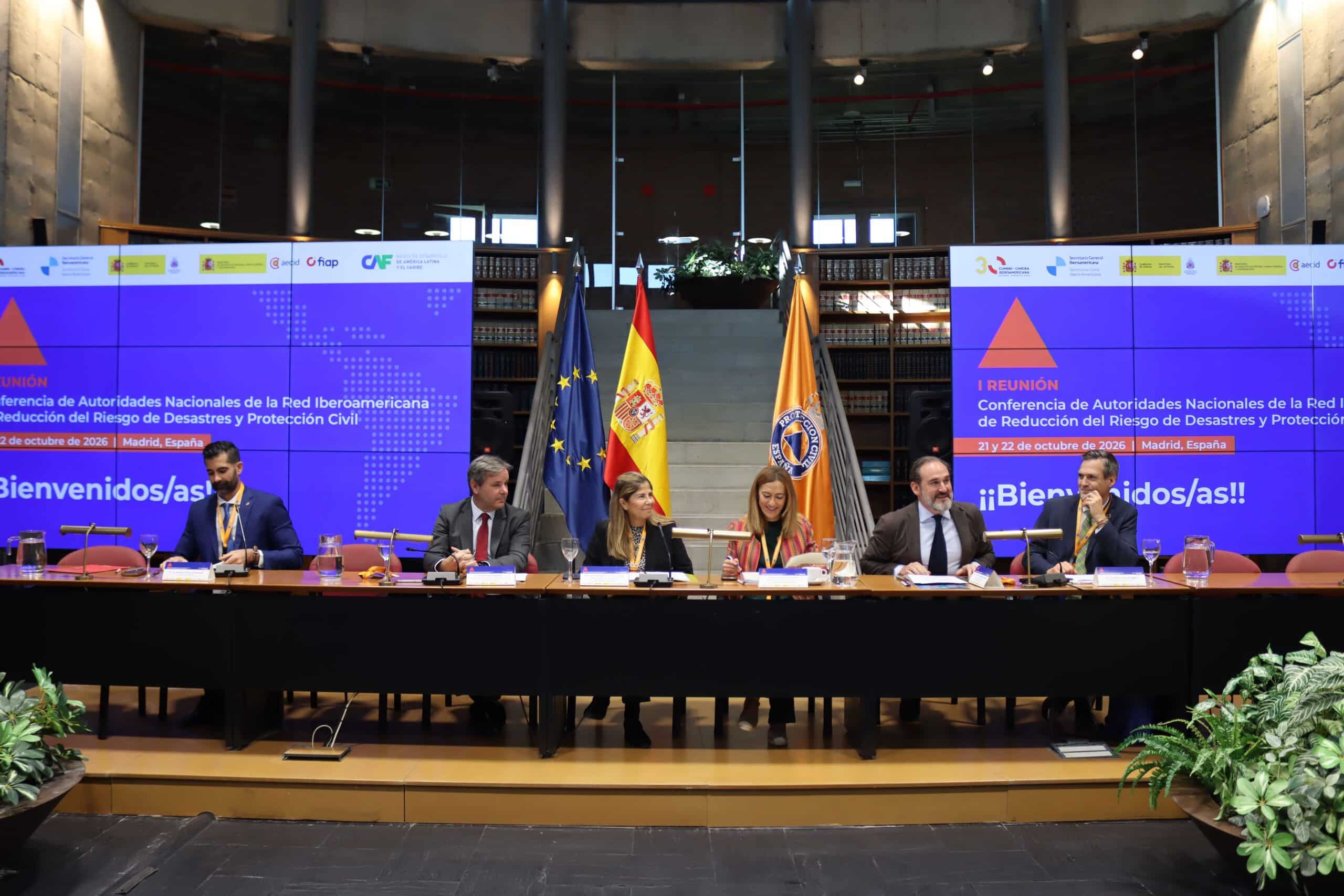
The establishment of the Network marks the culmination of a process led by Spain’s Directorate-General for Civil Protection and Emergencies and the Ibero-American General Secretariat (SEGIB), with support from the Spanish Agency for International Development Cooperation (AECID), the Development Bank of Latin America and the Caribbean (CAF) and the Foundation for the Internationalisation of Public Administrations (FIAP). This milestone was reached during the First Meeting of the Ibero-American Conference of National Authorities for Disaster Risk Reduction and Civil Protection, held at the National School of Civil Protection in Rivas-Vaciamadrid, Madrid, as part of the official programme of the 30th Ibero-American Summit of Heads of State and Government.
The closing session was chaired by Fernando Grande-Marlaska, Spain’s Minister of the Interior, who stressed that the creation of the Network reflects a shared conviction: “Risks know no borders, and our ability to address them cannot be confined by them either.”
Marlaska highlighted that the Network will enable Ibero-American countries to address risks collectively, not only by responding to emergencies but also through prevention and preparedness. He also emphasised that its purpose is not to replace existing mechanisms, but to “add to, connect and strengthen what is already working”, and thanked the institutions and countries that had contributed to its establishment.
During the meeting, the delegations approved the main instruments needed to make the Network fully operational: its internal regulations, the 2027–2030 strategic guidelines and its first Action Plan, which will set its priorities for the next four years.
The Plan defines the results to be achieved by 2030 and outlines an implementation schedule with verifiable milestones, indicative timelines, indicators and targets. It also recognises the Network’s complementary role alongside existing regional disaster risk reduction initiatives and mechanisms.
Its areas of action include developing an early warning system, establishing a regional cooperation mechanism for emergency response, strengthening technical and operational capacities, and promoting prevention and forward-looking risk management.
The meeting also formalised the transfer of the Network’s Pro Tempore Presidency. After leading the establishment process and coordinating the preparatory work, Spain’s Directorate-General for Civil Protection and Emergencies handed over the presidency to Andorra’s Department of Civil Protection and Emergencies, in accordance with the rotation system approved by the member countries. Andorra will officially assume this responsibility on 1 January 2027.
During the handover ceremony, Virginia Barcones, Director-General for Civil Protection and Emergencies, highlighted that the Network’s formal establishment marks the culmination of a collective effort and provides the organisation with a solid structure, strategic planning and the tools needed to turn cooperation into tangible results. “Today we bring the creation phase to a close; today we begin the action phase,” she stated.
Cristian Pons, Director of Andorra’s Department of Civil Protection and Emergencies, expressed his commitment to translating the agreements into clear objectives and concrete actions, strengthening knowledge-sharing and cooperation among member countries.
The member states also agreed to establish a permanent Technical Secretariat, to be hosted by SEGIB with specialised technical support from Spain’s Directorate-General for Civil Protection and Emergencies. Its responsibilities will include coordinating the Network’s activities, monitoring agreements and developing the joint work agenda. It will also ensure institutional continuity across successive rotating presidencies.
The participants also approved the organisation’s official visual identity, including the logo that will represent the Ibero-American Network for Disaster Risk Reduction and Civil Protection.