-
FIIAPP's Information and Special Programmes Director, Isabel Ramos Talma, reflects on the benefits of exchanging experiences with experts from different regions.
Ponentes del XVI Curso Anual de RegistradoresWe have several long months of hard work behind us. Numerous meetings, agreements and negotiations for achieving our objective: to bring Latin American experts to our Spanish institutions to share, through our experts, our know-how, experience and knowledge.
But, what does this incredible exchange of experience really do?
After attending several opening and closing sessions for a variety of seminars – such as the ones on property law, wastewater treatment, social innovation, international taxation and the fight against tax fraud – one comes to appreciate the enormous utility of these types of activities.
Activities that we could call specialised cultural exchanges and which have resulted in the creation of networks of experts that extend well beyond simple know-how. They end up leading to inseparable personal bonds and institutional links that turn into professional and cultural exchange networks.
This conclusion reconciles us once more with our work, if we were ever in doubt about what can be achieved by dint of effort and great determination.
It renews our faith in our small contributions in the context of international development cooperation, always focused on institutional strengthening through technical cooperation and mobilization of experts.
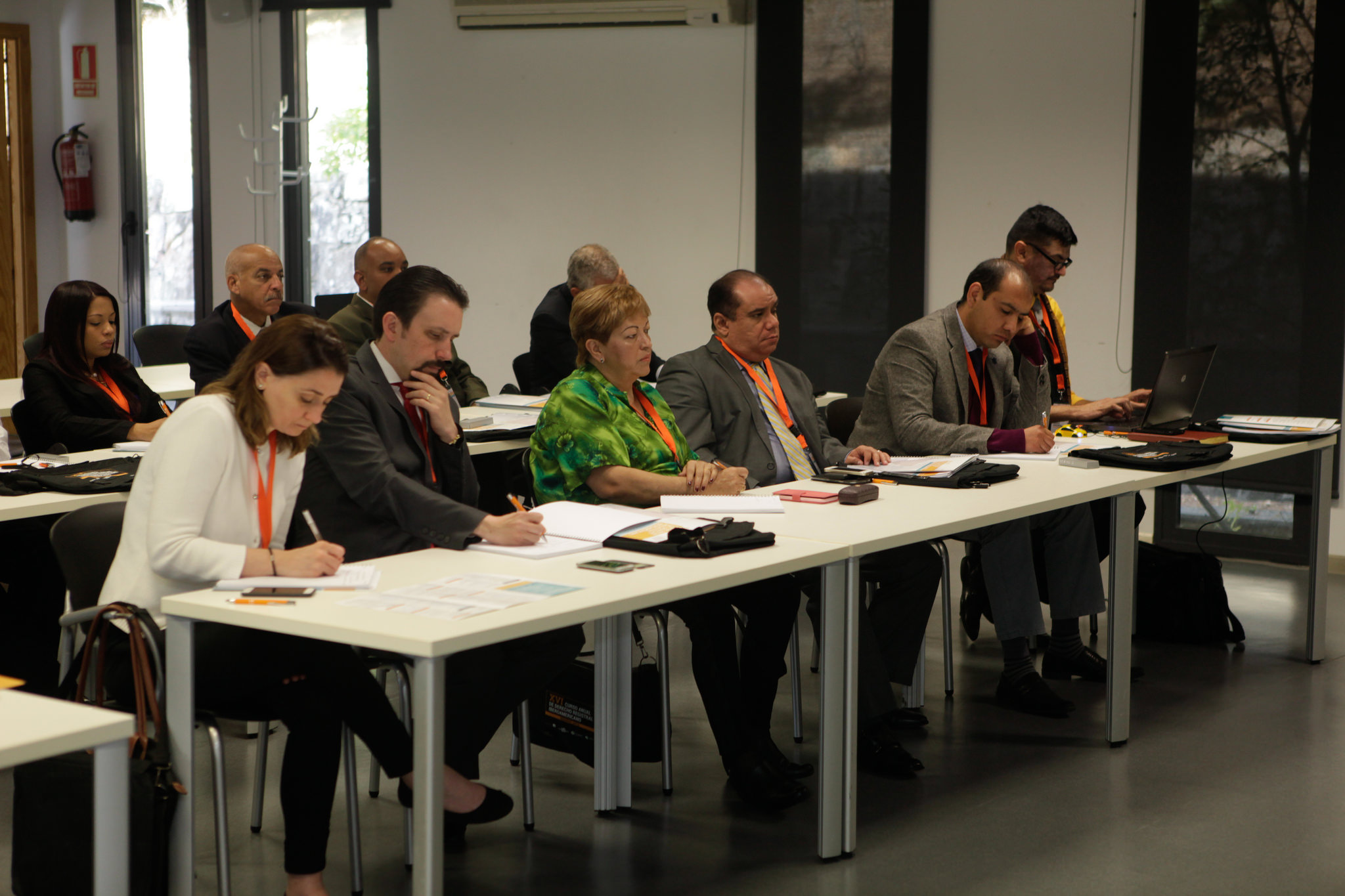
It also confirms that these actions are important, as they demonstrate, once again, that those who share experiences and knowledge are the people we manage to bring together for weeks at a time around a specific, always important, issue for Spanish Cooperation.
But we don’t leave it at that. We can go even further and be more ambitious with our expectations, as they demonstrate that, with these initiatives, we promote the sharing of a dose of culture and confidence in the institutions of different countries. Because at FIIAPP we work for people, and thus we improve citizens’ quality of life which, in the final analysis, is our ultimate objective.
It is always gratifying to be able to see first-hand, through direct experiences narrated in the first person by our guests and collaborators, that the effort has paid off, that the reward is talking to you and asking you to continue working in this same direction and that, with great effort butnot much money, great and ambitious objectives can be achieved.
All of this encourages us to keep making an effort and working day after day to improve our institutions through people. Through this, we also progress and become better people and institutions.
By Isabel Ramos, Director of the Information and Special Programmes Area
-
El próximo lunes, 24 de octubre celebramos el Día Mundial de Información sobre el Desarrollo. Ángel González Suárez, Técnico de la FIIAPP (Comunicación- Cooperación Española), nos cuenta lo que supone la comunicación y cómo podemos comunicar.
Angel González en su mesa de trabajoA few weeks ago, I read an interview with anthropologist Arturo Escobar. In it he expresses his ideas on many subjects, including the role of experts and social media. He showed himself to be critical of the social transformation capacity of these communication channels and expressed an unflattering view of experts. Reflecting on his statements, I found myself somewhat in ‘no man’s land’ because, while they seemed on target, my experience raised objections.
Today we are all experts on something. There may be someone who has not accepted it (although our browsing, increasingly specialised and segmented thanks to Google, suggests otherwise), but categories, tags and keywords are here to stay in our digital reality. And up to a certain point, it’s good that there are experts, not because one has to emulate or praise them but because their experience can be very important for others, provided they communicate it.
Direct and personal communication
Before encouraging the experts on development cooperation, and especially those who have not yet started using social media, I will take this opportunity to recall some of the channels and genres that can help them:
· Blogs
These are spaces that are open to creation, commentary and interaction. In Spain there are various, some journalistic in nature, with a community of contributors (El País or eldiario.es), others started in the world of DNGOs (Pobreza Cero , Fundación CIDEAL and the many run by Spanish DNGOs), by international bodies (World Bank) or the Spanish Public Administration (MAEC which also has created an important document on Digital Diplomacy;FIIAPP, or the Spanish Cooperation portal whose work I would like to promote).
· Video blogs
This is a genre that still has not taken hold among our experts. It involves a high degree of public exposure (hence the influence of YouTubers) but can also generate greater empathy in the public, more so than the written word. (I’m not aware of any Spanish examples, nor of ones in Spanish, that focus their content on development, so don’t hesitate to point them out in the comments section).
· Social Media
How networks are used depends a great deal on the characteristics of each channel. Twitter is not the same thing as Instagram, nor Facebook the same as LinkedIn. I recommend starting with Twitter due to its simplicity. There are many examples of good use made by its devotees; at @CooperacionESP we try to follow many accounts that work with diverse styles and objectives. It’s worthwhile to visit numerous profiles before starting one’s own and, always, much better to move into it gradually.
Despite this, many experts, mainly those working in public institutions, hardly use this media to transmit their knowledge. I know that it’s difficult and that there are good reasons as to why they don’t do so:
- Lack of time.
- Fear of public exposure.
- Self-exclusion from communication tasks.
- Rigidity in the institutional structure.
- Lack of confidence in one’s abilities.
However, I don’t just think that this is an error, but that boosting the use of social media would serve to improve institutional communication.
Communicate what you know how to do
I’ll give you an example. Recently I had the good fortune to share my workspace with various experts on diverse subjects, all related to the field of development cooperation.
I had never had the opportunity to learn about Spain’s gender policy, nor the implication of and degree of detail whichmultilateral cooperation requires. The same thing was true for me regarding the coordination of donors within the OECD, the flows of Official Development Assistance, the process of coordination of any position that represents Spain, the commitment to improving health systems and attention to childhood in other countries, or the need to better evaluate our work.
Everyone should know about these subjects, especially if their taxes are supporting them. The difference between me and anyone else is that I had access to an expert.
Spanish Cooperation has a tremendous panel of experts. I’ve been finding this out in the past two years. They have experience in other countries, knowledge, a good network of contacts and a great deal of documentation (that cannot be found on the Internet). In terms of communication, all of this is a rich vein. I think that they can improve the existing communities and strengthen social commitment to cooperation, which is already high.
Implementation of an easy-to-use communication system for experts in public administrations is not terribly complicated; France and the United Kingdom have already done it, and our experts as well, for example, in the field of education for development. That’s why I would like experts and specialists to get more involved in communication. Time is of the essence. I never tire of saying it; they already have the most important thing: knowledge. Transmitting is much easier.
Look at Natalia Lizeth López López. I’m convinced that she will become an expert; in fact she is already a good communicator who we would not know about if not for YouTube. The same is true of many assets from the Spanish Cooperation. (By the way, and this is key, one of its experts ‘told me about’ the link).
Written by Angel González, FIIAPP (Communication- Spanish Cooperation)
-
Carmen Comas-Mata, director of the advisory board of the Ombudsman's Office, talks to us about the importance of cooperation.
Carmen Comas-Mata with Antonio Mora, former coordinator of projects in Kazakhstan and ArmeniaIn my extensive experience in charge of international relations at the Ombudsman’s Office, which is also the national institution concerned with human rights under terms of the United Nations Organisation, I have been able to see the importance of cooperating in human rights first-hand, not just to merely ensure that the beneficiary countries achieve certain minimum standards of respect and protection for these rights but also to enhance the prestige of Spain abroad.
People talk of “Brand Spain” to showcase to the world the successes achieved by our athletes and companies. But we shouldn’t leave it there: over the past 40 years, Spain has been an example of respect for human rights, and we can show the world how we had an exemplary transition from a dictatorship to a democracy, where we accepted a constitution that establishes the citizen as a subject of rights and established effective mechanisms for their protection. One of the main players in this transition was an extra-judicial institution, the Ombudsman’s Office, which is responsible for ensuring that public administrations respect these rights. Moreover, it is one of the institutions of this type with the most power in the world.
Therefore, I feel especially proud of having been able to help enhance the image and prestige of my country by working in cooperation with human rights in countries of the former Soviet Union, like Kazakhstan and Armenia, and in other ones closer to us, like the Former Yugoslav Republic of Macedonia and, most recently Turkey. Through EU Twinning projects, with the invaluable help of FIIAPP, we have helped to start or have strengthened other ombudsman institutions. The importance of sister institutions collaborating wholeheartedly in the same direction, improving action procedures, learning from one another, and thus being able to better serve citizens, the only reason for our existence, is something I understand to be unimpeachable and very positive.
One of our priority objectives is, of course, Ibero-America. The expansive force of human rights has made everyone see the need to intensify collaboration with the ombudsmen in other countries, especially those in Ibero-America by holding meetings within a new organisation that took the name Ibero-American Federation of Ombudsmen (FIO). Its purpose was, and is, to lay the groundwork for fruitful international cooperation, particularly in countries that share a common culture and past. That cooperation is expressed and made concrete through the implementation of practical and effective programmes for training specialised personnel and promoting the establishment and solidity of the ombudsmen in all of the nations in the Ibero-American community.
There is work being done in areas as important as immigration, human trafficking, youth, women and prisons. Precisely this field, that of cooperation in prison matters, and ultimately, the care of Spanish prisoners abroad, is one that can benefit most from Spanish cooperation. It is necessary to make our sister countries in America see that ensuring that sentences are served under humane conditions is as important as fighting crime. This is one of the most important duties we have today.
We also work with countries in the Mediterranean region. The Arab Spring represented a threat to the incipient ombudsman institutions that were being created, but in some countries it is also turning out to be an opportunity to better adapt to international standards. Cooperation with these countries takes place through the Association of Mediterranean Ombudsmen, the purpose of which has always been to give strength and consistency to the ombudsman institutions of the Mediterranean basin, as a secure channel for affirming democracy in the area, as well as to initiate action consisting of international collaboration to cooperate within the framework of the good neighbour policy.
The ombudsman is the friendly voice that listens to us, informs us and, if possible, helps us to improve our lives and solve our problems; and, above all, it is the last hope of dozens of people whom public authorities — culpably, intentionally or accidentally — have passed over them like bulldozers.
Let’s not forget that we are all citizens, whether Spaniards or foreigners, and therefore strengthening our institutions here and there with cooperation projects means strengthening our system of freedoms.
-
Marta García Moreno es la Coordinadora del proyecto Chaco Ra’anga en Paraguay, y hace un repaso de los objetivos, actividades y países visitados durante el proyecto.
Viajando con la comunidad enlhet de Campo Largo (Paraguay)Image of the Chaco
The Gran Chaco is a territory people imagine to be remote, isolated and impenetrable. A land of jaguars, dust, gigantic cacti, lagoons and alligators, it extends over Argentina, Paraguay, Bolivia, and a small slice of Brazil.
Numerous indigenous peoples with different ethnic identities coexist peacefully with other later-established communities, such as Creoles and Mennonites. In addition to the rich cultural diversity, the Chaco is a key area for conservation of biodiversity. However, the model of large-scale extractive development is a rapidly growing threat to the sustainability of the environment and the traditional ways of life of its peoples.
Chaco Ra’anga
Chaco comes the Quechua word chaku, meaning ‘hunting land’. Ra’anga is a Guaraní word that means reflection, image.
Chaco Ra’anga might be translated as ‘The Image of the Chaco’.
The journey
1 month (May, 2015)
3 countries (Argentina, Bolivia and Paraguay)
7 vans
27 people travelling with cameras and a great many questions
All of them full of good intentions, although this is not always sufficient.
“No one comes back from the Chaco (he who returns is, in part, a different person)”, Ticio Escobar. El círculo inconcluso, 2014.
For one month we toured the Chaco, observing large cotton and soybean fields in northern Argentina. The soybean fields continued into Bolivia, accompanied by hydrocarbon operations. Entering the Paraguayan Chaco, endless hectares of cattle ranches. We came into contact with indigenous communities that have been displaced from their ancestral lands and are fighting to recover their rights, not only territorial but also civil, political, economic, social and cultural.
Despite the environmental and cultural deforestation, we also get to see a Chaco that resists the encroachment of agriculture and livestock operations. There are alternative and sustainable development models that respect the environment, such as family farming, agro-ecology, and the ways of life of the indigenous peoples.
The tour, which allotted ten days per country, also included visits to peasant communities, Mennonite colonies, a gas extraction plant, natural parks, and key sites for recovery of the region’s historical memory.
Based on the field work, the contacts made, the projects of the expedition members and the advisers, we started to work on different components of the project:
– An International Symposium (held in November of last year at the AECID Training Centre in Santa Cruz de la Sierra, Bolivia).
– An exhibition, ‘Territorio Acotado / Expandido‘, which opened in April at the Juan de Salazar Spanish Cultural Centre (Paraguay), which will later travel to Spanish Cooperation’s Cultural Centres in Argentina and Bolivia. The exhibition is also slated to come to Spain next year.
– A documentary aimed at giving visibility to the wealth of the Gran Chaco. Click here to watch the preview.
– An interactive website and a book (under development).
The objective is to make the importance of the Gran Chaco and the threats facing the region visible, and to advance in the construction of a global citizenry committed to sustainable development, from a perspective of social justice, with equality and rights, and in a scenario of peace and international cooperation.
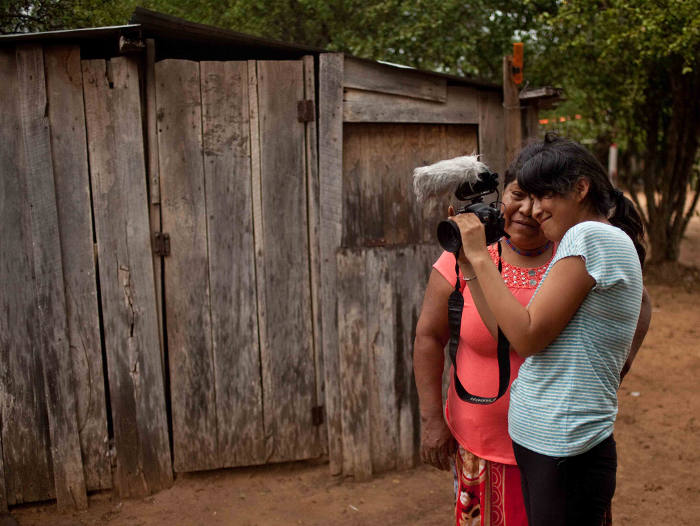
Bolivian traveller Pamela Gómez in the Chaidi community of the Ayoreo Totobiegosode people (Paraguay) The future
It is difficult to evaluate the impact of Chaco Ra’anga in the medium term. As curator Lia Colombino says in the text that accompanies the exhibition: ‘This journey, which still has not finished, this crossing whose itinerary raises more questions than we have asked, has to first change what we are, so that this will not have been just a trip through the territory’.
I close with this phrase because, from my point of view, it is intrinsically linked to the fundamental objective of the project: the formation of citizens who are critical, committed to their environment and to their society. I believe that shared work, cooperative production, and exchanging ways of seeing and doing are things that can be done in response to ever more isolated and isolating presents, and of generating alternatives and commitment to change, not only of thinking but also of realities.
Marta García Moreno, Coordinator of the Chaco Ra’anga project in Paraguay. A project of Spanish Cooperation promoted by the Network of Cultural Centres, through the ACERCA programme and with the support of the International and Ibero-American Foundation for Administration and Public Policies (FIIAPP).
If you want to learn more about the Chaco and the project, go to the blog at: www.chacoraanga.org
You can follow Chaco Ra’anga on social networks:
Facebook: Chaco Ra´anga / Twitter: @ChacoRaanga
-
Gerard Muñoz, is the coordinator of the project to fight drug trafficking in Peru. In this post, he talks about his experience in a training course on basic investigative techniques held in the Peruvian jungle.
It’s still several hours before sun-up and the jeep being driven by an officer in the anti-narcotics directorate is weaving around the sinuous, hairpin curves of a goat trail that will take us from Ayacucho to a government base in the middle of the jungle, near the valley of the Apurímac, Ene and Mantaro rivers, a territory located northeast of the capital of the Huamanga region.
The landscape is hard, like the people’s faces and characters; it’s a mountain range that gives way to dense and inaccessible jungle as the hours and kilometres go by. Ayacucho, the city we are leaving behind, is where the internal Peruvian conflict began that between 1980 and 2000 left 70,000 dead or missing. The victims included farmers, mayors, leaders and militants of political organisations, teachers, engineers, priests and nuns, labours, journalists, housewives, police officers and members of the armed forces.
Here no one has forgotten. To understand the situation facing us, you simply have to walk through the zone and listen to people tell you how their families were brutally tortured or murdered. It doesn’t take us long to realise that the State is not exactly welcome in these parts.
In Peru, an arroba (11 kg) of coca leaf sells for $45. Each hectare under cultivation can bring a cocalero up to $10,000 per year. Each 265 kg of coca leaf can yield 1 kg of cocaine chlorhydrate (what people sniff), with a total production cost of around $1,200 in Peru. This same kilo of cocaine is sold by the ‘narco’ in Spain for €36,000; from there, the local dealer cuts it however he chooses and sells it for €60 a gram. Peruvian coca leaf is especially efficient because of its high concentration of alkaloids; for the narco, Peru is a paradise for cultivating coca.
In the coca production zones, there is no transportation infrastructure, no hospitals or clinics, hardly any schools, and, of course, forget about universities or even basic services like drinking water or sewer systems. Many citizens feel abandoned by institutions, and it is the narco who sets the rules.
It’s enough to see the harsh reality of many of the inhabitants of these coca-producing regions to get an idea of what needs to be addressed. According to data from the Ministry of Development and Social Inclusion, nominal poverty may affect as much as 60% of the population, and up to 30% of children suffer from malnutrition.
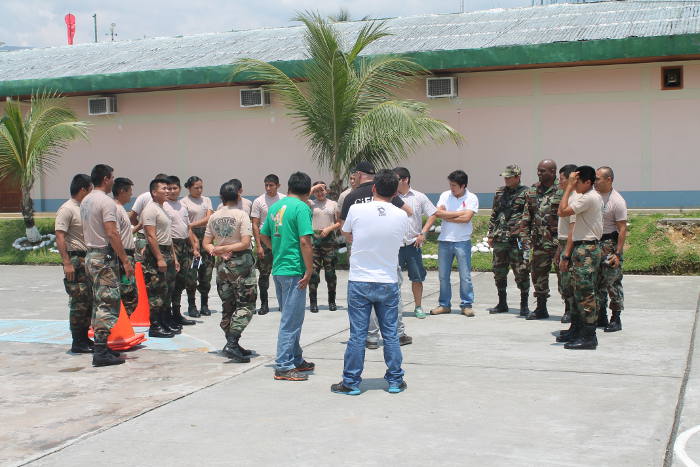
The group of police officers in formation. In territories like this one, beyond the reach of the State and with no strong institutions, crime is endemic and it’s a question of survival of the fittest.
After a 10-hour hike, we reach the base, which is a military compound in the middle of the jungle surrounded by a wall topped with barbed wire. The commander, the perfect host, welcomes us and provides us with all the comforts a facility like this has to offer.
The daily routine during the training course is to get up at 5:00 a.m., exercise, eat breakfast, and then start classes at 8:00. The training is on basic investigative techniques and includes a real operation to raid paste pits for coca leaves and a laboratory. There is a 50-minute break for lunch, and at 5:00 p.m. classes are over. At the base, there is nothing to do except jog on the runway off to one side of the facility or go to the gym. Dinner is at 7:00 p.m., and bedtime is 9:30 p.m. My electronic book turns out to be perfect for these occasions.
These types of training courses make a difference. This is the first time the students, normally very young officers who have been posted to a hostile territory, are learning, first-hand, techniques, adapted to their reality, which will improve operational efficiency exponentially. This is vitally important in terms of the handling of evidence to ensure that it is admissable in a trial.
On this occasion, in addition to a theoretical module, the students and instructors took part in a real raid on a laboratory involving an on-the-spot investigation that could lead to the arrest of a narco, or at least satisfactory collection of evidence that can be used against the individual later. Prosecutors also participated in the training course and the operation, providing a more complete vision of all the players in the criminal process.
Now, when the men start trusting you and you spend 24 hours a day with people like this on the front lines of the fight against drugs in the jungle, reality speaks for itself. The problem of drug trafficking is very broad and, although the work done at times like this is vital for preventing traffickers from infiltrating some countries’ institutions, more than they already have, a comprehensive, long-term strategy is needed. This would require courageous decisions at the international level, such as doing away with tax havens, among other measures with high political impact.
Gerard Muñoz, is the coordinator of the project to fight drug trafficking in Peru.
-
Juan José Charro, a FIIAPP expert in the APIA programme (Support for Inclusive Public Policies in Sub-Saharan Africa), just back from Ethiopia, tells about his experience.
Juan José Charro meeting with the experts from the NGO Management Sciences for Health.When I landed in Addis Ababa, I had a feeling that many aid workers no doubt experience: ‘I’m coming to contribute with my work, but I will end up learning much more than I give.’ This initial impression was borne out, and that’s one of the things that makes development cooperation so stimulating and educational.
And when the country is Ethiopia, these feelings can be more intense, because it’s a very special country. The altitude, the temperate climate; a conservative culture that dates back to the dawn of Christianity; the tolerance of the people with only occasional animosity between the Christian majority and the sizeable Muslim minority; the absence of European colonisation; and the suffering of the past, still palpable, make it a unique country.
For several years, the Ethiopian government has been committed to achieving universal health coverage and providing access to healthcare services. A public care network currently exists that requires co-payment for each healthcare service received and includes payment exemptions for childbirth, malaria, and extreme poverty. The main challenge is to achieve a level of quality sufficient to make this universal coverage a reality, as people who can afford to, even if it means enormous sacrifices, prefer private healthcare, and the poor endure much greater risks.
When I reviewed the most general demographic and health indicators, I wasn’t really surprised, but confirming the existence of such gaping needs never ceases to be shocking. With a population of over 80 million people, nearly half are under 15 years of age. Preventable transmissible diseases and malnutrition-related disorders continue to be widespread. The infant mortality rate is around 75 per thousand, and 90% of this is due to pneumonia, diarrhoea, malaria, neonatal complications, malnutrition, and AIDS.
The maternal mortality rate continues to be high, around 600 cases per 100,000, almost always due to avoidable causes. The problems include a shortage of qualified midwives, defects in procedures for referring patients to clinics, substandard care, and a paucity of funds for key services.
One of the principal measures for improving healthcare is financial reform aimed at achieving more efficient, suitable, and equitable care, eliminating the need for patients to pay out-of-pocket in the case of illness, especially in cases of very serious financial difficulties.
The main financial reform measures are the following: allowing healthcare centres to retain their own revenues for use in providing better care; suitable design of a system of payment exemptions for certain cases; outsourcing of non-medical services in healthcare centres; allowing hospitals to have private wings; autonomy for healthcare centres by allowing them to have their own governing bodies; and the use of social insurance to finance the public healthcare system.
The establishment of social insurance as a means of financing healthcare means transitioning from a system where people are bankrupted when illness strikes to one where the policyholder pays only a monthly or annual premium, which transfers the financial risk of getting sick to an insurance company, in this case the Ethiopian Health Insurance Agency. Being a social insurance system, this premium is not affected by age, gender, or pre-existing conditions.
Two schemes are planned for establishment of the insurance coverage, aimed at different segments of the population. A Social Health Insurance scheme for the formal sector: civil servants, public enterprises, and private companies with more than ten employees; and a Community Health Insurance scheme for the informal and agricultural sector.
The Ethiopian Health Insurance Agency is in operation and ready for the Social Health Insurance scheme for the formal sector to begin functioning whenever the government decides; as regards the Community Health Insurance scheme for the informal sector, this is in the pilot phase in various regions with promising results. But the health insurance programme will only be effective if it is financially healthy and has a clear vision of the resources needed to sustain it over the long term.
To achieve this, the central part of our technical assistance involved ensuring that the Agency has the necessary financial management tools, especially for assessment of its financial sustainability and analysis of statistical information, and that the technical staff responsible for these tasks develops the knowledge and skills to do so.
Thus, we developed a computerised model designed to estimate the future income and expenses of health insurance policies for a ten-year period, so that the user can enter data and relevant demographic and economic hypotheses, with the model supplying the desired results. These results are the estimated trends according to the hypotheses put forth, in the form of a ‘what if’ scenario. For people to use this tool, it was also necessary for us to provide training to the technical staff on the accompanying statistical software, methods of calculating payments to hospitals for inpatient treatment, the data needed for income and expense projections, and the financial basis of social health insurance.
With this, we hope that the Ethiopian health insurance scheme will be able to determine and estimate for the future the portion of the population to be covered; the premium rates and other revenues that will be needed; the financial burden on the government as an employer; different operating scenarios with different employment and inflation levels; the evolution of the population structure, the costs of healthcare services, etc.
As part of our project, an Ethiopian delegation travelled to Madrid and Toledo to learn first-hand about the Spanish National Health System and exchange experiences. I know that this visit was enormously helpful for them.
I have the hope that all of this has contributed in some way to improving the prospects for Spanish cooperation with Ethiopia in health.
Juan José Charro is an expert from the International and Ibero-American Foundation for Administration and Public Policies (FIIAPP) who works in the APIA Programme (Support for Inclusive Public Policies in Sub-Saharan Africa), which is managed jointly with the Spanish Agency for International Development Cooperation (AECID).