-
Pamela Salazar, journalist, opens her heart and tells us about how she has faced her disability with courage and passion for life.
“Feet, what do I need you for when I have wings to fly?” (Frida Kahlo)
This phrase defines me. I am 42 years old, congenitally handicapped from birth, but with an indomitable spirit. Living with disabilities is a challenge. My grandmother often says that “I am unique, because God only gives great battles to his best warriors” and, I have accepted this for every moment of my existence.
I look back on my childhood with great affection. I grew up in a large family with aunts, cousins, my maternal grandparents and of course, my parents, my sister and brother. I would not be the woman writing these words today if they had not supported me, they are my greatest love. The strength and dedication of my mother is a divine gift, as is the care and understanding of my father. My brothers have been accompanying my life and teaching me the value of fraternity and my grandmother is an absolute rock who has empowered me since I was a child and given me the courage to fight many battles. My grandfather passed away recently, but his sweetness and endless stories will stay with me forever. Now I have a four-year-old nephew who is the apple of my eye and from him I have learned that, if children are brought up to respect everyone, they accept disability as something inherent to human beings. He does not look at me as being different, but as someone fun, because he can race with his “Aunt Pilu” and be happy. This child pushes my wheelchair and shows me off, so this child, my Martin, is my favourite person on this entire planet.
I went to a private school, because 40 years ago talking about disability more difficult and was synonymous with discrimination and pain, so my parents decided that private education would be better so that I could blossom in an inclusive and friendly environment. That mission was successful.
For me, school was a place where I could grow and where I developed my love for books, words and the history of my country. I continued to study here and I was fortunate that the great-great-grandson of José María Sáenz (Ecuadorian patriot) was my teacher. He inspired my long infatuation with the libertarian feat of Latin America and defined my desire to be a communicator. I wanted to tell stories… I wanted to start with mine, to tell others that there are no barriers and that a disability is no obstacle to dreaming.
It was easy for me to adapt. I am an outgoing person, so I never had problems making friends. University was another great challenge. I went to a girls’ school so I found it hard studying in a mixed environment, but I managed it. I was first in my class and I specialised in print journalism.
Once I had my degree, I discovered that the entire educational process had been nothing compared to the process of finding a job, because even though I had a university degree and a diploma, my abilities were invisible and the only thing that other people could see was my disability . So I was offered jobs as a porter, a cleaner and – of course I do not detract from these trades at all – but I was a professional and wanted to practice my chosen profession.
There have always been plenty of angels around, and there was one woman, the mother of a young man with a disability, who always believed in my abilities. She gave me my first job as a communicator, which was the starting point of my professional career.
In 2007 I had my 19th surgery, it was a routine operation. I was used to it, but it was not what I expected, I could not walk again and it was the first time in my life that I became aware of my disability and I felt very down, as through the wheelchair had taken my essence and independence, which is also why I lost my job. My people, my family and the friends I have had all my life, encouraged and helped me again. I am still not entirely independent now, but I am smiling again, and that’s something.
These days, I look at the world from my wheelchair, and I know that I can conquer it. It is the battle for inclusion, which for me is fairness, not only in terms of disabilities, but also in general. The attitude barrier is still decisive. From my point of view, I would say that being included means walking (rolling) down the street freely, without having to explain why I am using a technical aid. At this point, I should mention that my boyfriend has undergone this process with me. He has learned to live with and understand disability with me, because he loves me. He took on the challenge of overcoming stereotypes and fears.
In this regard, respecting diversity allows us to build an inclusive and supportive world, such as the Bridging the Gap (BtG) project, which entails sustained and responsible work in schools in Ecuador to guarantee the inclusion of children and young people with disabilities. Your contribution guarantees access to education, which is very important for the full development of a person. I know a woman with a disability who dropped out because her school was not accessible and now, at 57 years of age, she has gone back to high school. This anecdote shows the importance of the BtG project, which makes it easier for students with disabilities to get qualifications and to keep their dreams of success.
Lastly, I would say that 3 December is not a celebration. It is a day to raise awareness of disability, to make other people realise the importance of accepting people who are different and start an effective and assertive social process that is summed up in a single word: inclusion.
That is the only way that I can see a different future, where people do not ask me why I am in a wheelchair, where there are no billboards on pavements preventing my blind friends from walking about, where television channels will use sign interpreters to guarantee access to information for people with hearing disabilities. And that is the only way that my brother, Esteban, a young man with intellectual disabilities, will not be treated like a child, and his abilities and knowledge will be appreciated.
This is how I see the future of people with disabilities in the world, I imagine us free, being included, challenging ourselves and smiling because people no longer give us funny looks or feel sorry for us.
Pamela Salazar Pérez. Journalist.
-
The recently approved Inter-American Model Law 2.0 of the Organization of American States marks a before and after in the management of an essential right for the strength of democracies. FIIAPP has contributed, through the European EUROsociAL+ programme, to the development of the legal text by providing technical support and promoting the incorporation of the gender perspective.
The recently approved Inter-American Model Law 2.0 of the Organization of American States marks a before and after in the management of an essential right for the strength of democracies. FIIAPP has contributed, through the European EUROsociAL+ programme, to the development of the legal text by providing technical support and promoting the incorporation of the gender perspective.On 22 October, the Organization of American States (OAS) approved the Model Inter-American Law 2.0 on Access to Public Information at its Annual Assembly. This policy framework, promoted by the OAS Department of International Law (DDI in its Spanish initials), has enjoyed broad participation in its drafting process and is of enormous relevance to Latin America and the Caribbean, since it incorporates cutting-edge standards and best practices for promoting transparency and the right of access to information.
The Law establishes the broadest possible application of the right of access to information in possession, custody or control of any public authority, political party, union and non-profit organisation, which has to respond to requests for information on funds or public benefits received.
As the DDI emphasises, the ultimate objective of the regulations is that “access to public information is consolidated as a tool that allows increasing levels of transparency and to fight effectively against corruption, promoting open competition, investment and economic growth, to generate the confidence of the population in its democratic institutions and empower citizens, including those sectors that are in a situation of vulnerability”.
“This Model Law is intended to provide citizens with greater access to information which is in the hands of the authorities. Why? So that they have a better understanding of how the administration is managed and how the public resources that derive from its taxes are used. We also want it to influence management models that impact ordinary citizens because the right of access to information ranges from right up high to local governments”, underlines Dante Negro, Director of the DDI at the OAS.
The European Union-financed EUROsociAL+ corporation programme, through its Democratic Governance area, which is coordinated by FIIAPP, has made a decisive contribution to the development of this regulatory proposal, through significant technical support channelled through the Network of Transparency and Access to Public Information (RTA) in spaces for debate and the exchange of experiences between guarantor bodies and promoters of the right to information, and through the systematisation of good practices provided by different experts.
The regulation focuses on key factors such as the nature and functions of the guarantor bodies which guarantee this right, the regime of exceptions, the entities bound by the regulation, active transparency and the definitions and scope of the right of access to information. Likewise, it includes as an annex the Inter-American Model Law on Document Management and its implementation guide, prepared by specialists from the Sub-Directorate of State Archives of the Ministry of Culture and Sport of Spain on the basis of the RTA Document Management Model moved forward by EUROsociAL+.
Throughout the work processes EUROsociAL+ also ensured the incorporation of the gender perspective, the norm being one of the first legal instruments of the Inter-American System to incorporate said vision from its conception.
As Gabriel del Piazzo, President of the Executive Council of the Unit for Access to Public Information of Uruguay (UAIP) (Presidency of the RTA), points out, “the Model Law 2.0 has the added value of gathering the experience of the guarantor bodies of Latin America, whose responsibility it has been to implement the access to information laws over the last 10 years”.
The Model Law thus becomes a reference to be followed by States in order to improve regulations, guidelines and internal procedures for transparency and access to information. From the moment that the 35 States of the Americas endorsed it, they acknowledged that it is necessary to reach that standard. For citizens and organised civil society, it implies being aware of the standards that their State could potentially reach and thus being able to demand processes for the elaboration of norms or policies aimed at reaching that standard.
This EUROsociAL+ action is aligned with the 2030 Agenda, especially with Sustainable Development Goals (SDGs) 6.10 (to guarantee access to information), 16.5 (to considerably reduce corruption and bribery), 16.6 (to create effective and transparent institutions at all levels of accountability), and SDG 17 (to promote alliances to achieve these objectives).
Borja Díaz Rivillas, Senior Expert in Democratic Governance for the EUROsociAL+ Programme at FIIAPP
-
Antonio Roma, prosecutor and coordinator of EL PAcCTO’s cooperation between justice systems component, analyses the keys to the need for cooperation between legal entities in Europe and Latin America to combat organised crime, improve security and promote socio-economic development.
The intensity of legal relations between Europe and Latin America is forever increasing and their efficient functioning is key to combating organised crime on both sides of the Atlantic. This is a crucial issue in achieving the general and legal security of the countries, in addition to facilitating their social and economic development. There are now systems for coordination between institutions in the different states, however, we are at a key moment to further strengthen their consolidation.
The regulatory and institutional reality reveals an increase in the working tools available to all of the states’ legal operators, from the territorial units in the Public Prosecutor’s Offices to bodies that cover national jurisdictions. As a consequence, there has been a quantitative and, more importantly, a qualitative increase in requests for cooperation between different national authorities. In addition, following community-based models, more sophisticated cooperation instruments are being implemented on both continents. This is the case in the creation of joint investigation teams and the rules facilitating the execution of transnational warrants for the arrest of suspects and for the protection of witnesses. However, in order that these mechanisms exist and that results are obtained, coordination systems are necessary.
Professional networks are an essential mechanism and extremely practical. Furthermore, there is a need, indeed a great need, for inter-agency coordination systems. The European Union has its own bodies, that carry out their own functions in relation to the crimes committed in its different states, as is the case with the recently created European Public Prosecutor’s Office, or that facilitate coordination between national legal authorities, frequently public prosecutors’ offices, as is the case for Eurojust.
Between Latin America and several European states there are institutions going back some years that in recent times have made progress with regard results. These include the Conference of Ministers of Justice of the Ibero-American Countries (COMJIB), the Ibero-American Judicial Summit (CJI) and the Ibero-American Association of Public Prosecutor’s Offices (AIAMP). All of them facilitate the relationships between the different groups they contain and they have established foundations for their work over the coming years.
Fighting organised crime requires greater effort in coordination and cooperation. Personal and legal protection, as well as economic and social development, means not exhausting efforts exclusively in the operation of assistance systems between the different legal operators. In a globalised world, it is not enough to apply systems that do not extend beyond state or even continental borders, especially with the economic, cultural and family flow that exists between Latin America and the European Union, especially its southern states.
Coordination between the community and national institutions of the Latin American states has begun, but it is not enough. In today’s interdependent world, cooperation is imperative to meet common challenges. Our knowledge and our actions complement and reinforce each other. The efficient functioning of the fight against organised crime in pursuit of greater legal protection and economic and social development requires support through more effective cooperation formulas that go beyond strictly legal aspects. And this is now more important than ever.
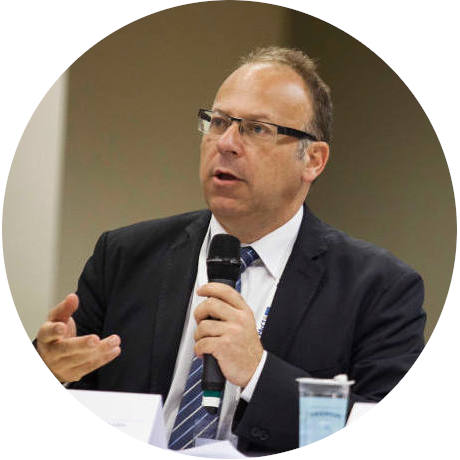
Antonio Roma Valdés
Prosecutor and coordinator of EL PAcCTO’s cooperation between justice systems component
More information:
EL PAcCTO is a European Union-funded programme managed by FIIAPP and Expertise France with its partners IILA and Camôes. The objectives for the Cooperation Between Justice Systems component led by FIIAPP include promoting cooperation and coordination between institutions in Latin America and Europe. This was the reason behind it organising the 1st Encounter Between the Justice Institutions of the EU and Latin America, on 23rd September, to promote cooperation and legal coordination, as well as increased efficiency in the fight against organised crime.
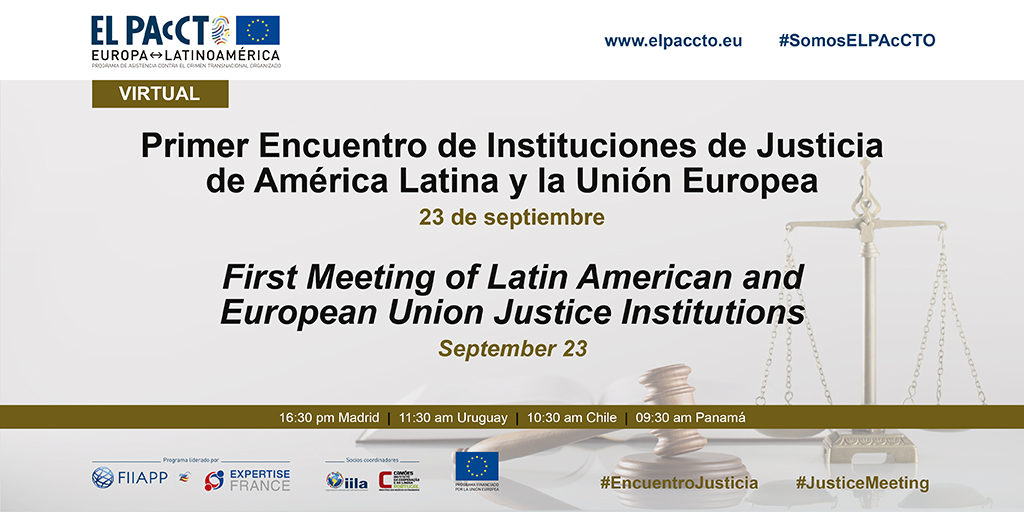 High-level representatives took part in this encounter, including the Spanish Minister of Justice and members of COMJIB, AIAMP, the International Judicial Summit, Eurojust and the Council of Europe, as well as the European Commission Directorate General for International Cooperation and Development (DEVCO).
 -
On World Development Worker Day, a FIIAPP technician tells us about the challenge faced by millions of people in accessing drinking water
On World Development Worker Day, David Rodríguez Soane shares his thoughts with us on the importance of development workers continuing with their work. A vital and necessary task, especially during the pandemic. In a difficult context like this, David focuses on the need to guarantee access to safe water and hygiene, as universal rights and a key action against the spread of the virus.
Washing your hands with soap and water is a simple gesture that today more than ever, in the middle of the Covid era, helps save lives. With the first days of September already passing by, governments and educational centres are debating about reopening their facilities and the most appropriate teaching models to adapt during this pandemic. However, in 43% of schools around the world it is not possible to wash your hands, a key defence mechanism in the fight to reduce the transmission of the virus. In fact, in less developed countries, 7 out of 10 schools lack basic facilities.
In mid-August, the World Health Organization (WHO) and UNICEF published a joint report, Progress on Drinking Water, Sanitation and Hygiene in Schools (WASH), in which it was revealed that around 818 million children in the world lack basic facilities to wash their hands in their schools, which puts them at greater risk of contracting Covid-19 and other communicable diseases. More than a third (295 million) live in Sub-Saharan Africa.
Once again, water proves essential for life. But so are sanitation and hygiene. A simple example is enough: without toilets, natural water sources are polluted; without clean water, basic hygiene practices are not possible. Among them, washing your hands.
The cooperation perspective
The world of cooperation has an important role to play in ensuring that the right to drinking water and sanitation is just that, a right for everyone. Indeed, this summer, the international community discussed water at great length. In the last week of August, for example, numerous actors, from governments to civil society organisations, gathered at two important events.
On the one hand, from 24 to 28 August, Water World Week – WWWeek took place virtually. The Stockholm International Water Institute (SIWI) promotes this multilateral Agora every year which, for almost 30 years, has become the most influential event in the world for tackling the greatest challenges relating to water. On the other hand and also in the same week, the German Agency for International Cooperation (GIZ) organised five days of conferences dedicated exclusively to water from the perspective of development. This year, the Week on Water for Development (WW4D) started with a motto which is clearly part of today’s world: “Every drop counts, water in exceptional times.”
Also this summer, in July, and with a strong presence from Spanish Cooperation through the Cooperation Fund for Water and Sanitation (FCAS), the XXI Conference of Ibero-American Water Directors (CODIA) took place, which is the main platform for political dialogue, technical collaboration and cooperation on water in Ibero-America. Within this framework, the two technical dialogues that dominated the debate were the relationship between water and biodiversity and the integration of sanitation and treatment in the framework of integrated water resources management.
As we can see, there are plenty of spaces for the exchange of experiences and for multi-stakeholder coordination in order to achieve SDG 6, clean water and sanitation for all. The achievements of the past should serve as a spur to strengthen the firm steps being taken by multilateralism to reach 2030 in the best possible position. Global mobilisation after the Millennium Development Goals (MDGs) lead to the fact that in 2015, 2.1 billion people had access to improved sanitation and that 147 countries reached the goal for accessing sources of drinking water (MDG Report 2015, UNDP). Now, the SDGs, after being with us for five years, open a new window of opportunity to follow the same path of progress and consolidation of rights. However, the figures in the SDG Report 2020 on SDG6 are not as good as one would expect and the emergence of Covid-19 has only made the situation worse. This is why we require solutions, we need answers.
In this context, Spanish Cooperation, has the tools to contribute to global objectives and these must be emphasised. From data for 2018, it has been estimated that the FCAS has benefited more than 2.8 million people in Latin America and the Caribbean. In addition, 2.2 million Latin Americans have had access to new or rehabilitated drinking water services and 1.1 million to sanitation services. Also the AECID and FIIAPP, through its participation in the EUROCLIMA+ project, which is the EU’s flagship programme on environmental sustainability and climate change with Latin America, devote enormous efforts to managing water in order to ensure the availability of water resources and strengthen institutional capacities and governance of the sector in beneficiary countries. In turn, numerous NGDOs, such as Manos Unidas, Oxfam Intermón and Acción Contra el Hambre, to name just a few, also carry out important specialised intervention actions regarding the provision of water, sanitation and hygiene in the countries in which they operate. They are examples of actors in our development work, but there are more, also among the autonomous communities, universities and other agents that are part of the system.
Thoughts from the pandemic
We have been looking at the issue from the perspective of cooperation, but the pandemic that has taken up and conditioned our lives for months provides us with some thoughts: the interconnection of essential elements such as dignity, people, prosperity, the planet, justice and partnerships. We are already familiar with the image being reflected back at us, but it also invites us to reflect once again. Global health, quality education and access to water and sanitation. SDGs 3, 4 and 6. All of these are interconnected rights, objectives and challenges that intersect throughout the world in a familiar scene in early September: the beginning of the school year. The equation is more complex in times of pandemic. And practically impossible to solve, for those girls and boys living in countries where washing their hands with soap and water is still a luxury within the reach of only a handful of people.
On 8 September each year we celebrate Development Worker Day. It is a day to honour all the people who contribute their work, their knowledge and their sweat to build a world which is more just. But it will also be a day to remember that, according to the Hand Hygiene For All initiative, three billion people, 40% of the world’s population, cannot wash their hands with soap and water at home. Three-quarters of them live in the poorest countries in the world. Simply because they lack basic facilities to wash their hands, millions of people are at immediate risk of contracting Covid-19 or other diseases.
The challenge is enormous, but we must make a start at sometime and in some place. So let’s start this September and let’s start with schools. Let’s learn a lesson as a society: simple gestures should not be impossible.
Author: David R. Seoane, Communication and Knowledge Management Technician for the Spanish Cooperation programme “Transparency, Communication and Knowledge Management”
-
A EUROsociAL+ expert explains the vulnerability migrants face at borders
Bárbara Gómez, EUROsociAL+ project technician tells us about the dangers that migrants run at borders and how inequalities increase while they remain in this situation, particularly at the crossing between Mexico and the United States. She also speaks about how public policies are the key to guaranteeing a legal framework to protect the basic human rights of migrants.
Clearly, we have abandoned the usual idea of seeing a border as a mere line that can be easily erased, to look at it, like the philosopher Eugenio Trías, as an authentic territory in which not only conflicts or cultural clashes, but also multiple exchanges and trade-offs are evident. Above all, a different conception of the “experience of the limit”.
The flexibility of the mobility of people across these borders, added to the complexity of our current society, and the perennial problems of searching for opportunities due to poverty and social inequality in many countries, along with regional conflicts, has led to a migratory phenomenon that has itself increased to such an extent as to become a global situation. This reality has become more evident lately due to the latest events that occurred in the current context of the migration through Mexico where, in October 2018 a caravan began in which just over six thousand people came to Tijuana to seek asylum in the United States[1]. The focus on this event was sharpened by the continued strengthening of the south-west border of the United States, where the current president insists on building a border wall with Mexico, despite the Democrats’ opposition and refusal to approve expenditure for the wall.
Over the last 12 years, migration in Mexico has started to change profoundly in terms of numbers, patterns and impacts, in other words, a significant transformation in the migration dynamics in this region of the country has occurred. This new dynamic has brought consequences of a social, economic and cultural nature to the different border cities and to the region in general.
EUROsociAL+, the European Union programme run by FIIAPP, is watching the migratory phenomenon in the Latin American region, and particularly in the Central American region, and with a multidimensional approach, is also observing how migration is being managed in border areas, improving cross-border governance systems. Within this framework, it has overseen the preparation of a diagnostic study that focuses on all phases and stages of this phenomenon in a context of economic, social and political crisis.
To this end, there were several questions to answer: What will happen to undocumented migrants arriving at the south-western border of the United States? How likely is it that they will decide to reside in the border region of Mexico as they are unable to cross the border or request asylum? Is the Mexican government prepared for this possible contingency?
It was vitally important to analyse the initial situation in the border territories, which in most cases were not only forced to receive migrants from Central America unable to cross the border, but at the same time to receive all those who had been deported and were affected by the extremely strict migratory policies of the United States. The analysis started from this approach and how all this would affect a new organisation of the region, the public policies put in place for multilevel governance, regional cohesion and, therefore, for social cohesion as a response to the sense of belonging felt by such a heterogeneous group of citizens living on the border.
The study, therefore, aims to understand the journeys experienced by the migrants, as well as their experiences during their temporary or forced stay in the border cities of this region. The analysis included both Mexicans who have been deported or returned from the United States, as well as men and women from Central America and the Caribbean.
Mexico’s northern border includes the group of municipalities adjacent to the US border, on the assumption that this is where most of these events occur. Included in this area are 38 adjoining municipalities that belong to six states: Baja California, Sonora, Chihuahua, Coahuila, Nuevo León and Tamaulipas. It has now become a region with close ties to the United States; there are permanent exchanges of goods and services in both directions, as well as a huge flow of people who cross over in both directions every day. To mention just some interesting details. The Baja California border region has the highest number of immigrants (168,000); 38.4% of the population was born in a non-border region or outside Mexico. This percentage increases to over 50% in municipalities such as Tijuana and Tecate (Baja California). Baja California and Sonora have received most of the migrants deported from the USA. Jointly, 67% of the cases recorded took place in these two states. Men make up the vast majority of Mexicans repatriated from the United States, totalling 91% versus 9% women. However, the qualitative experience of this repatriation will not be the same for men and women, with the latter being the most vulnerable as, in most cases, they take their dependent children with them. But it is also notable that the vast majority of repatriation events involve young migrants; almost half are between 20 and 29 years old. Between January and October 2018, 9,348 minors (MENAS) were handed over to the Mexican authorities by their American peers, which represents 6% of the total.
The journeys taken by migrants
Also, it would not be entirely fair to present this work, which is sponsored by EUROsociAL+, only with statistical data. It is also only right to take into account the human dimension of all these experiences of “transition” that are exponentially increased by inequality.
Devoid of rights, and even devoid of the right to possess rights, undocumented migrants are nowadays the clearest expression of the conscious deprivation of basic human rights for a whole human group. By excluding them from legality, the State places undocumented migrants outside the limits of the law, at the same time that it applies laws that systematically exclude them. In other words, the vulnerability of this group is largely caused by the denial of their right of access to justice, and EUROsociAL+ is working to change this situation. Access to justice is a key right, which acts as a kind of gateway for access to basic services such as health, education, housing, employment, and so on. But it also entails the defence of aliens detained or deprived of liberty, care for victims of gender violence and legal assistance for unaccompanied minors.
Perhaps this ambiguous situation of being “outside the law” has led to certain situations of violence that migrants themselves suffer in their journey across borders. Without a legal framework that protects them, in no-man’s land, their lack of protection is greater and, therefore, their rights are weakened. One of the clearest examples of this form of violence is suffered by women. Women are in a very vulnerable situation when crossing borders. And EUROsociAL+ is addressing precisely the differentiated effects of corruption on women, pursuing two phenomena that do not always intersect: corruption and trafficking. Added to this equation is a more variable one, migration, since most women who are trafficked are also migrants.
At the border, migrants are at a crossroads between here and there, with their belongings in a backpack or in a plastic bag, and their dreams and hopes running high. In this border space, these people prefer information which is informal, which comes from family and friends, over any other source, to compensate for the extreme vulnerability of their border experience. Aware of this situation, EUROsociAL+ is also working so that this vulnerable group can fully exercise their right to access information; improving passive transparency with institutions that have the competence to manage this migratory phenomenon, but also a transparency that is active, promoting the exercise of these peoples’ rights to request basic information that can improve their lives in a country they do not know.
The border is a point of transition, of transience, a temporary place that increases their vulnerability, the difficulties they face. Sharing such vulnerability allows them to create deep ties during their short stay at the border, while deciding whether to move on or establish their new residence in the transit territories. Either decision will push them towards the most disadvantaged aspect of inequality. Governments must not forget about borders and must use all the instruments at their disposal so that the effects of their public policies also reach the inhospitable territories that are often forgotten.
Bárbara Gómez, Project Technician for the EUROsociAL+ Democratic Governance area at FIIAPP
[1] The Colegio de la Frontera, Northern Mexico (COLEF), 2018.
-
In this post, Chilean National Defender, Andrés Mahnke, talks about the progress made in Chile's criminal defence with the EUROsociAL+ project
In this post, Chilean National Defender, Andrés Mahnke, talks about the progress made in Chile's criminal defence with the EUROsociAL+ projectThe so-called “social outcry” started in Chile on 18 October 2019 and transformed the country’s agenda, not only because its citizens demanded it, and because it exposed the activities of public institutions which now, more than ever, were struggling to cope with hitherto unseen scenarios stemming from the demonstrations.
The Chilean social outcry attracted international interest, since it included loss of life and hundreds of people with ocular mutilation, numerous complaints of serious human rights violations, and destruction of public and private infrastructures, among other consequences. As a result, the country received visits from representatives of several international human rights organisations, such as the United Nations High Commissioner for Human Rights, the Inter-American Commission on Human Rights, Amnesty International and Human Rights Watch.
In all these areas, Chilean justice and its actors had to take action, monitored by the justice system and the close scrutiny of an empowered citizenry and the international community. In this context, a series of adjustments and learnings took place, which started to become visible during the first quarter of 2020, and which had their acid test during March of this year.
However, this story had an unexpected twist, which dominated all scenarios and modified all agendas: the SARS-CoV2 Coronavirus, which causes the disease known as Covid19 . A few weeks after the disease reared its head in Chile, it forced a change to the electoral calendar for the beginning of the constitutional process and caused something which was unthinkable just weeks earlier: the end of mass social protest in public spaces. People went home and the streets were empty, in the same way as happened almost all over the world.
But reflection on the changes to the justice system and the lessons learned from the ‘outbreak’ must not stop. In fact, they have become even more essential to resume the fluidity of public activity when the health emergency ends. Nor does the outcry seem to have disappeared, rather it has been put on hold with a few resurgences due to the lack of food during the quarantine. Everything suggests the social and economic impact of the pandemic will exacerbate existing inequalities. Therefore, this period has been an opportunity to integrate our learning and anticipate future scenarios.
In the social protest scenario, one indirect effect was connected to the work of the different actors in the criminal system facing an unprecedented challenge in terms of coverage and operational capacity, because of the notable increase in the number of people detained and processed.
Between 18 October and 13 November 2019, the Chilean Public Criminal Defender’s Office – a public institution that guarantees the right to defence and which is made up of 722 officials and 524 external providers – attended to 20,645 people under arrest, an increase of 25.4% compared to the same period of the previous year.
These increases, however, were even greater during the initial days of the crisis. Between 20 and 28 October, a period during which much of Chile was under a “state of constitutional exception”, the institution registered 10,712 defendants undergoing detention reviews, representing an increase of 70% compared to the same period in 2018. Furthermore, whereas on average there are between 600 and 650 daily detention reviews in the country, at that time they increased to 1,100 daily hearings, reaching a peak of 2,508 detention reviews on 21 October.
Beyond this work, an initial conclusion showed that an indeterminate number of detainees were not assisted by public defenders, either because the Public Ministry had decided not to transfer them to detention review, or because the police did not report that they had been arrested. This meant that there was no jurisdictional control of these activities and there were no records.
This triggered a contingency plan in Public Defence to attend to people detained in the police units, because by institutional design, defenders are in contact with the detainee just before the detention review hearing before the supervisory judge. Although public defenders set up informal service centres in police stations and other police detention facilities, this gave direct coverage to only 105 of the 900 police stations in the country.
This gap need to be filled urgently, since numerous people’s rights have been violated, as described in reports from the human rights organisations who visited the country.
Institutionally, the Chilean Public Criminal Defender’s Office activated different measures, such as strengthening the dissemination of rights , coordinating with the rest of the actors in the system, and opening channels for collaboration with the police, among others.
However, the main initiative that followed the period of social crisis in Chile stemmed from the support lent by EUROsociAL+, European Union programme managed by the FIIAPP, whose specialists are currently collaborating with Public Defenders to prepare a ‘Criminal defence protocol for the initial hours following arrest‘.
Its main objective is to find a means to provide coverage that guarantees the right of detained persons to a defence lawyer in the shortest possible time, thus protecting their right to technical defence. Furthermore, as international organisations that promote and protect human rights have revealed, the presence of a defence lawyer is a safeguard to protect the detained person’s other rights, particularly to prevent torture.
These actions enable comprehensive, effective achievement of the institutional mission to guarantee the right to defence of any accused person at all stages of the criminal process, preventing violation of rights and strengthening judicial detention review, providing public defenders with more tools to appeal against the punitive power of the State on an equal footing before the courts of justice.
The objective is always the same: to reinforce institutional commitment to the rule of law, a peaceful society and democracy in Chile, a task for which we are grateful to have the steadfast, permanent support of European cooperation.
By Andrés Mahnke M., National Defender (Chilean Public Criminal Defender)
In relation to the work done together with the Chilean Public Criminal Defender’s Office, the EUROsociAL+ programme has just published a diagnosis of the criminal defence of people in the first few hours of detention in the Latin American country.