


04/11/2026
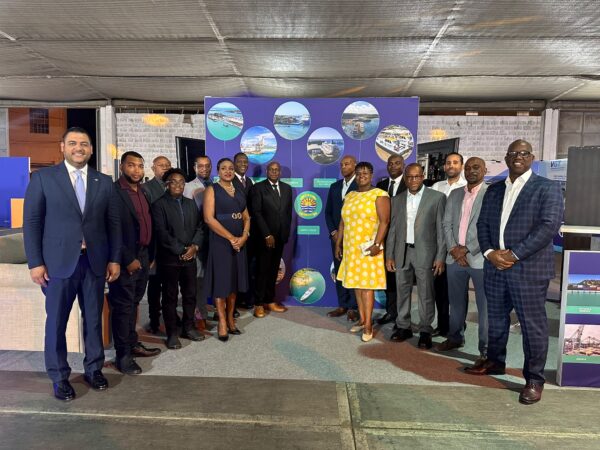
A high-level delegation comprising ten Caribbean countries has undertaken a study visit to Hamburg, Malta and Genoa to learn about the experiences of European ports and exchange best practice in the face of a common challenge: port sustainability. The visit forms part of the European Union’s (EU) Global Gateway strategy, in collaboration with FIAP as the implementing agency.
04/06/2026
02/06/2026
26/02/2026
From 12 to 16 October 2026, the Caribbean delegation toured port areas in Germany, Malta and Italy to share experience on port decarbonisation and sustainability. In Hamburg, the delegation visited the port and exchanged knowledge with German authorities and the private sector on bringing green energy into the port’s day-to-day operations. The visit was organised by the EU-Caribbean Cooperation Mechanism Programme, funded by the European Union and implemented by FIAP.
The delegation also attended the Decarbonising The Future (DTF) 2026 conference on maritime decarbonisation and port electrification. Held in Valletta, Malta, it was one of the highlights of the trip. Discussions covered shore power for ships at berth, grid capacity, battery storage, hydrogen and EU funding.
 While in Malta, the group visited the Palumbo shipyards and the cruise ship MSC World Europa to learn about their sustainability initiatives. They also met the Hon. Chris Bonett, Malta’s Minister for Sustainable Mobility; Transport Malta, represented by Captain Fritz Farrugia, Director and Harbour Master of the Ports and Yachting Directorate; and Malta Freeport Corporation.
The visit ended in Genoa with an institutional meeting with the Port Authority, the City Council, the Liguria Region and the University of Genoa. The delegation met representatives of leading port-sector companies specialising in certification, digitalisation, shore power and solar energy, and toured the Port of Genoa.
A visit to the Italian Merchant Marine Academy showed the delegation how higher education and training work in the maritime and logistics sectors. The academy is a non-profit public institution funded by both public and private money, and it was recognised as an ITS Foundation in 2011. Because it works so closely with industry, a high proportion of its students go on to find jobs.
Throughout the visit, speakers stressed that public policy should actively encourage and support decarbonisation. They put particular emphasis on the regulatory framework and on the social as well as economic benefits of environmental sustainability strategies. Close collaboration and alignment between countries were also seen as essential. Public-private partnerships, meanwhile, make it possible to finance and roll out green energy infrastructure and to invest in scalable low-carbon solutions that can be adapted to ports of different sizes and types of operation.
Hamburg, Valletta and Genoa showed three different routes to the same goal: cleaner, more efficient ports that are ready for the energy transition. Cooperation between the two regions, under the Global Gateway strategy, aims to share knowledge, strengthen institutions and build public-private partnerships so that Caribbean ports can adapt these solutions to their own circumstances and move towards cleaner energy of their own.


