


19/10/2026
The country is working on new tools to investigate the drug problem, identify emerging threats and improve coordination between public bodies.
The emergence of new drug-related threats requires reliable information and mechanisms to share it and take timely action. To strengthen this capacity, Ecuador is working on the creation of two tools: a Commission for Analysis and Research on Drugs and Mental Health and an Early Warning System (EWS).
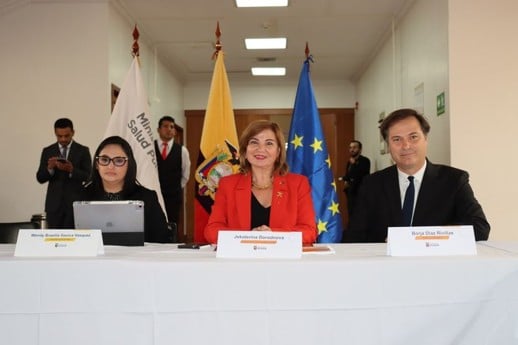
On 6 and 7 October, technical representatives from the institutions that make up the Inter-institutional Committee on Drugs met in Quito to make progress on the design of these mechanisms, as part of a national workshop supported by the European Union.
The Early Warning System aims to facilitate the timely detection and reporting of new drug-related risks, whilst the Analysis and Research Commission will help to examine the available information, identify emerging trends and challenges, and improve institutional coordination.
During the workshop, participants explored the knowledge and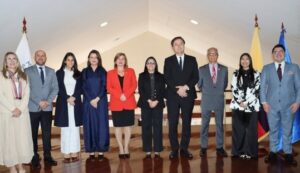 mechanisms required to carry out these functions. María José Mena, secretary of the Inter-institutional Committee on Drugs, emphasised that the active participation of institutions will be essential to promote comprehensive and coordinated responses.
The Deputy Minister for Health Governance, Wendy Gavica, also underlined the importance of coordinating the work of health services, laboratories, security and control institutions, academia and other stakeholders.
The initiative forms part of the technical cooperation with COPOLAD III, the cooperation programme between Latin America, the Caribbean and the European Union on drug policy. This specialised assistance aims to ensure the continuity of the activities set out in the roadmap for 2026–2027 and to strengthen Ecuador’s institutional capacities, with the aim of helping to improve the public response to the drugs problem for the benefit of its 18 million inhabitants.
The European Union’s Ambassador to Ecuador, Jekaterina Doródnova, has highlighted the importance of international cooperation in strengthening evidence-based public policies on drugs.
This joint effort aims to consolidate analytical and research tools, as well as early-warning mechanisms, enabling Ecuadorian institutions to share information, identify new trends and base their decisions on evidence. Coordination between the various sectors will be key to ensuring that these tools contribute to a more timely and coordinated public response.