


21/09/2026
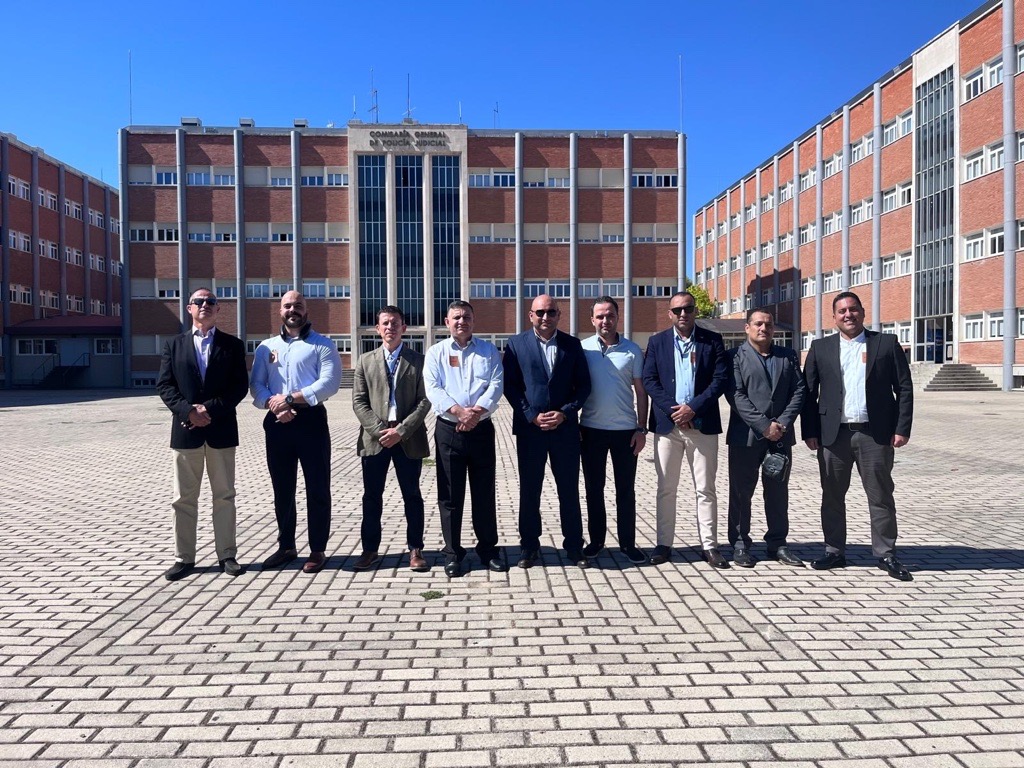
A delegation from the Jordanian security forces has visited Spanish police stations to gain first-hand insight into their work in the fight against organised crime.
Jordan’s geographical location, combined with the rapid development of digital technology, makes it a hub for various forms of illegal activity, including human trafficking, cybercrime and illicit drug trafficking.
With the aim of strengthening the capabilities of Jordan’s security forces in the fight against transnational organised crime, the European Union’s twinning project on combating organised crime is currently being implemented in the country, with police officers from Spain, Sweden and Germany working alongside Jordanian security forces to tackle organised crime.
The two-year project combines activities in Jordan with visits to Member States. Its aim is to strengthen the capacity of the Public Security Directorate to combat transnational organised crime effectively, in line with international and European best practice.
Against this backdrop, six representatives from Jordan’s Public Security Directorate (PSD) visited various police stations in Madrid and Ávila, covering a wide range of National Police departments and units that fall within the scope of the project.
Over the course of a week, the Jordanian delegation attended a number of presentations and working sessions led by specialists from the Spanish National Police, focusing primarily on the institutional exchange of knowledge.
The advent of the internet and digital communications has led to many criminal activities moving online. Cybercrimes, such as identity theft, financial fraud and online exploitation, have risen significantly in Jordan. Consequently, during the visit, the delegation was able to visit the Central Cybercrime Unit at the General Directorate of the Judicial Police, where they were briefed on the unit’s remit in combating cybercrime. They also learnt about the work of the Central Unit for Drugs and Organised Crime, which coordinates the investigation and prosecution of national and transnational criminal activities relating to drug trafficking, organised crime, economic and financial crime, and technology-related crime, and were briefed on the preparation, implementation, monitoring and oversight of strategic and operational plans.
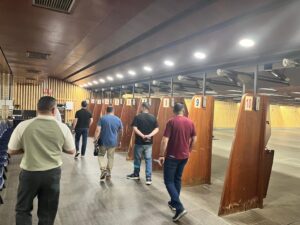 In addition, they had the opportunity to visit the Police Academy in Ávila, where they toured the facilities and observed the training programmes that police officers undergo before entering active service.
They also visited the Centre for Intelligence against Terrorism and Organised Crime (CITCO), which reports to Spain’s Secretary of State for Security; this is the strategic national body responsible for integrating, assessing and coordinating all operational intelligence relating to terrorism, organised crime and violent radicalism. The Jordanian police officers were able to gain an understanding of how the centre is responsible for receiving, analysing and processing the information gathered by the various security forces and agencies in order to produce strategic and forward-looking intelligence, avoid duplication of investigations by managing operational overlaps, and design counter-terrorism response and alert plans at national and international level.
Equally significant was the visit to the International Cooperation Division (DCI), which is responsible for overseeing cooperation and assistance to police forces in other countries and for coordinating the working groups in which the National Police participates within the European Union and other international institutions, as well as matters relating to support missions to third countries and police personnel serving abroad. This visit has proved particularly useful for the project in understanding how opportunities for international police cooperation—both bilateral and multilateral—are created, and in learning how procedures for inter-institutional and inter-departmental collaboration are established, as well as cross-border agreements through treaties or conventions that provide legal frameworks for international police cooperation.
This visit has enabled an exchange of experiences between the Jordanian and Spanish police forces and has allowed the Jordanian delegation to gain first-hand insight into some of the work carried out in Spain and in the fight against organised crime.