


05/05/2026
With the support of the European Union, Peru and Bolivia are working together to control chemical precursors in order to combat transnational organised crime.
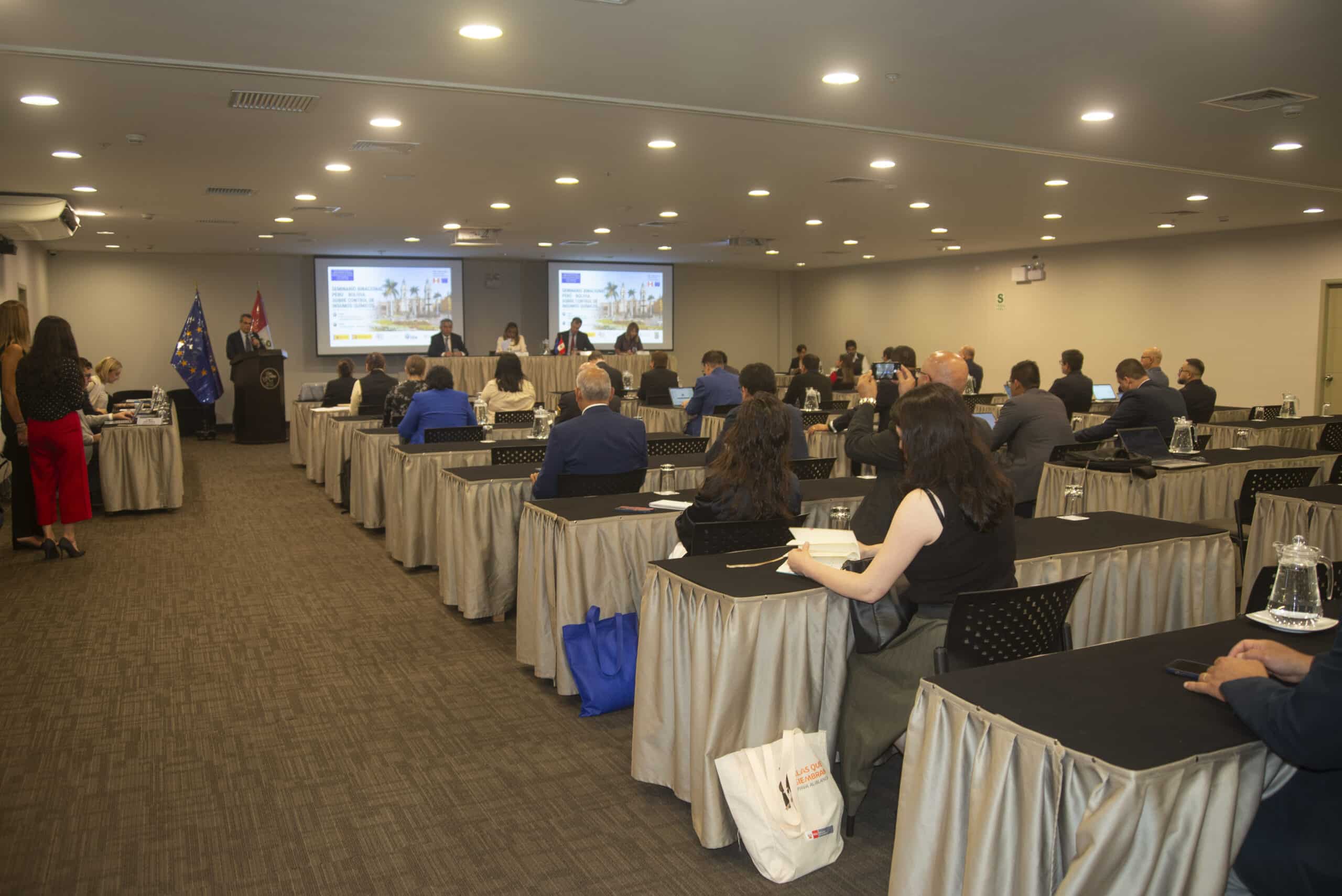
Lima, the Peruvian capital, has hosted a binational seminar (Peru-Bolivia) organised by the European projects on combating drugs and organised crime in Peru and on combating organised crime in Bolivia, focusing on the control of chemical precursors, a key initiative for tackling transnational organised crime at its operational heart: the chemical supply chain.
This seminar marks a milestone in regional cooperation, consolidating a binational strategy aimed at neutralising the diversion of chemical resources used in drug production and illegal mining activities, two of the main threats to security, sustainable development and the environment in the region.
Over three days, representatives from international organisations and key institutions such as police forces, customs, public prosecutors’ offices and technical agencies addressed strategic issues including: new routes and methods of trafficking in chemical precursors, standardisation of control and inspection protocols, emerging chemicals and evasion mechanisms, control of precursors in areas of illegal mining, money laundering linked to the trade in chemicals, and the strengthening of operational cooperation and intelligence sharing, amongst others.
One of the main objectives of the meeting is to establish real-time coordination mechanisms between the two countries, enabling a joint and synchronised response to the illicit trafficking of chemical substances.
Furthermore, the seminar aims to lay the foundations for coordinated operations in strategic border areas, strengthening the capacity to detect, intervene in and prosecute these crimes.
The initiative reaffirms Peru and Bolivia’s commitment to working as a coordinated bloc, recognising that criminal networks operate without borders and that only through effective international cooperation is it possible to dismantle their logistics.
Through this effort, the European Union and its strategic partners are consolidating a comprehensive response that focuses not only on interdiction but also on prevention, targeting the flow of precursors that fuel illegal economies.