


05/06/2026
The high level of informal employment in Mexico, which affects more than half of the working population, poses significant challenges to expanding social protection coverage.
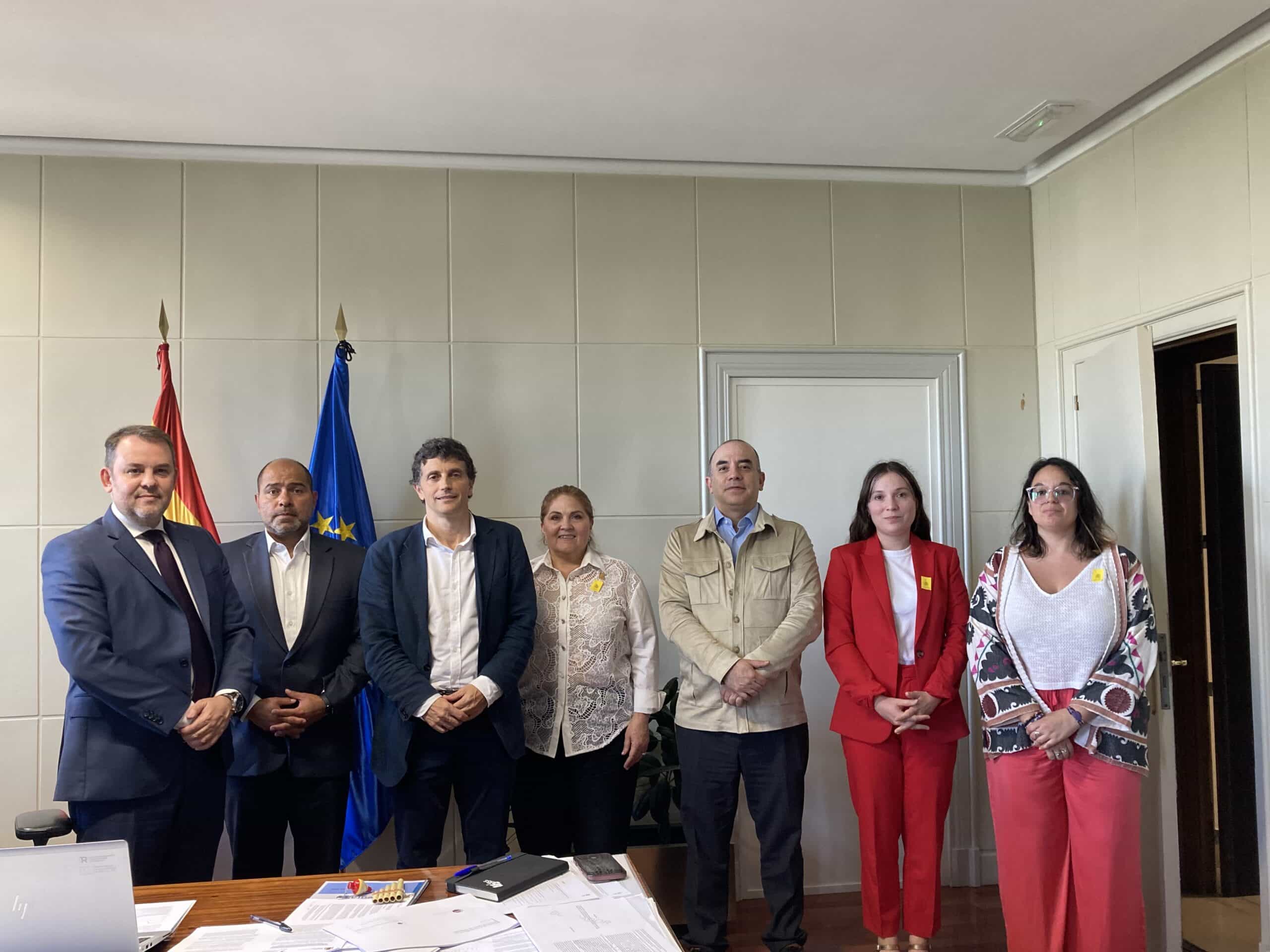
Representatives from Mexican institutions have this week concluded a study visit to Madrid to gain first-hand insight into the workings of the Spanish social security system and the tools developed to improve registration, revenue collection and fraud control.
During their stay in Spain, the delegation held working meetings with María Carmen Armesto González-Rosón, Director General of the National Social Security Institute (INSS); Andrés Harto Martínez, Director General of the General Social Security Treasury (TGSS); Carlos Escudero Rivas, IT Manager for Social Security; Rodrigo Francisco Mares Ramirez, Provincial Director of the TGSS in Madrid; Borja Suárez Corujo, Secretary of State for Social Security and Pensions, and the Special Directorate of Labour and Social Security Inspection.
The Mexican delegation comprised Luisa Obrador, Head of the Registration and Collection Directorate at the Mexican Social Security Institute (IMSS); Eduardo Alcaraz Prous, Head of the Social Security Registration Unit at the IMSS; and Eduardo Licea Arellano, Director-General of Productivity Analysis at the Ministry of Finance and Public Credit.
The visit also served as a forum for a peer-to-peer exchange of experiences. The Mexican delegation outlined some of the distinctive features of its social protection system, including mechanisms for accessing housing linked to formal employment, a hallmark of the Mexican model.
Social security is one of the pillars of welfare in Mexico and plays a fundamental role in guaranteeing a decent life for workers and their families. The Mexican system protects not only the worker but also their immediate family, and has approximately 22.7 million members, a figure comparable to the 22.3 million members registered in Spain.
“There are no solutions that can be easily transferred from one country to another, because every situation is different and every

legal system has its own characteristics”, according to the Secretary General for Social Security, who cited as an example the challenge posed by Spain’s ageing population—one of the main challenges to the sustainability of the pension system—a problem that cannot be transferred to Mexico.
While Spain faces the challenge of an ageing population, Mexico faces another major challenge: high levels of informal employment. More than half of the working population is employed outside the formal economy, which makes it difficult for them to join the social security system. For this reason, the Mexican authorities are seeking to promote the formalisation of employment.
The gender gap was another key topic of discussion. “Women’s contribution bases are lower across all age groups,” noted the provincial director of the General Social Security Treasury in Madrid, an inequality that ultimately affects benefits and pensions.
This issue, together with the regime for domestic workers and their integration into the social protection system, aroused particular interest among the Mexican representatives.
The study visit took place in Madrid as part of the EU4DecentWork project, funded by the European Union and implemented by FIAP and Expertise France, the French counterpart agency for development cooperation.
Through meetings and exchanges of experiences, the mission has brought European and Mexican public administrations together to share solutions in areas such as benefits management, the digitalisation of services, institutional coordination and the formalisation of employment.
In the coming days, the mission will continue in Paris, where the delegation will learn about French experiences relating to family benefits, social inclusion, the registration of self-employed and agricultural workers, as well as mechanisms for inter-institutional coordination in the fight against social security fraud.