


26/05/2026
Ecuadorian officials are visiting Spanish prisons to learn how they operate and to strengthen the state’s response to organised crime.
Ecuador is facing an unprecedented internal security crisis due to structural problems exacerbated by drug trafficking, money laundering and the financing of terrorism, as well as by transnational organised crime groups operating within the country.
For this reason, the SERPAZ project –the Security, Hope and Resilience for Peace programme in Ecuador– is being carried out with European funding. One of its components focuses on prison security, with the aim of learning from Spain’s experience in prison management, dynamic security, treatment and prison work, restorative justice and prison intelligence –key areas for strengthening the social rehabilitation system in Ecuador–.
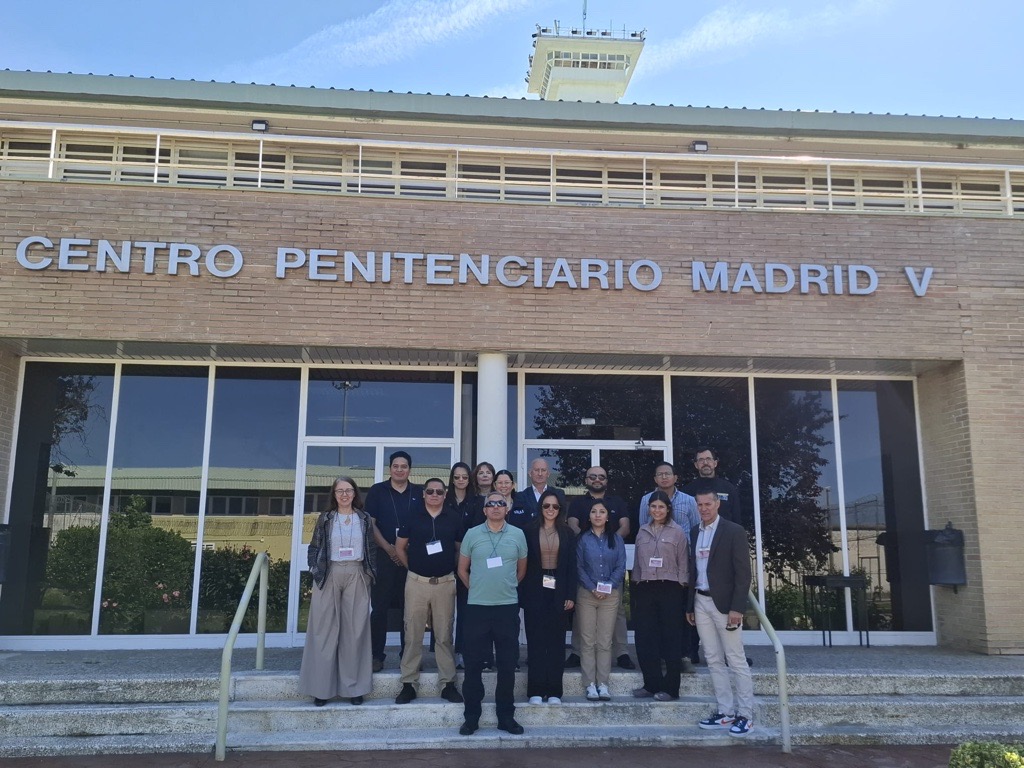
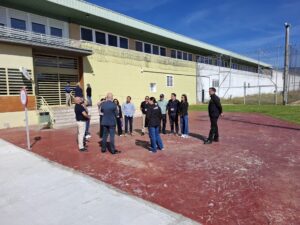
An Ecuadorian delegation is visiting Spain to gain first-hand insight into the work being carried out in the field of prison management. They have visited the Spanish General Secretariat for Prison Institutions (SGIIPP) and several Spanish prisons, including Soto del Real Prison, Navalcarnero Prison and the Josefina Aldecoa Social Reintegration Centre. These visits have provided practical insight into the operation of standard and open-regime centres, as well as experiences relating to differentiated security measures, prison work, vocational training and support for life after release.
The delegates from Ecuador’s Ministry of the Interior and the National Service for the Comprehensive Care of Adults Deprived of Liberty and Juvenile Offenders (SNAI) also visited the Centre for Intelligence against Terrorism and Organised Crime (CITCO), where they discussed the importance of inter-agency coordination, risk analysis and prison intelligence within national security strategies. This forum has enabled a broader dialogue on the links between organised crime, public security and prison contexts.
This meeting took place at a significant time for Ecuador, following the transfer of the SNAI to the Ministry of the Interior and as part of national efforts to consolidate a model that integrates security, rehabilitation and social reintegration. In this context, European cooperation aims to contribute to technical dialogue between institutions, the analysis of best practices and capacity building to address the challenges linked to organised crime and prison management.
The SERPAZ Programme, implemented by FIAP and the Italian-Latin American Institute (IILA), will continue to support initiatives for technical assistance, institutional coordination and the exchange of experiences aimed at strengthening the State’s response to organised crime. The European Union thus reaffirms its commitment to continuing to cooperate with Ecuador in strengthening its institutions, based on an approach centred on human rights, security, resilience and peace.