
30/04/2026
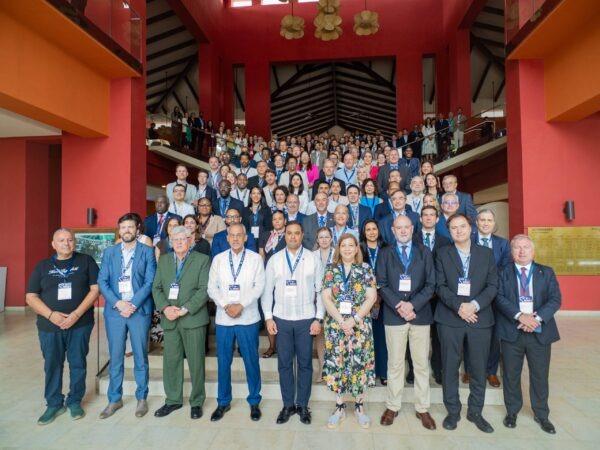
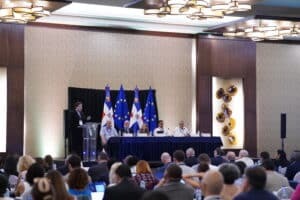
Today marks the end of the 4th Annual COPOLAD III Meeting, which has brought together 150 experts from 40 countries in the Dominican Republic.
The European Union (EU), Latin America and the Caribbean (LAC) have reaffirmed their commitment to a joint, comprehensive and evidence-based response to the global drug problem, within the framework of the 4th Annual Meeting of the European Union’s COPOLAD III Programme, which concludes today after two days of discussions under the theme ‘Drug policies in a changing context’.
In an international context marked by the growing complexity and transnational nature of the drug phenomenon, both regions are strengthening their strategic partnership, committing to multilateralism, shared responsibility and respect for human rights. In the words of Olivier Luyckx, Head of the Country Programmes Unit for Latin America and the Caribbean at the European Commission’s Directorate-General for International Partnerships (DG INTPA), “the rise of drug trafficking is having a profound impact on security, governance and people’s lives, and requires more comprehensive and coordinated public responses.”
The programme, funded by the European Union, is implemented by the Foundation for the Internationalisation of Public Administrations (FIAP) in partnership with the International Italo-Latin American Organisation (IILA). This meeting has brought together senior representatives from both regions in the fields of public health, security and justice, providing an inclusive platform for dialogue aimed at exchanging experiences, identifying common priorities and developing coordinated responses to emerging threats.
In this context, Borja Díaz, director of COPOLAD III at FIAP, stated: “At a time when the drug problem is evolving rapidly and presenting common challenges, this meeting has shown that COPOLAD acts as a tool for cooperation and a bridge between regions, facilitating the exchange of experiences and contributing to the development of public policies that are more effective and tailored to each specific context.”
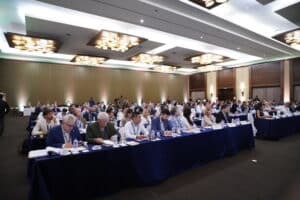 The main objectives of the meeting include strengthening bi-regional political and technical cooperation, defining shared guidelines on drug policies in line with international standards, drawing up concrete conclusions to inform future decision-making, and reporting on the progress made. Furthermore, the outcomes of the meeting will contribute directly to the High-Level Meeting of the EU-CELAC Coordination and Cooperation Mechanism on Drugs, scheduled for 30 April 2026.
The meeting has helped to consolidate COPOLAD’s support processes with countries and supranational organisations such as the Ibero-American Association of Public Prosecutors (AIAMP), the Caribbean Community Implementation Agency for Crime and Community Safety (CARICOM IMPACS) and the Conference of Ministers of Justice of the Ibero-American Countries (COMJIB), strengthening coordination and joint work across the various levels of cooperation.
The discussions held focused on key areas such as improving data governance and early warning systems, evidence-based approaches to preventing drug use, the response to organised crime and the promotion of a culture of legality, as well as the involvement of various stakeholders, including the private sector, the humanisation of criminal justice and the integration of environmental considerations into drug policies.
One of the highlights of the meeting was a side event focusing on public-private partnerships, which highlighted the strategic role of sectors such as the chemical industry and logistics and port networks in the fight against drug trafficking, as well as their contribution to the reintegration and social inclusion of vulnerable people. On this matter, the Minister of the Interior and Police of the Dominican Republic, Faride Raful, emphasised: “The shared responsibility of the private sector is fundamental to limiting the scope of illicit economies.”
In the same vein, Myriam Ferrán, Deputy Director-General of the European Commission’s DG INTPA, emphasised: “Within the framework of the European Union’s Global Gateway strategy, which promotes international partnerships with the private sector, strengthening this cooperation is key to improving our ability to anticipate and respond to the new dynamics of drug trafficking”.
The event also featured the participation of the European Union’s Ambassador to the Dominican Republic, Raúl Fuentes Milani, who highlighted the country’s strategic role as a key partner for regional security in the Caribbean and the fight against drug trafficking, as well as the importance of fostering partnerships between the public and private sectors to tackle common threats.
The 4th Annual Meeting of COPOLAD III thus consolidates progress in bi-regional cooperation and reinforces the commitment to more effective, humane and sustainable drug policies, based on international cooperation as an essential tool for tackling a global challenge.
Following the extension of the Programme until 2029, COPOLAD III will continue to consolidate and build on the progress made to date. During this extended phase, it will focus its efforts on strengthening political dialogue, generating knowledge and implementing strategies aimed at reducing both demand and supply.
The Programme will also incorporate new priorities such as violence linked to drug trafficking, environmental issues and the strengthening of information and early warning systems.
This work is underpinned by the recognition of COPOLAD’s value and achievements by EU and CELAC countries, reflecting the effective and well-established cooperation between the two regions
Since 2021, COPOLAD III has worked with 32 countries and over 300 institutions, mobilising more than 2,000 people and carrying out 78 national actions with 25 countries and 9 regional actions. The results achieved can be accessed via this link.