
12/06/2026
A European project is working to bridge information gaps and strengthen women’s capacity to cope with political manipulation and conflict situations.
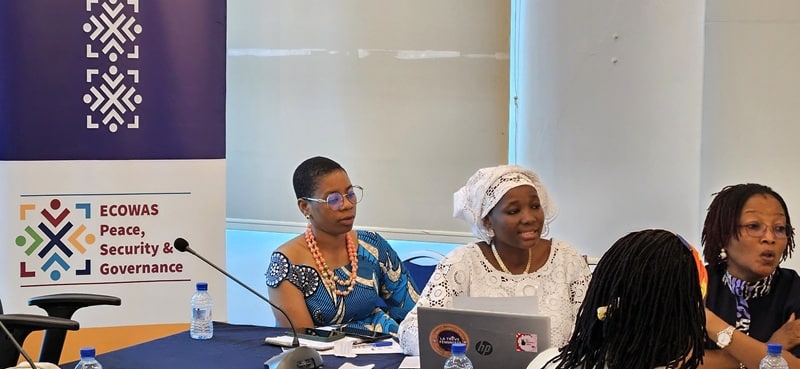
As part of the EU Support Project for the Economic Community of West African States (ECOWAS), funded by the European Union, a three-day workshop (19–21 May) was organised under the title: ‘Exploring the role of young women in public participation, conflict prevention and electoral awareness-raising: challenges and opportunities’. The event brought together 32 participants representing the 12 departments of the Republic of Benin, in West Africa.
The project’s mission is to put meaningful public participation by women into practice. Consequently, one of the main objectives is to reduce the information gaps that have historically left women and young people more exposed to political manipulation and the effects of conflict.
By replacing vulnerability with the capacity for action, the project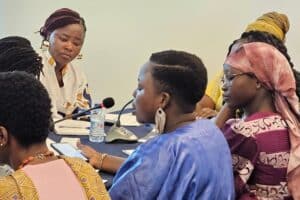 transforms civic awareness into meaningful public participation through two strategic fronts. Firstly, regional risk mitigation. That is, actively countering the rapid spread of disinformation and false narratives in high-tension areas. Secondly, the aim is to foster resilience. That is, empowering historically marginalised demographic groups to resist political manipulation and lead local peacebuilding efforts.
Furthermore, to foster a culture of sustainable participation, the programme is based on three interconnected pillars:
– Knowledge and active participation: Deepening citizens’ understanding of electoral rights and structural processes to ensure that civic participation is informed and has a real impact.
– Integrity and democratic values: Upholding the rule of law, transparency and strictly non-violent civic participation.
– Transformative leadership: Empowering women and young women to take on influential roles as community leaders and in decision-making, particularly decisions that directly affect women’s role and participation in electoral contexts.
Building on the success of previous women-led workshops in Nigeria, this initiative has served as a dynamic platform for participants to share their achievements at a local level upon returning from the workshop, demonstrating that robust electoral training directly catalyses meaningful public participation and tangible community action.
Looking ahead, the project is designed to expand both horizontally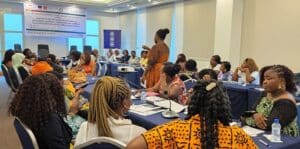 and vertically. By fostering knowledge-sharing at the national level and establishing resilient, women-led networks for empowerment and advocacy, the initiative plans to extend its reach to The Gambia in the coming month, ultimately cultivating strong, interconnected networks that promote peace and governance at the national and regional levels.
The initiative, part of a Peace, Security and Governance (EPSG) project, has been made possible thanks to the support of the German Federal Ministry for Economic Cooperation and Development (BMZ), the Danish Ministry of Foreign Affairs (MFA) and the Foundation for the Internationalisation of Public Administrations (FIAP).