
15/09/2026
As disinformation and hate speech spread online, young content creators are learning to turn their digital influence into a tool for responsible information sharing.
In Benin, social media has become a central channel for the circulation of political, social, community and security-related information. Whether true or false, information shared in a WhatsApp group can be spread in a matter of minutes via Facebook, TikTok and other digital platforms, quickly influencing conversations in communities, markets and households.
In this context, content creators, influencers and digital opinion leaders with a wide reach are no longer just entertainment figures. Their ability to reach large audiences makes them actors with a relevant role in promoting verified information and fostering responsible public dialogue or, on the contrary, amplifying disinformation and hate speech. Their influence has direct implications for social cohesion, democratic resilience and the stability of the country, especially during electoral and post-election periods.
To this end, FIAP, in collaboration with BANOUTO, Benin’s leading media outlet for information and research, has organized the Final Camp on 3 and 4 September in Cotonou for the restitution and promotion of initiatives by content creators and influencers from Generation Z.
This activity is part of a cycle of three training camps. The first two, held in Cotonou and Parakou, have strengthened the capacities of around 60 participants in the fight against disinformation and hate speech, the verification of information, the responsible use of artificial intelligence and the use of art and creativity as awareness-raising tools. The cycle has been developed within the framework of the EPSG project – European Union Support to ECOWAS in the field of Peace, Security and Governance.
This third meeting brought together 30 young content creators and influencers, selected from among the most active and creative participants of the first two training camps organized in Cotonou and Parakou.
Poets, cartoonists, digital content creators, web-comedians and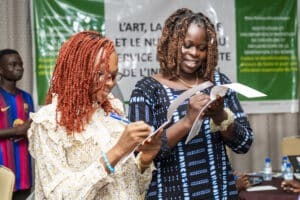 young civic or digital activists have participated in this final stage dedicated to the restitution of achievements, the exchange of experiences and the promotion of the initiatives developed during the course.
These achievements have been put into practice through the creation and dissemination of content, in particular as part of the #VerifieAvantDePartager (Verify Before You Share) digital campaign, designed to promote the reflex of online communities to verify information before sharing it.
Art, creativity and digital technology were central to the activities. Slams, sketches, drawings, illustrations and digital content creation were used as mediums for messages raising awareness about disinformation, hate speech, information integrity and the responsible use of artificial intelligence.
The official opening ceremony, held on 4 September, brought together institutional representatives and partners involved in the initiative, including FIAP, BANOUTO, the Embassy of Spain, the European Union Delegation and Beninese authorities responsible for communication and media.
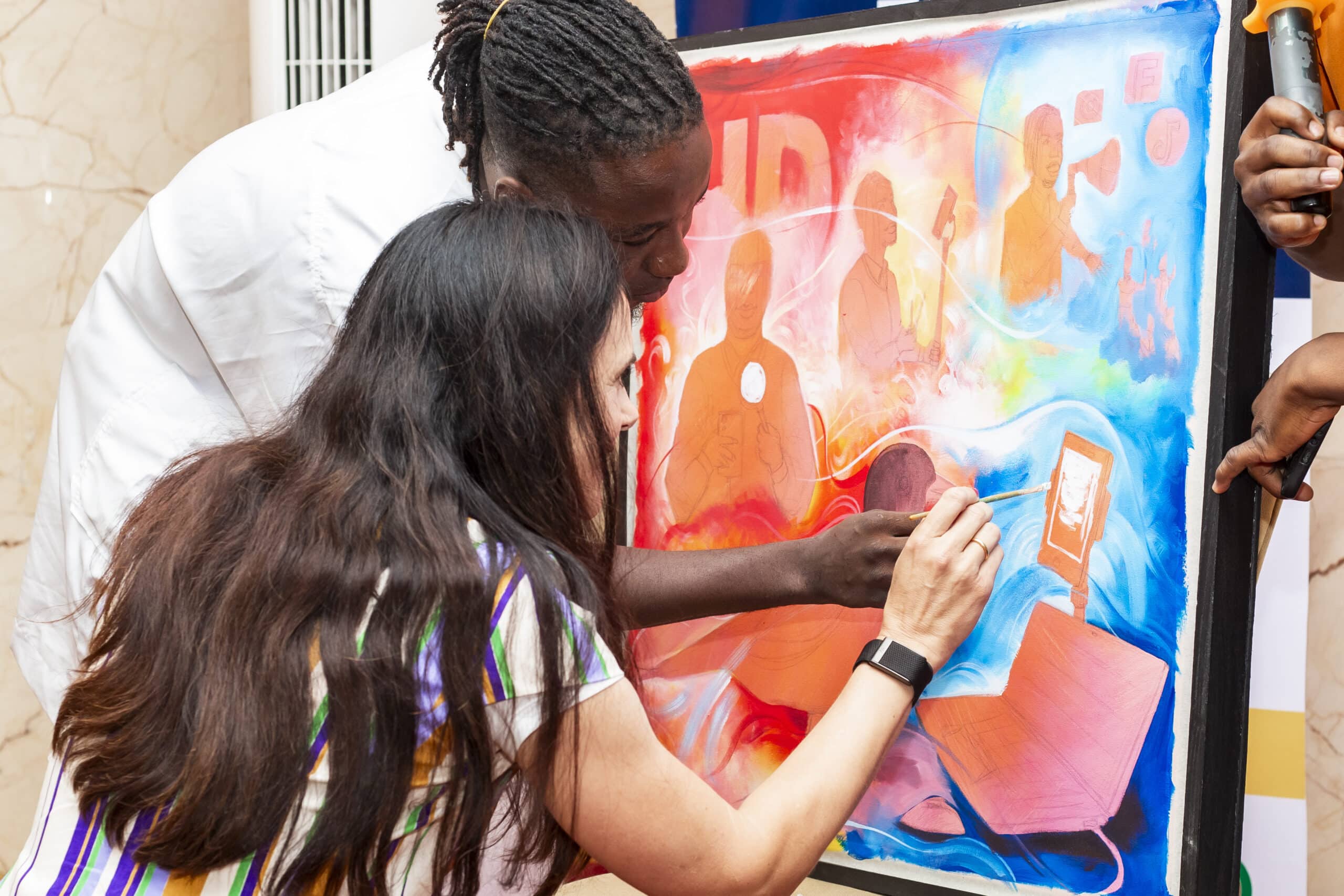
As a symbol of the camp’s launch, one of the participants, a visual artist, illustrator and portrait artist, created an artwork on information integrity on site, showcasing the potential of art as a tool for raising awareness.
The last training camp has also been marked by the presentation of several technical deliverables aimed at supporting the practices of creators and users of social networks.
These include a Good Practice Guide for the Responsible Use of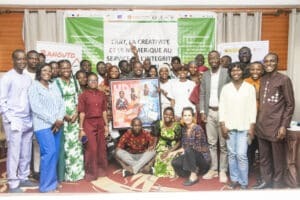 Social Media, including TikTok, Facebook and WhatsApp, as well as a Toolkit on the Responsible Use of Artificial Intelligence for creators and users, with a focus on the safe use of AI-generated images and stories.
The Charter of the 10 Principles of the Responsible Digital Creator has also been presented and symbolically signed by the young beneficiaries. It includes the verification of information, transparency, recognition and correction of errors, respect for privacy and dignity, responsible use of AI and the fight against misinformation and hate speech.
This project is a multi-donor initiative co-funded by the European Union (EU), the German Federal Ministry for Economic Cooperation and Development (BMZ) and the Danish Ministry of Foreign Affairs (MOFA).