-
02 October 2026
Category : Sin categorizar
Geothermal energy: the driving force behind energy sovereignty
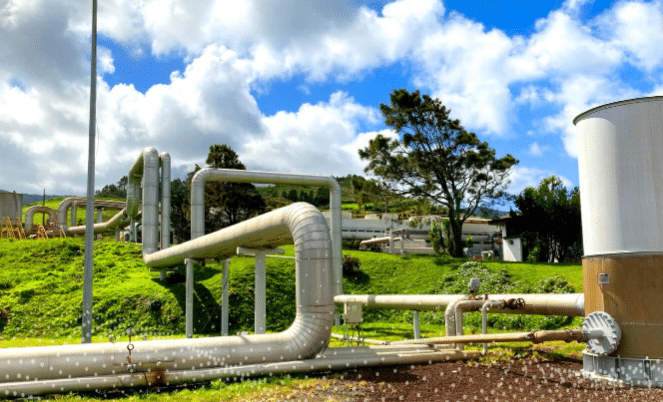
A group of interconnected islands powered almost entirely by clean energy generated from deep within the Earth, without relying on imported oil or the vagaries of the international fuel market. What seemed a distant prospect a decade ago is now closer than ever thanks to geothermal energy, and cooperation between the European Union and the Caribbean is accelerating progress along this path.
As part of the European Union’s ‘Global Gateway’ initiative, civil servants and key stakeholders from the Caribbean energy sector recently came together for a study visit that took them to Lisbon, the Azores and Gran Canaria. The exchange of experiences centred on four key areas: operational excellence, R&D and regulation, innovation for direct use, and electricity grid stability. The aim of the visit was to learn first-hand how European island territories with volcanic geology similar to that of the Caribbean have managed to transform the Earth’s heat into clean, stable and increasingly affordable electricity.
A resilient energy source
Geothermal energy does not depend on the sun or the wind. It is generated by harnessing the heat stored in rocks and groundwater, making it a constant source of energy that is available all year round.
This characteristic is particularly significant in disaster risk management. Unlike other renewable energy sources, geothermal infrastructure is located underground, making it more resilient to phenomena such as hurricanes, which are so common in the Caribbean region.
A shared geology beneath different islands
The Azores, the Canary Islands and the Caribbean islands share more than just a volcanic landscape: they share a subsoil with enormous energy potential and the challenges inherent in isolated energy systems that have historically relied on fossil fuels. It is precisely this shared geology that makes the exchange of knowledge between the two regions so valuable. The study visit has enabled the Caribbean delegation to gain an in-depth understanding of how the geothermal systems installed on these islands operate – from the feasibility study right through to implementation – and to exchange experiences and best practices tailored to their own circumstances.
In Portugal and Spain, investment in geothermal energy has been made possible by the commitment to this source as part of their energy strategy. In this process, regional organisations such as the Organisation of Eastern Caribbean States (OECS), the Caribbean Electric Utilities Corporation (CARILEC) and the Caribbean Centre for Renewable Energy and Energy Efficiency (CCREE) play a central role: they coordinate capacities, organise technical training and optimise the use of resources at a regional level.
More than just technology: a question of governance
The transition to geothermal energy involves a transformation that goes beyond technical considerations; it requires clear regulatory frameworks, well-designed public procurement processes, continuous environmental monitoring and, above all, public institutions with the capacity to coordinate multiple stakeholders over a long period of time.
The exchange of knowledge between regions facing similar challenges is one of the most effective ways to make progress on complex public policies. This partnership between the EU and the Caribbean ultimately aims at something deeper than technology transfer: to jointly strengthen the institutional capacity needed to move towards energy sovereignty.
By: Raquel Val Rivas, Coordinator of the EU-Caribbean Cooperation Facility.
The views and opinions expressed in this blog are the sole responsibility of the person who write them.