-
Since June 2011, I have had the immense professional and personal good fortune to be able to work on the development and consolidation of one of the greatest political, social, and institutional breakthroughs in the world since the fall of the Berlin Wall in 1989: the so-called Arab Spring.
Diego Blázquez in a work meeting.This year, 2016, marks a momentous five years since of the eruption of this social and political movement which, starting in the impoverished city of Sidi Bouzid in Tunisia, spread throughout the Arab-Islamic world. Many of its consequences continue to reverberate today. In the context of this more or less significant anniversary, many analyses have emerged, most of them pessimistic in light of the chaotic situation in the Middle East, riven by the Syrian civil war, the rise of DAESH, instability in Libya, the consolidation of modern Islamist parties in some of the countries, and the backward progress of rights and guarantees in others. This post is not intended to deepen or take part in these analyses based on geo-strategy, international relations, or political science by experts in these and other fields. Rather, I am content to pass on my experience over these years as a worker in the area of cooperation with FIIAPP.
After spending 28 months in Tunisia collaborating in the implementation of the Convention on the Rights of Persons with Disabilities, particularly in the area of educational and occupational inclusion, since May 2014, I have been very excited to be involved in the management of a new Twinning project with the Kingdom of Morocco.
I left Tunisia having intensely experienced the entire political transition and the constitutional reform period. I arrived just as the results of the parliamentary elections were being announced, and I left a few weeks after approval of the new constitution in a festive atmosphere of great relaxation in which a dynamic and modernising process of political consensus was anticipated.
This new project was concerned with the institutional and technical strengthening of one of the new institutions formed in the constitutional reform process of 2011. With the creation of the Inter-Ministerial Agency for Human Rights, Morocco complied with one of the recommendations of the United Nations: to establish permanent government mechanisms to coordinate the relations of the States Parties to human rights treaties with their respective monitoring bodies.
At the same time, this body, reporting to the Prime Minister, was required to centralise actions for making human rights a cross-cutting issue in the different public policies, in collaboration with the responsible technical departments. With this decision, and with the creation of a powerful and independent National Human Rights Council, Morocco was implementing one of the recommendations of its internal process of national reconciliation and transitional justice issued by the country’s Equity and Reconciliation Commission. In addition to the 2011 constitution, it established various bodies to provide follow-up and monitoring in the area of human rights, such as the Authority for Parity and the Fight Against All Forms of Discrimination (APALD). And, lastly, the National Plan of Action on Democracy and Human Rights was created in a participatory manner and with international input.
No sooner did I arrive at my post, I had the opportunity to participate in the Second World Forum on Human Rights, hosted by Morocco in Marrakesh, which was attended by delegations and activists from numerous countries. Morocco announced the ratification of the Optional Protocol to the Convention against Torture and other Cruel, Inhuman or Degrading Treatment or Punishment within the framework of intense convention-related activity on the subject, recognising the pseudo-jurisdictional competences of some of the human rights committees and various reservations.
As in the case of Tunisia, optimism and faith in the reform processes, of course, should not be confused with complacency or ignorance of reality. And so, following these major decisions of a “macro” nature, the important and significant tensions that have built up in this process, and which are not easy to resolve, should not be swept under the rug. At times, these tensions have been manifested in open conflicts, such as with Amnesty International in the spring of 2015, or with the European Union itself at the start of this year, or currently in the context of the United Nations. No one can hide or deny the fact that this is not an easy transition, for both internal and external reasons.
From its modest position and the simple contribution institutional cooperation can make, it will be hard for these tensions and difficulties to be overcome. But we do what we can to equip the Public Administration with the means and resources to successfully confront the challenges ahead of it and for which society expects answers and solutions.
As with the Tunisian experience, in Morocco I have been able to work with and personally get to know numerous young people, both men and women, who firmly believe in an intense process of ongoing and stable reforms that will, each in its own way, make it possible to deepen and improve the rule of law and democracy in their country. Young people with tremendous preparation, the majority of which, nevertheless, see a very limited horizon for their expectations and capacities. But there are also broad sectors that, for different reasons, see some reforms as serious threats to their way of life and what they consider to be their identity. And, lastly, every day I discover how the main concern of a large swathe of society is just to survive each day with the greatest dignity possible in a context of low salaries, high prices, and scarce public services.
In this difficult equilibrium of optimism and realism, my daily experiences in Morocco and Tunisia make me very aware of the difficulties and threats, of the precariousness of the processes unleashed by Mohamed Bouazizis’ self-immolation in December 2010. But also of the responsibilities on both sides of the Mediterranean, as well as our mutual dependency. As the refugee crisis shows us in an extremely raw way, the social, economic, and political stability of our southern neighbours is essential for our own social, economic, and political stability. By weaving together, little by little, the threads of joint work and cooperation, these internal tensions can be dissipated gradually, and we can confront the external issues, because these are common threats. And that is the other big contribution European institutional cooperation, and the Spanish government through FIIAPP, can make today, because working to make Maghrebi institutions more democratic, robust, and transparent will also make for a more democratic, robust, and transparent Europe.
Diego Blázquez is an expert from the International and Ibero-American Foundation for Administration and Public Policies (FIIAPP).
-
EUROsociAL, the cooperation programme of the European Union, has contributed to the creation of a defence protocol to allow foreign women in different prisons in Peru to efficiently access justice and receive better assistance.
In Peru’s prison population, there are two groups especially vulnerable to overcrowding and living conditions in prison: on the one hand, young people, 11% of the total; and on the other, foreign women, 90% of whom are serving sentences for drug trafficking. Under the country’s constitution, it is the responsibility of the Public Defender’s Office to guarantee access free of charge to the right of defence to persons with few economic resources or who are in situations of vulnerability. Within the framework of the regional intervention with public defender’s offices being carried out by EUROsociAL, the Peruvian government considered it a priority in 2014 to improve the situation of these two groups by establishing conduct guidelines for public defender’s offices. To this end, in 2014 EUROsociAL collaborated with Peru’s Ministry of Justice, through the Directorate-General of Public Defence and Access to Justice, to expand to the national level the support of the programme to public defender’s offices by preparing a specific, nationally-applicable, defence protocol.
CONTENT OF THE PROTOCOL
The protocol addresses, on the one hand, the main needs identified in the collective of incarcerated foreign women in prisons, such as translation, up-to-date and understandable legal advising on prison benefits, alternatives for returning to their countries of origin, adequate spaces for caring for sons and daughters, guarantees for maintaining links with their families, and access to adequate medication. In addition, it addresses the specific needs of young inmates, such as receiving differentiated treatment because of their age, access to prison benefits, and contact with their families. The protocol determines concrete actions, as well as general and specific recommendations, that public defender’s offices should adopt to ensure adequate attention to these collectives, from the moment of detention to execution of the sentence.
GENDER PERSPECTIVE
Prison systems normally do not address the different needs and problems of women inmates. The intervention in Peru is situated in a line of work of the programme with the public defender’s offices which incorporates the gender perspective and aims to impact the justice administration so that it contemplates gender factors that influence the commission of crimes and serving of sentences. In this line, another two protocols prepared in Guatemala and Costa Rica have been approved which address, respectively, the situation of incarcerated women with sons and daughters and family members.
-
Every EUROsociAL annual conference has had its engine room. In Lima, it was Room 212; in Brussels, the office of the FIIAPP “antenna”; in Antigua, we lost ourselves in the corridors and cloisters of the Training Centre; and lastly, in Madrid, it was the Octavio Paz room.
Sala de máquinas del encuentroEach place has its share of anecdotes. In Lima we would gather after dinner until the wee hours in an atmosphere that resembled a newsroom more than a hotel room. There, the phone stopped ringing at two in the morning… but at five it was ringing again. Your humble chronicler was the “guest”. In Brussels, the FIIAPP office was overtaken by nerves two hours before the start of the “EUROsociAL Meeting” with the European Commission. 120 minutes to go and still putting together bags. The Made-in-EUROsociAL knack for improvisation and a multifaceted movie producer who packed his Fiat Panda to the gills with materials, came to our rescue just before the “bell”. In Antigua, we were so suffused with the beauty and elegance of the colonial city and the solemnity of the cloisters of the former Jesuit School (today the Training Centre) that all our preparation and the meeting itself flowed without a hitch.
And that brings us to Casa de América, right in the middle of downtown Madrid. On Monday, 19th October 2015, the latest EUROsociAL conference got underway, and, very early on, the Octavio Paz room, our portable office, became the scene of nerves, laughter, tears, and desperation in an authentic roller coaster of emotions. Eva, Dani, Federica, Clara, Darío, Matteo, Sergio, Laura, David, Danae, and many other people crisscrossed in time and space from sun-up to sundown, coexisting with the legends of Palacio de Linares. There, almost without realising it, we were all playing on the same team.
This place will remain etched on EUROsociAL’s memory. And as the poet the room was named for wrote, “Love is born at the strike of an arrow; friendship from frequent exchanges over time”. We don’t know if love was born, but it’s clear that friendship found a place in the Sala Octavio Paz.
Until we meet again,
Enrique Martínez, EUROsociAL communication manager
-
Helena Farinha, Deputy Director General of the FAS, tells us what the FAS is and its objectives for fighting poverty in Angola.
Kizanga-Malanje School. Photos courtesy of the FAS.HISTORY OF THE FAS
Actions to fight poverty by the Angolan government started to take shape with the creation of the Social Support Fund (FAS) on 28th October 1994 through Decree No. 44/94 of the Council of Ministers within the framework of the Economic and Social Programme – PES/94. As a government body, it was granted legal personality and administrative and financial autonomy in its founding statutes.
To accomplish its mission, the FAS has utilised funds from the Angolan government and grants from diverse funding sources, such as World Bank credits, multilateral donations from the European Union and bilateral donations (Norway, Japan, Sweden, Italy, the Netherlands, and the United States of America) totalling 186.3 US dollars.
WHY FUNDS WERE REQUESTED FROM THE EU
In 2013, the FAS expanded its scope to provide national coverage and invest in regions of the countries with extremely vulnerable populations in terms of access to goods, services and opportunities.
The main objective of the Local Development Project (LDP) financed by the European Union is to combat poverty in Angola through effective decentralisation of service delivery, increased opportunities for business, and income generation. Its specific objectives are the following:
Improve the access of rural and vulnerable families to basic social services and economic opportunities.
Strengthen the institutional capacities of Angolan municipalities.
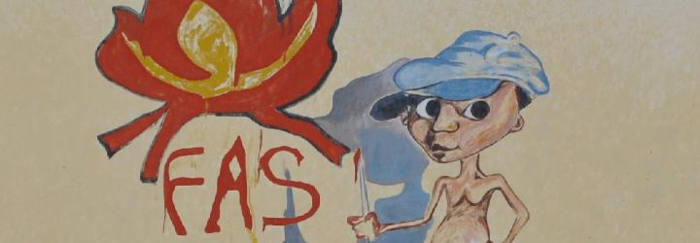
The FAS has always been attentive to context changes in order to adapt them to the real needs of the target public, i.e., the most vulnerable populations. This has meant transitioning from emergency intervention, whose main priority was reconstruction and construction of local physical capital (peri-urban and rural areas), to a type of intervention focused on strengthening physical, human and social forms of capital, and, more recently, economic capital (since 2011). The primary objective of this is to strengthen the 26 municipalities so that local and municipal leaders participate in their development process through better utilisation of the potential and productivity they have.
In this way, with this intervention, the FAS is working in the following areas:
Strengthening physical capital in the face of growing limitations on the access of populations to basic social and economic services (education, health, water, market, bridges and temporary bridges).
Strengthening social capital to address the need to continue stimulating the participation of citizens in identifying and solving the problems of their towns through public consultation mechanisms, bringing citizens, the civil society sector, the private sector and public bodies (municipal administrations) closer together.
Strengthening human capital because, during the war, there was a great exodus from rural zones towards the cities in search of protection; the majority of municipalities were left without qualified administrators, and so it is necessary to invest in training, not only of organised civil society but also to build the capacities of the employees of the local administration.
Strengthening economic capital because most economic and productive sectors which could be a means of lifting the local economy are not trained or developed enough to represent an added value for collecting revenue for municipalities, and because the main source of income for families tends to be the informal sector, especially in the case of women.
Helena Farinha
Deputy Director General of the FAS
-
Gerard Muñoz, coordinator of the EU project to combat drug trafficking in Peru, witnesses an operation conducted by the Peruvian port authorities at the Port of Callao.
Activities to combat drug trafficking at the Port of CallaoIt’s 6:15 in the morning and we are at the entrance to the loading docks at the Port of Callao, around 25 kilometres north of Lima. There is a quite odd and steady flow of workers, stevedores, seamen, customs officials, contractors and other people that you really can’t tell what they do at a port, which employs over 5,000 people and is one of the largest ports on the American continent. One of the characters milling around the port approaches me and asks me for a cigarette, I offer him the last one in my pack, telling him to keep it and that I’m going to give up anyway. Oddly, it’s the same brand as he usually smokes, or so he tells me. The guy smiles and asks me where I’m from, I tell him that I’m from Iceland, that usually means that people will leave me alone and not bother me with talk about Barça and Madrid. It’s very early and I got up at 4:15 am.
Here the days begin way before dawn and you never know when they will end, today is the second week of the course that we have organised on searching ships and shipping containers for drugs. Two German customs officials have come along to teach the primarily practical activities. From their height and build, it’s obvious that they are not from this land. Both the instructors and the students are excellent and have achieved some unbeatable results.
It’s calculated that 60% of the cocaine that currently arrives in Europe comes from Peru. The majority of this substance is transported to its destination by sea. It normally arrives at the commercial ports and recreational harbours of Spain, Belgium or Holland. Drug traffickers are usually ahead of the curve in terms of techniques for hiding drugs. We have seen everything from clothing impregnated with cocaine, drugs hidden in the stomachs of frozen fish or in babies’ nappies – anything goes.
No less surprising or dramatic is the situation faced by some people in Peru who become involved in this illegal trade, most due to need but others due to greed. From the poor farmer who is under a death threat to grow the coca plant (both he and his family) from the narco-terrorist group Shining Path; the young person forced to work in a chemical laboratory in the jungle to make base paste and who is a target of bombing by the army (something which is not reported in newspapers); the single mother who, to pay her bills, swallows 74 bags of cocaine and is arrested on arrival in Europe because she has been reported by the very same organisation that it trying to smuggle in other “drug mules” on the same flight and so wants to distract customs officials; to other more tragic situations that I prefer not to go into. It’s hard when you see the human faces involved in this business to get the ‘product’ to the end user.
Of course, the protagonists of the previous paragraph are just cannon fodder for this business. In reality, the real beneficiaries of this illegal industry are the large criminal organisations, fiscal paradises and certain powers that be, which have no regard for the human repercussions of this issue.
With a view to disrupting this illicit trade, the European Union has launched a project to support the fight against drug trafficking in Peru, led by FIIAPP, in collaboration its partners, the law enforcement agencies of Spain, Germany, United Kingdom, France and Czech Republic. The objective of this project is to improve the air, land and sea drug interception capabilities, as well as improving capabilities for obtaining intelligence, investigating and prosecuting drug lords.
At the time of writing this post, as part of one the project’s activities, we are working at the Port of Callao alongside the institutions responsible for drugs seizures at Peruvian port, namely customs, police, public prosecutors and coast guard.
As I said at the start, in the morning we build a profile of suspicious ships and containers, then we later carry out the practical search activities on them to see what we can find. For example, the port intelligence unit passed us some information about a container carrying frozen corn, passion fruit pulp and Rocoto pepper (very spicy) to Spain. Come on! As if there isn’t enough corn in Spain or it is cheaper to bring it frozen in a refrigerated container from Peru – it just doesn’t make sense. So we set the container aside to be searched. The students on the course disassemble the container’s refrigeration system and check the load and, indeed, among the corn and passion fruit pulp we find a suspicious box containing a security seal and instructions on how to apply it. This means that at some point between Callao and Spain, this container would be opened, loaded with cocaine and the new security seal would then installed. An investigation is currently ongoing into who placed the new security seal inside the container and into other issues relating to the container’s origin and destination. Curiously, a worker from the loading area in which the container was stored has disappeared and no one seems to know where he is.
At the end of the day we attend a debriefing session, where everyone explains what they have learned and how it can be replicated in their units. The idea behind this project is that every time you train someone, that person in turn conveys the knowledge gained to other members of the department to which they are assigned.
As night falls, our day’s session comes to an end and we make our way back to Lima, in rush hour traffic it will take us at least another hour to get home. Tomorrow we will begin again at dawn, I wonder what we will find…
Gerard Muñoz Arcos – Coordinator of the EU-ENLCD Project (Videoblog)
-
EUROsociAL, the European Commission programme for social cohesion in Latin America, participated in European Development Days in Brussels.
EUROsociAL in European Development DaysThe year 2015 is key for cooperation. Declared the European Year of Development by the European Union, its mid-point coincided with its flagship event, European Development Days, which brought together people from five continents in Brussels with a significant African presence (an exception to the logical European majority), dozens of public institutions (also with a clear European Union majority), bilateral agencies and international bodies, fewer DNGOs than expected, and a small but media-covered presence by the private sector, with special attention to Melinda Gates and the Gates Foundation championing health issues.
Three auditoriums, 16 laboratories (or small conference rooms), 5 meeting points, 44 stands, 4 press areas and 2 television broadcasting sets, numerous cameras and a good turnout, without reaching the attendance levels of ARCO or FITUR to give a close-at-hand example. In short, a true cooperation fair.
But beyond the staging, it was possible to learn a great deal from others and to invite them to take an interest in the themes that EUROsociAL proposed in Brussels: Europe and Latin America, their cooperation relationship, social cohesion policies, and the reality of the two regions during the crisis and at the present time. An interesting thematic and geographic “exception” in an agenda more focused on Africa and Asia and on sectors such as migration, health and food safety.
As far as the rest was concerned, the theme of inequality was very important, and here the FIIAPP also participated along with think tanks like ODI and DIE, and the World Bank; gender equality with the presence of AECID; reproductive rights; the Ebola crisis; food safety with an impressive stand by the FAO (including planters made of rubber tyres made in Guatemala); and the fresh proposals of young international leaders.
Constant foot traffic (with a look that was more white-collar than NGO) peppered by musical performances, photographic exhibitions, improvised interviews… an event with a paperless spirit in which the technological assistance was lacking (or failed) as the WiFi was not up to the deployment arranged by the organisers, as the participating institutions are called in Brussels.
This decisive year for development will bring us another three milestones: the third conference on development financing (Addis Ababa, Ethiopia, 13th-16th July); the special summit on sustainable development (New York, 25th-27th September), where the Sustainable Development Goals (SDG) are to be approved, and the summit on climate change (COP21, Paris, December).
As for the #EDD2015 tweets, they’re already talking about 2016.
By Enrique Martínez, EUROsociAL communication and visibility officer