


25/05/2026
Bolivian police officers, prosecutors and analysts are working to improve their ability to identify suspicious activity, thereby enabling them to combat more effectively the criminal groups that are increasingly using crypto-assets.
In Bolivia, against a backdrop of inflation and a shortage of US dollars, people are turning to cryptocurrency as it is not subject to devaluation like the local currency. The Central Bank of Bolivia (BCB) lifted the ban on cryptocurrencies in June 2024 and authorised the use of electronic payment channels and instruments for the purchase and sale of virtual assets. However, the BCB reiterated that the only legal tender in Bolivia remains the boliviano, meaning that cryptocurrencies do not have the status of official currency.
The BCB has regulated its use, but there is still no comprehensive oversight or monitoring of transactions. Since 2024, small businesses and retailers have been accepting cryptocurrencies as a form of payment, due to their stability and ease of use.
Cryptocurrency transactions rose by 630% in 2025, partly because cryptocurrencies offer a degree of anonymity that can facilitate money laundering and other illicit activities. It has been established that certain platforms, which have been flagged internationally for the risks they pose in relation to money laundering and terrorist financing, are being used in Bolivia.
Given that transactions totalled over $588 million in 2025, it is essential that the authorities regulate and supervise their use. The complexity of this field requires specialised training, underpinned by the expertise of specialists, clear explanations and practical case studies.
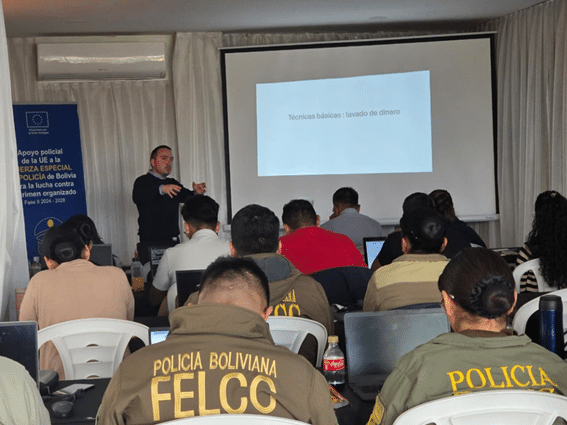
In light of this situation, the European Union project on combating organised crime in Bolivia has organised a specialist course on cryptocurrency and the laundering of illicit proceeds. The
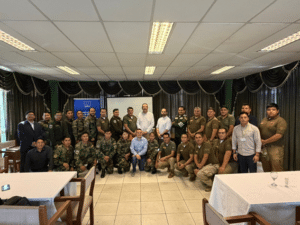
training sessions took place in the cities of Cochabamba and Santa Cruz, and were supported by two European experts specialising in cybercrime and investigation.
As a result, the police officers, prosecutors and analysts from Bolivia’s Financial Investigations Unit who took part in this training have gained a better understanding of the risks associated with the use of cryptocurrencies and the applicable regulatory framework for preventing the laundering of illicit proceeds. The knowledge gained will enable them to develop the ability to identify suspicious transactions, strengthen their investigative work and equip them with tools to combat more effectively criminal groups that are increasingly using crypto-assets to conceal and launder the proceeds of illicit activities.