


18/08/2026
The EU4SUN regional exchange has provided an opportunity to learn about Brazil’s experience in governance, school meals, family farming and food security.
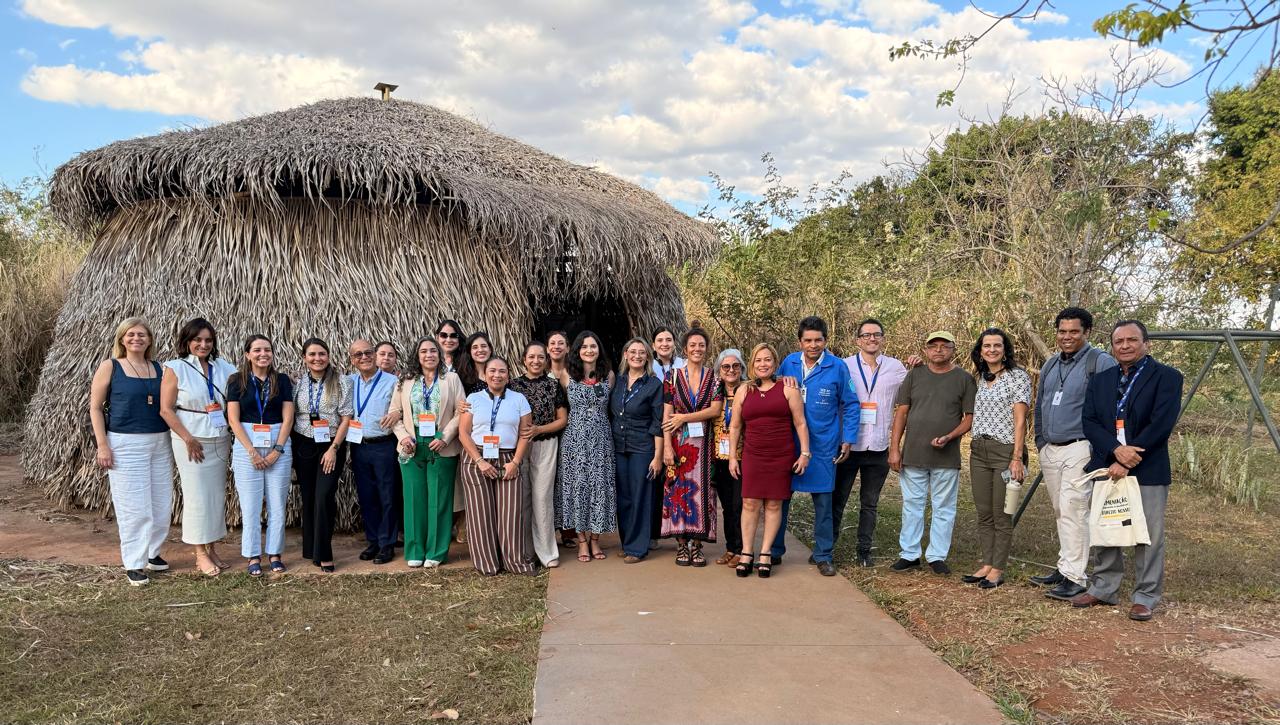
From 10 to 14 August 2026, Brasília hosted the SUN Regional Exchange, organised by the SUN Movement’s Regional Hub in Latin America, the Brazilian Government and the EU4SUN project, implemented by FIAP and Expertise France with funding from the European Union. The visit brought together delegations from eight SUN countries in Latin America and the Caribbean to strengthen capacities in governance, financing and the integration of nutrition into public policies.
Over the course of five days, the delegations gained first-hand insight into Brazil’s experience of integrating nutrition into its institutional frameworks, planning systems and public programmes. The agenda included meetings with key Brazilian government institutions, which provided an opportunity to explore different aspects of nutrition policies and learn about coordination tools and mechanisms applicable to other contexts.
Spain’s Secretary of State for International Cooperation, Eva Granados, addressed the opening of the exchange with a message to the delegations, in which she emphasised that combating hunger and guaranteeing the right to adequate food is a priority for Spanish development cooperation. She highlighted the joint work with the FAO, the ‘Latin America and the Caribbean Without Hunger’ initiative and the Global Alliance Against Hunger and Poverty, which Spain co-chairs alongside the Government of Brazil.
She also pointed out that hunger “is not inevitable” and can be reversed through firm political decisions, highlighting Brazil’s leadership in this area. He also referred to the commitments made at the Fourth International Conference on Financing for Development and reaffirmed Spain’s commitment to maintaining and increasing its cooperation resources. In summary, he emphasised that regional dialogue is seen as a practical forum where global ambition is translated into public policy, and that “guaranteeing the right to food is essential to ensuring that no one is left behind”.
Over the course of five days, the delegations gained first-hand insight into how Brazil integrates nutrition into its institutional frameworks, planning systems and public programmes. The programme included meetings with key Brazilian government institutions.
At the Ministry of Foreign Affairs (CGSAN/ABC), the countries analysed the role of diplomacy in food and nutrition security, inter-ministerial coordination and South-South cooperation, as well as the role of the Global Alliance Against Hunger and Poverty as a mechanism for technical support and resource mobilisation.
At the Ministry of Social Development (MDS), the delegations were briefed on the governance model of the ‘Brasil Sem Fome’ Plan, coordinated through SISAN and CAISAN, and the use of information systems such as the Cadastro Único for monitoring and targeting. Particular emphasis was placed on the Cisternas Programme, recognised for its impact on climate resilience and public health.
The National Education Development Fund (FNDE) has presented the framework of the National School Feeding Programme (PNAE), one of the largest of its kind in the world, based on stable funding, decentralisation, social oversight and the rule requiring 30 per cent of purchases to be sourced from family farms. This model, supported by the Global School Feeding Coalition, was identified by the participating countries as one of the most significant lessons learnt from the exchange.
At the Ministry of Health, the delegations were briefed on the integration of nutrition into primary healthcare through SISVAN, the Family Health Strategy and nutritional surveillance tools implemented in the majority of municipalities. The role of community workers and the importance of preventing the double burden of malnutrition were highlighted.
The Ministry of Agrarian Development and Family Farming (MDA) outlined policies aimed at strengthening family farming, including the PAA Institutional Procurement Programme, which facilitates public procurement without tendering and prioritises agroecological products and those from vulnerable groups. Instruments to support socio-biodiversity and price protection mechanisms were also reviewed.
At the Ministry of the Environment and Climate Change (MMA),
discussions focused on the link between climate and nutrition, the importance of resilient food systems, and the ACTO’s lines of action in the Amazon, relating to family farming, small-scale fishing and the sustainable management of species.
The meeting with CONSEA and CAISAN at the Palácio do Planalto provided an opportunity to learn about the Brazilian model of multi-stakeholder governance, which the delegations regarded as one of the keys to the country’s success in the fight against hunger. The link between social participation and inter-ministerial coordination was highlighted as a guarantee of the continuity and legitimacy of public policies.
The Institute of Applied Economic Research (IPEA) presented tools to ensure the quality of public spending, return on investment and macroeconomic planning with a nutritional focus. Evidence from the Cisternas Programme demonstrated how a policy can generate social, health and climate benefits that are sustained over time.
The field visit to the Centro de Ensino Especial provided an opportunity to observe the implementation of the PNAE, including food reception, the supply chain, menu compliance, infrastructure, hygiene and school gardens, highlighting the direct link between school meals and family farming.
The final two days of the exchange have focused on consolidating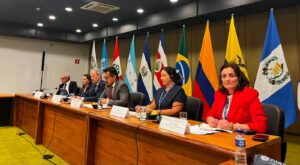
the lessons learnt and translating them into national action plans. Each delegation has identified specific priorities for making progress on governance, funding and the integration of nutrition into public policies in their respective countries.
These action plans incorporate elements inspired by the most highly regarded Brazilian experiences: CONSEA’s participatory governance model, the sustainability of the PNAE, the public procurement system and support for family farming.
The aim is for each country to return with clearly defined priorities that are applicable within their institutional contexts, geared towards strengthening the integration of nutrition into public policies and making progress towards fulfilling the international commitments they have undertaken.