


26/06/2026
Thanks to the exchange of experiences at an international level, Ecuador is working with its justice sector staff to strengthen restorative justice in the country.
The Ecuadorian criminal justice system is working with Europe to strengthen restorative justice, with the aim of addressing the shortcomings of the traditional model, which is based primarily on punishing offenders.
Restorative justice has been proposed as an alternative tool for conflict resolution, benefiting both victims – by making amends for the harm caused – and offenders – by imposing an appropriate sanction.
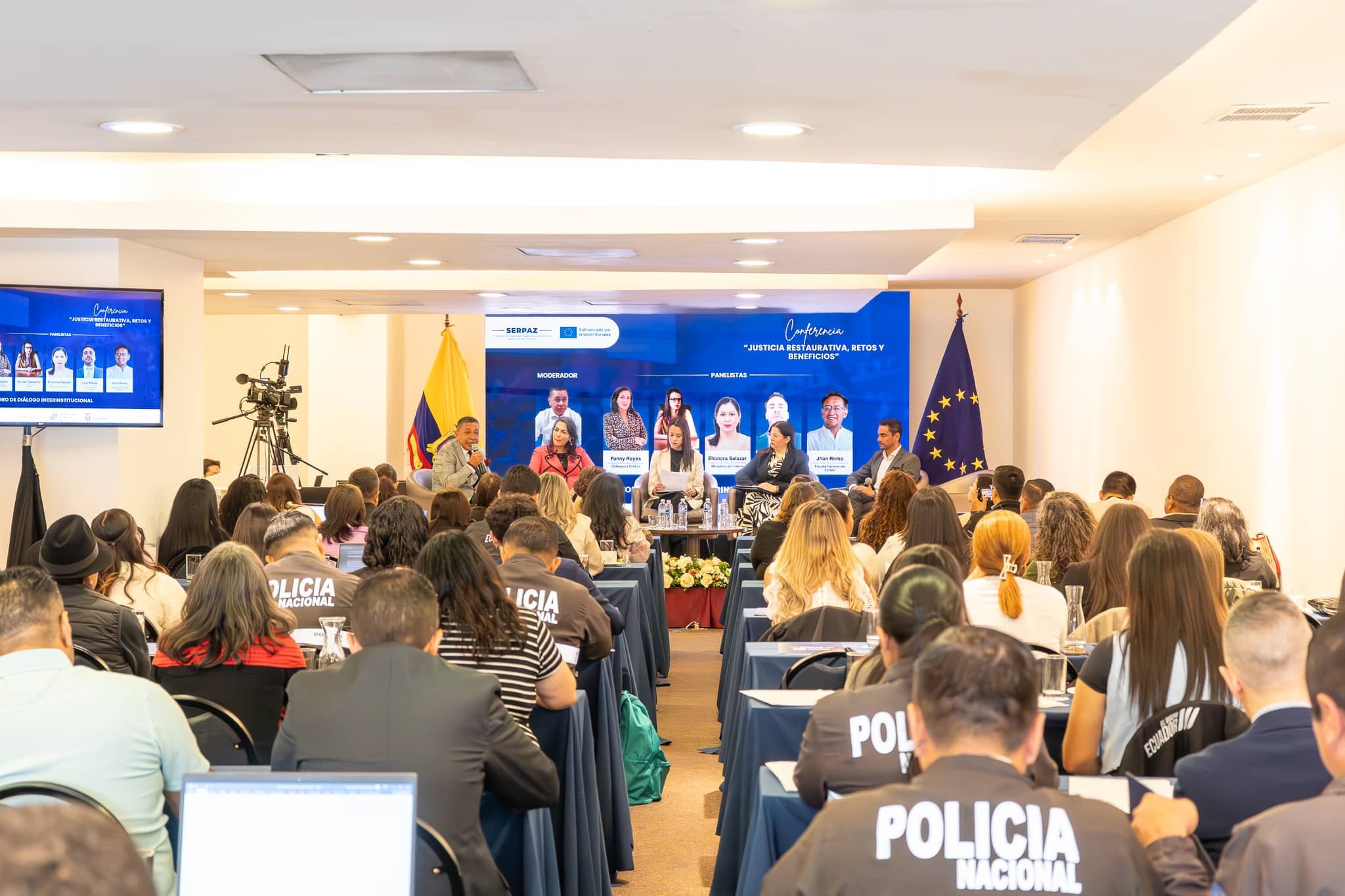
In this context, as part of the European Union’s SERPAZ project, a conference was held with Italian and Spanish experts, which provided an opportunity to examine restorative justice from various technical, institutional and social perspectives.
Some of the topics discussed included: social rehabilitation; the reintegration of prisoners; support for young people in conflict with the law; reparation for victims; and community participation in restorative processes.
As part of the meeting, participants worked in thematic groups, which enabled them to draw up recommendations aimed at consolidating a restorative justice model based on accountability, reparation and reintegration.
The contributions, experiences and recommendations arising from the conference have served as input to strengthen the implementation of the 2026–2029 Public Policy on Social Rehabilitation and to continue promoting the incorporation of restorative approaches into the country’s social rehabilitation and youth justice processes.
The European Union and the SERPAZ programme will continue to support and promote opportunities for training, the exchange of experiences and inter-institutional coordination that contribute to strengthening technical capacities, protecting rights and consolidating mechanisms aimed at reparation, social reintegration and the building of sustainable peace in Ecuador.