


23/10/2026
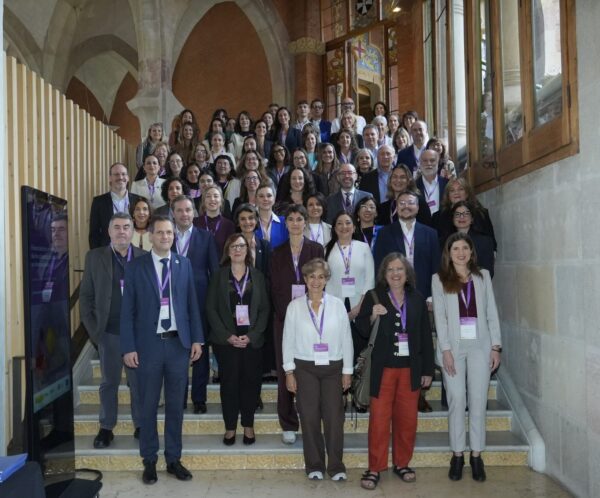
The Secretary of State for Social Rights opened the conference held at the Modernist complex of Sant Pau, which was brought to a close by the Deputy for International Relations and the 2030 Agenda of the Barcelona Provincial Council.
Making care visible and recognising it as essential infrastructure for sustainable development, with the funding needed to deliver it across every region.
This was the shared goal that brought more than a hundred representatives of local governments, the private sector and civil society together at the Hospital de la Santa Creu i Sant Pau in Barcelona. The meeting served as a prelude to the 30th Ibero-American Summit (Madrid, 4–5 November). At the Summit, Heads of State and Government will receive the Ibero-American Charter adopted in July by the 4th Ibero-American Ministerial Conference on Social Affairs and Inclusive Development. The Charter marks a milestone by recognising care as a human right, a public good and a pillar of sustainable development.
 The meeting also marked the launch of the project Support for the Design and Implementation of Local Care Agendas in Latin America. The project is Barcelona Provincial Council’s contribution, through FIAP, to the European Union’s regional programme Inclusive Societies in Latin America and the Caribbean.
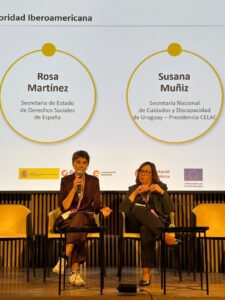
Opening the meeting, the Spanish Secretary of State for Social Rights, María Rosa Martínez Rodríguez, said:
“Care needs laws and public policies, sustainable funding and recognition of the dignity of the caring profession. It is a key issue for our democracies.”
Susana Muñiz, Uruguay’s National Secretary for Care and Disability, noted:
“Care is work. It is work that supports all other work. Every peso invested in care brings a return: we have to see it as an investment.”
Maria Eugènia Gay, Councillor Delegate for International Relations and the 2030 Agenda at Barcelona Provincial Council, added:
“Meetings such as this allow us to make progress in localising the care agenda promoted by the EU–Latin America Bi-regional Care Pact.”
Closing the event, FIAP Secretary General Tobias Jung said:
“Demand for care policies is growing. The challenge ahead is to make the right to care a reality, and that requires budgets as well as strong institutions capable of guaranteeing it across every region.”
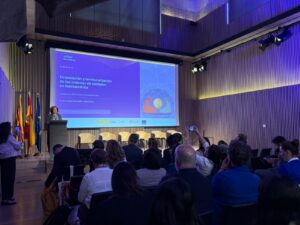 The meeting sought to advance the local implementation of the EU–CELAC Bi-regional Care Pact, adopted in Santa Marta (Colombia) in November 2024. Under this agreement, the European Union, Latin America and the Caribbean recognise care as a human right, an essential component of well-being and a strategic driver of socio-economic development. The Pact promotes shared responsibility, seeks fiscal and financial sustainability for care systems, and highlights the value of local and community experience.
Discussions focused on three key questions: how to finance care in increasingly ageing societies; how to mobilise funding and measure the impact of this investment; and how to support all of this at the level closest to citizens.
The meeting marks the start of a three-year roadmap through which Barcelona Provincial Council will contribute directly to the European Union’s Global Gateway strategy. This support for the EU’s international investment strategy will strengthen the “soft” infrastructure that must go hand in hand with physical infrastructure: a trained workforce, gender equality, governance and social inclusion.
The EU regional programme Inclusive Societies aims to reduce inequality in Latin America and the Caribbean, with a focus on women, young people and vulnerable groups.
On behalf of Spanish Cooperation, the Foundation for the Internationalisation of Public Administrations (FIAP) leads the European consortium implementing this ambitious programme, with funding from the European Union. The consortium also includes, Expertise France; the Italo-Latin American Institute (IILA); the German Agency for International Cooperation (GIZ); and the Spanish Agency for International Development Cooperation (AECID).
Barcelona Provincial Council’s contribution focuses specifically on localising care agendas. This contribution is particularly significant because the Inclusive Societies programme takes a place-based approach. It starts from the premise that Global Gateway investments are only truly transformative when they are designed around each area’s priorities, strengthen local capacity and reduce inequality where they are made.