

06/08/2026
More than 50 representatives from six countries have drawn up a declaration and a roadmap to strengthen regional cooperation on food and public health.
Countries in the Eastern Caribbean continue to face significant challenges in the area of nutrition, such as the rise in diet-related diseases, childhood obesity, micronutrient deficiencies and heavy reliance on food imports. Added to this are the impacts of climate change and difficulties in accessing healthy food at affordable prices.
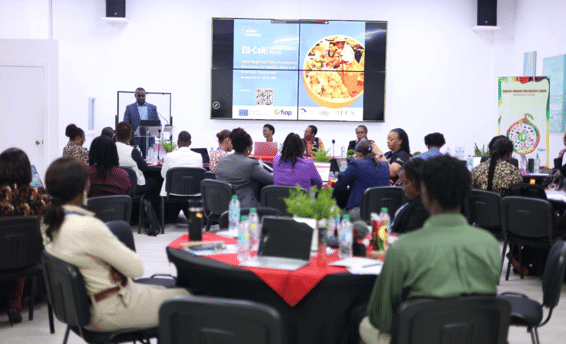
Against this backdrop, the European Union has organised a workshop with a multi-sectoral and gender-sensitive approach, promoting collaboration between the health, education, agriculture and social protection sectors to move towards healthier and more inclusive food systems.
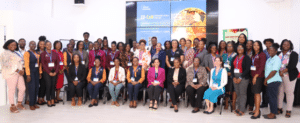
Thus, the Caribbean island of Grenada has hosted more than 50 representatives from the six

member states of the Organisation of Eastern Caribbean States (OECS) — Antigua and Barbuda, Dominica, Grenada, Saint Kitts and Nevis, Saint Lucia and Saint Vincent and the Grenadines — alongside officials from the ministries of Health, Agriculture, Education and Social Development, as well as regional and international technical partners.
The workshop, held over three days under the theme ‘Promoting healthy diets and gender equality in the Eastern Caribbean: regional action for women, young people and nutrition policies’, served as a forum for the participating countries to exchange experiences, identify common priorities, strengthen coordination mechanisms and define courses of action that will help to promote healthier food environments in the Eastern Caribbean.
Following the workshop, representatives of the Member States
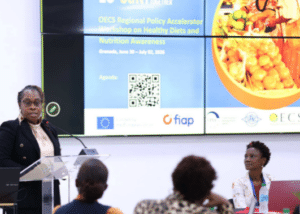
drew up a draft Declaration on Women, Young People and Healthy Diets, in which they reaffirmed that healthy eating is a fundamental human right and a key element for the socio-economic development and resilience of the Eastern Caribbean countries. The declaration places women, girls and young people at the heart of nutrition policies and commits to strengthening cross-sectoral coordination from a gender perspective to accelerate the implementation of measures.
The participating countries have also committed to strengthening nutritional information and surveillance systems, promoting evidence-based policies, preventing diet-related diseases, combating nutritional deficiencies and encouraging greater participation by women and young people in agriculture and food systems. The workshop also enabled the drafting of a Regional Roadmap on Nutrition, which will coordinate the implementation and monitoring of these actions amongst Member States.
The event took place as part of the EU-CaN Facility: Nurturing Futures Together project, funded by the European Union and implemented by the Foundation for the Internationalisation of Public Administrations (FIAP) in collaboration with the Central Project Management Agency (CPVA), the Commission of the Organisation of Eastern Caribbean States (OECS) and the Grenada Food and Nutrition Council (GFNC).