

21/10/2026
Fourteen public institutions from five Mexican states have presented the results of “Global Green Challenges”, a European programme aimed at modernising the country’s public transport system.
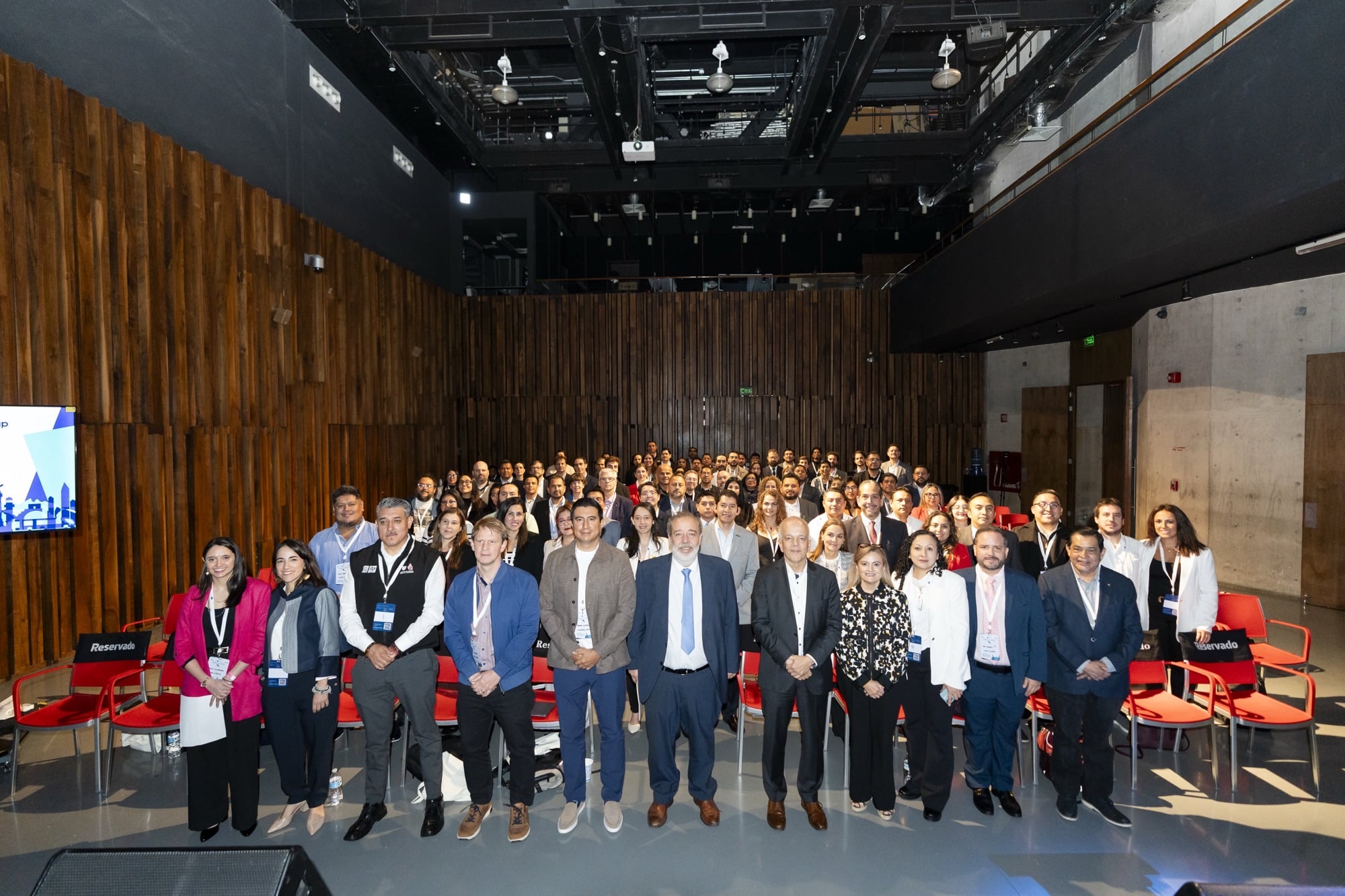
Transport authorities from Mexico City and five of the country’s states, representatives of the European Union, FIAP, development banks and companies from the transport sector have been meeting since Tuesday at the Spanish Cultural Centre in Mexico City to discuss how to finance and scale up public transport and sustainable mobility projects in the country’s cities.
The meeting marks the conclusion of ‘Global Green Challenges’, a project funded by the European Union as part of its Global Gateway strategy, in which fourteen Mexican public institutions have participated. In attendance were the Secretariats for the Environment and Sustainable Development and for Mobility of the State of Mexico, the Querétaro State Mobility Agency, the Yucatán Transport Agency, the Quintana Roo State Mobility Institute, Metrorrey and, in Mexico City, the Passenger Transport Network (RTP) and Metrobús.
“The challenge now is to ensure that the studies and plans supported by this project do not remain merely on paper, but are implemented in the future and brought to life through new public transport projects,” said Stefan Agne, Minister-Counsellor and Head of Cooperation at the European Union Delegation in Mexico, speaking at the event.
Among the project’s outcomes, Mexico City’s Passenger Transport Network (RTP) has carried out studies to prioritise investment and electrify new routes, whilst Metrobús has designed a new business model for its Line 1. In the State of Mexico, the Secretariat for the Environment and Sustainable Development has finalised its strategy for low-emission zones in Toluca, Lerma and Metepec in collaboration with Madrid City Council.
For its part, the Secretariat for Mobility has launched a campaign to promote cycling with the support of the public bicycle schemes in Madrid, Bilbao, Zaragoza and Seville. Metrorrey has analysed the reliability and safety of its Line 1 in collaboration with Metrotenerife. In 2025, Querétaro presented its Comprehensive Plan for Sustainable Urban Mobility (PIMUS); Quintana Roo is working with Madrid’s EMT to design Chetumal’s future Integrated Transport System; and Yucatán has a transport decarbonisation plan and a tool for measuring its greenhouse gas emissions.
“Cooperation between public authorities makes it easier for those responsible for transport in Madrid, Tenerife or Bogotá to share what they have learnt with their counterparts in Querétaro, Mérida or Monterrey, and vice versa. This European Union project demonstrates that such peer-to-peer exchange translates into plans, studies and decisions that have a direct impact on the public”, said Sonsoles Mories Álvarez, director of the Economic Development and Environment Department at FIAP.
How to finance the projects already on the table was precisely the question addressed on the first day. The Ministry of Finance, Bancomext, the European Investment Bank, the French Development Agency (AFD) and companies such as ACCIONA analysed how climate funds, development banks and public-private partnerships can turn these studies into fundable projects. In the afternoon, a business meeting brought together public institutions and companies from the sector.
On Wednesday, Mexican institutions shared experiences of public transport and active mobility with their counterparts from Madrid and Tenerife, and drew up recommendations to ensure the work continues beyond the project.


