



10/11/2026
Buenos Aires hosts a regional dialogue on sustainable livestock financing, traceability and opportunities to transform livestock production in Latin America.
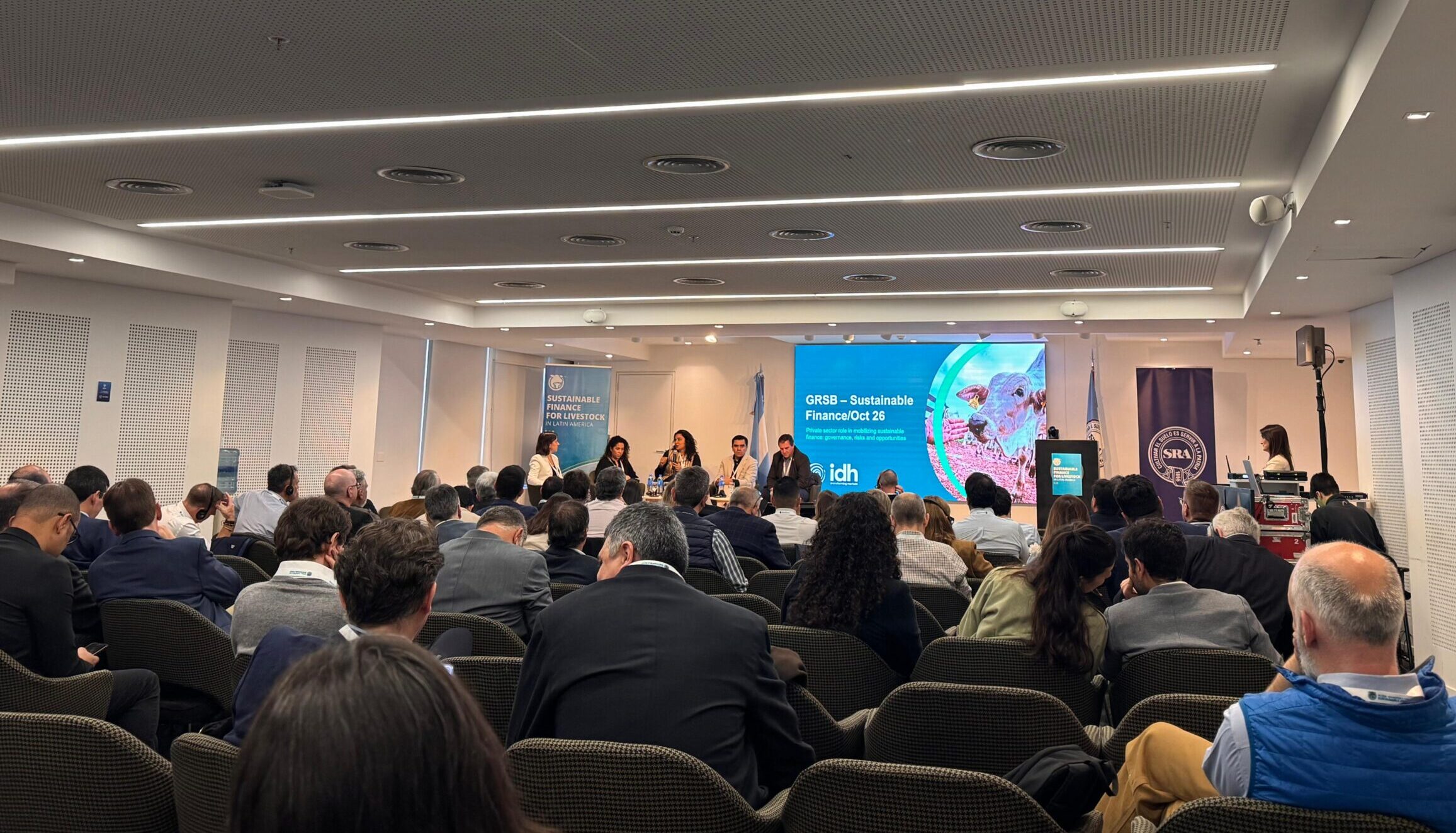
The transition towards more sustainable livestock production requires mobilising financial resources and having mechanisms in place to verify compliance with environmental and social criteria. In this context, traceability has become an essential tool for improving transparency across the value chain and facilitating access to markets and financing opportunities.
On 20 and 21 October, the EU-funded project to strengthen socio-environmental traceability systems in Paraguay, took part in the Regional Event on Sustainable Livestock Finance in Latin America, held in Buenos Aires. Organised by the Global Roundtable for Sustainable Beef (GRSB), together with the Sociedad Rural Argentina and other partners, the event brought together representatives from the public, financial, production and business sectors, as well as civil society organisations from Argentina, Brazil, Bolivia, Paraguay and Uruguay, alongside international guests.
The aim was to explore ways to scale up sustainable livestock financing and develop a regional roadmap to mobilise capital towards more sustainable production practices.
The Paraguayan delegation included representatives of the International Italo-Latin American Organisation (IILA) and FIAP involved in the project, as well as the Vice Minister of Livestock, Marcelo González Ferreira, representatives of AGROPORTAL, a private-sector traceability platform, and the Paraguayan Development Bank.
SiCalidad Trazabilidad supports the Government of Paraguay and the private sector in developing socio-environmental traceability systems for the meat value chain. This work aims to help Paraguayan producers demonstrate their practices and meet the requirements of international markets, including the European Union.
During the discussion sessions, participants also explored how these systems can improve access to financing and create new business opportunities, as well as the need to strengthen cooperation among the sector’s different stakeholders.
Overall, the discussions highlighted the importance of collaboration, shared learning and joint action among value-chain stakeholders in moving towards more sustainable livestock production.


