


30/07/2026
The role of consulates in assisting victims of human trafficking abroad is essential to ensuring the victim’s protection.
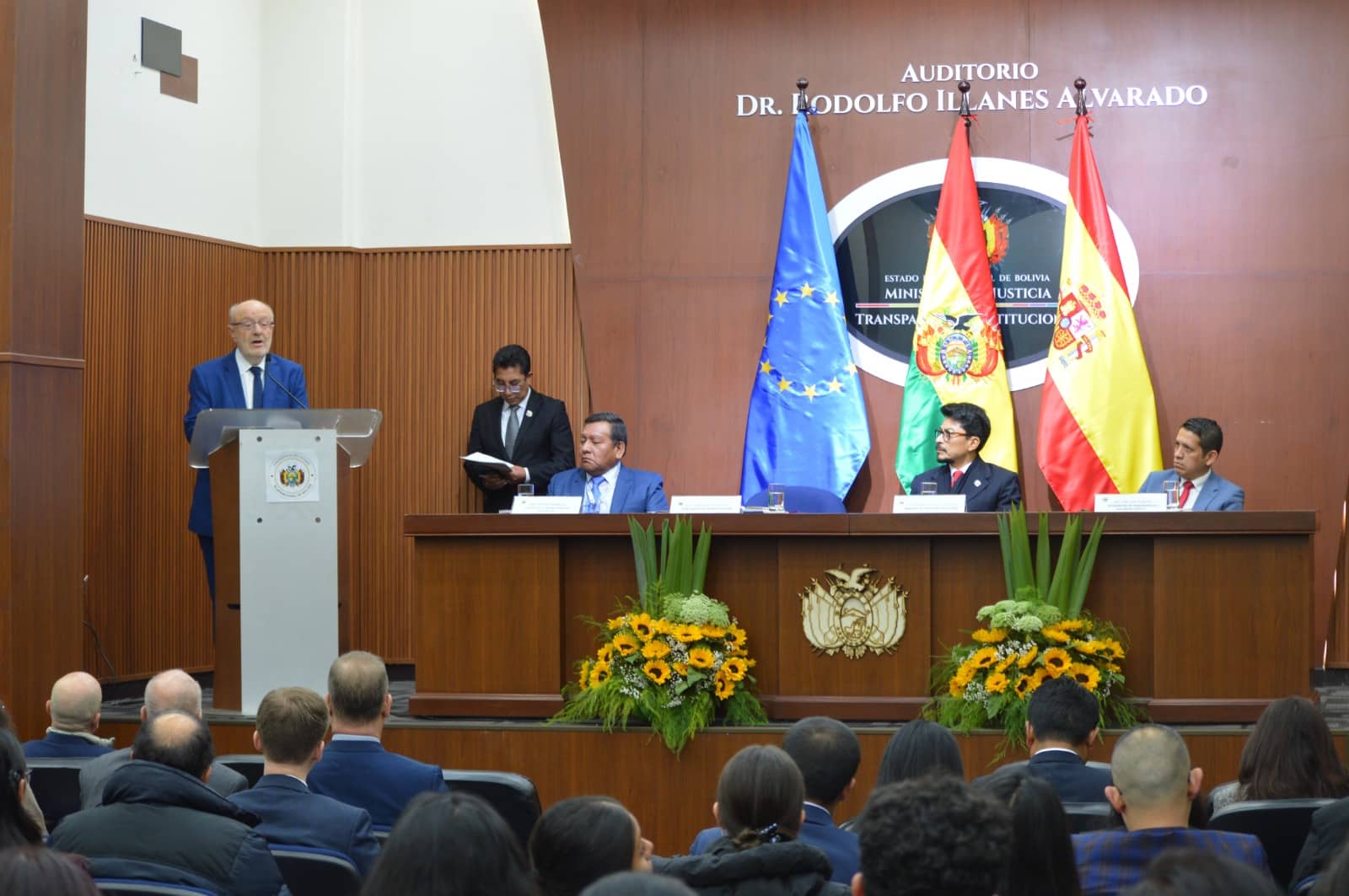
The Spanish Ambassador to Bolivia at the opening of the event.
La Paz, the capital of Bolivia, has hosted a round-table discussion which has brought together the experiences of the various stakeholders involved in the repatriation and protection of victims of human trafficking, with the aim of updating the consular protocol for carrying out the necessary repatriation where required.
The event was organised by the European Union (EU) project to support the prevention of human trafficking, the smuggling of migrants and related offences, implemented by FIAP.
The roundtable discussion aimed to bring together an international perspective and, to this end, drew on the expertise of a wide range of representatives from consulates, embassies and organisations involved in this work, such as the Bolivian Consulate in Argentina, the Colombian Embassy in Madrid, the Bolivian Public Prosecutor’s Office and the Bolivian police, the Chilean Ministry of the Interior, United Nations agencies (IOM), and representatives of civil society (APRAMP, Munasim Kullakita, and OURRescue).
In addition, the director of the EU-funded project to combat human trafficking in Nigeria – implemented by FIAP – joined us from Africa, with the aim of facilitating the exchange of experiences between different projects and countries.
Through its projects, FIAP remains firmly committed to combating human trafficking, adopting a victim-centred approach in which the protection of the victim and their psychological and emotional recovery are at the heart of all interventions. The exchange of experiences and knowledge between FIAP projects through joint actions helps to strengthen the technical capacity of interventions and, furthermore, creates a space for dialogue between institutions that are geographically distant, with vastly different languages and cultures, but which share similar objectives such as the protection of victims and the fight against human trafficking.
This bridge and this exchange of experiences are an example of institutional commitment to systemic coordination, which improves effectiveness and the achievement of results, whilst also contributing to greater efficiency in the use of financial resources.