


02/10/2026
Bolivian institutions are working together to combat money laundering and organised crime.
Money laundering in Ecuador involves billions of dollars annually. It is estimated to account for 4 per cent of GDP, primarily involving drug trafficking, illegal mining, corruption, extortion and the illicit informal economy.
Investigations and litigation (the filing of charges) in cases involving money laundering are crucial to combating this crime; in light of this, the Technical Specialisation Workshops on Criminal Prosecution, Asset Analysis and Litigation in Major Money Laundering and Organised Crime Cases have been launched.
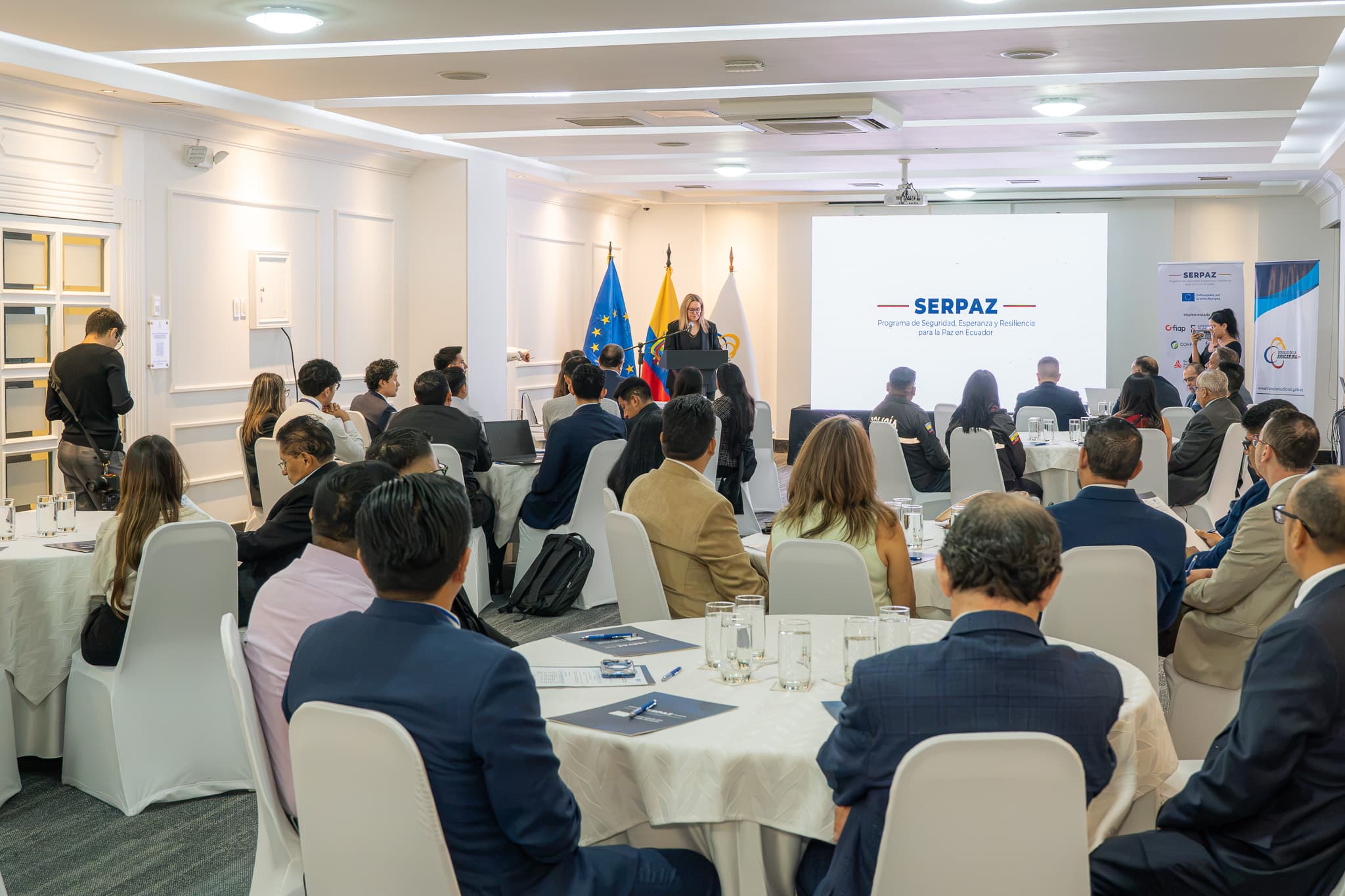
These workshops were organised by the European Union’s SERPAZ programme and were attended by staff from the Judicial Council, the Attorney General’s Office, the Ministry of the Interior and the Ecuadorian National Police. The sessions featured specialists from Spain and aimed to strengthen the capabilities of those working within the criminal justice system to formulate hypotheses, gather evidence and construct sound case theories in relation to money laundering and organised crime.
During the opening ceremony, the director of the SERPAZ programme, Cristina Lera, highlighted the value of such events in strengthening coordination between the institutions involved in the investigation, prosecution and trial of complex crimes. In this regard, she stated: “At the SERPAZ Programme, we work to strengthen the capacities of the institutions responsible for investigating and tackling complex crimes such as money laundering and organised crime. These workshops reflect our commitment to a justice system that is more specialised, coordinated and prepared to respond effectively to the new dynamics of organised crime.”
The conference was attended by prosecutors and investigators from the Economic and Fiscal Crime Unit (UDEF) of the Spanish National Police, who shared their experiences and expertise on asset tracing, circumstantial evidence, inter-agency cooperation, litigation and the development of case theories in complex investigations.
Over the course of a week, participants combined specialist presentations, case studies and practical exercises relating to asset tracing in large-scale cases, the drafting of indictments for money laundering offences, the assessment of evidence and the preparation of police reports based on circumstantial evidence.
The workshop provided an opportunity to explore in depth the legal and evidential criteria required to tackle large-scale cases of money laundering and organised crime, as well as to strengthen technical and operational coordination between the National Police, the State Public Prosecutor’s Office and the Judicial Council, within the framework of their respective remits. Furthermore, the training has also sought to contribute to the standardisation of evidential criteria and to the strengthening of capacities for presenting complex asset and financial flow reports within the judicial process.
The European Union and the SERPAZ Programme will continue to support Ecuador in strengthening institutional capacities and creating opportunities for cooperation, the exchange of experiences and specialised training, which will contribute to a more coordinated and effective response to money laundering and organised crime in Ecuador.